

Nirmal Purja’s Pakistan ascent ends in an avalanche death toll: his crew of 10
Purja’s expedition company says an avalanche in Pakistan killed Purja and nine companions as rescuers fought hazardous conditions.
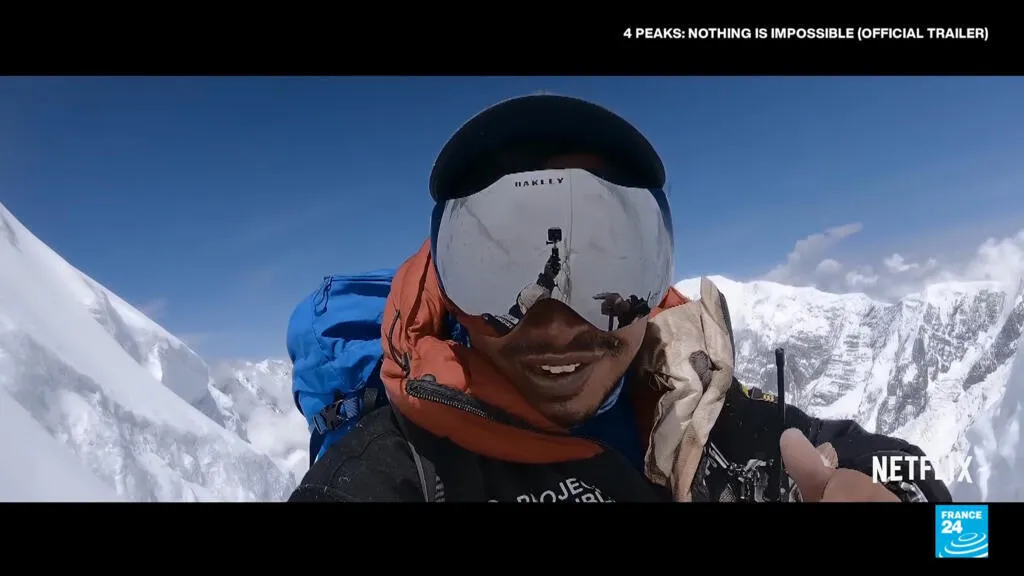
Renowned mountaineer Nirmal Purja, alongside nine climbing companions, was killed by an avalanche in Pakistan during an ascent of one of the world’s highest mountains, according to his expedition company. For leaders in high-risk sports and adventure businesses, the tragedy raises urgent questions about operational risk, emergency readiness, and reputational survivability.
Nirmal Purja, the famed mountaineer whose feats pushed mainstream attention toward extreme climbing, was killed by an avalanche in Pakistan during an ascent of one of the world’s highest mountains, according to his expedition company. The same statement says nine climbing companions were also killed, bringing the party to 10 people in total.
The company said rescuers were tackling treacherous conditions to recover their bodies on Saturday. In other words, this is not a distant, abstract “mountain incident.” It is a live, time-sensitive emergency with an immediate human cost, and it is happening in a region and environment where conditions can change fast and decisions have outsized consequences.
Purja’s name carries weight in the climbing industry not because of marketing, but because his public story helped inspire a generation to climb higher. That legacy is explicitly referenced in the reporting: France 24 describes him as “a giant of the industry” who left behind a legacy that inspired others. In practical terms, that kind of influence changes demand. When a charismatic, high-achievement figure draws attention to an activity, more people want in. More participants can mean more revenue for expedition operators, gear suppliers, training ecosystems, and media partners. It can also mean more pressure on safety systems, especially when operators scale routes, recruit new guides, or add higher-risk objectives to meet expectation.
This is where the operational reality bites. High-altitude expeditions are, by nature, risk-managed undertakings: weather forecasting, avalanche prediction, route selection, timing, oxygen planning, communications, and contingency plans are the backbone of what keeps a team alive. When the source says rescuers faced “treacherous conditions” while recovering bodies, it is a reminder that rescue operations in alpine disasters can be nearly as dangerous as the climb itself. Leaders should take note of the second-order impact: even after an incident, the crisis does not “end.” Recovery, investigation, and public scrutiny continue, and the conditions on the mountain determine what is possible, when.
From a board and executive perspective, the immediate reputational shock is obvious. What is less obvious, but equally important, is how organizations in high-risk fields prove they can handle the full lifecycle: preparation, incident response, family support, and transparent communications. France 24 attributes the information to Purja’s expedition company, and that attribution matters. When tragedies occur, stakeholders look for internal accountability and whether the company can coordinate effectively with rescue services, local authorities, and internal leadership.
There is also an industry incentive angle. Adventure and expedition companies often operate in a competitive environment where “success” is highly visible and “risk” is difficult to measure until something goes wrong. That can subtly tilt decision-making toward ambition. Yet a death toll like this, tied to a specific cause stated in the reporting, should force a hard reset on how risk is measured and communicated. If the avalanche was tied to conditions encountered during the ascent of one of the world’s highest mountains, then the central operational questions become: How were conditions evaluated before and during the climb? What triggers would have changed the plan? How were teams briefed and how quickly could decisions be made if the mountain “moved the goalposts” mid-expedition?
For leaders in adjacent sectors, the strategic stakes rhyme. Whether you run an expedition business, sponsor high-risk events, build infrastructure for remote work, or oversee safety-critical operations, you manage the same equation: uncertainty, visibility, and response capacity. Purja’s legacy may have inspired climbers to “climb higher,” but the source also shows what the mountain can take in a single incident. The takeaway for executives and operators is not to dampen ambition. It is to match ambition with ruthless risk controls, credible emergency procedures, and communications that stand up under pressure.
Finally, there is a cultural layer. When a well-known figure dies in the way described, it changes how the public understands the sport. France 24’s description of Purja as a giant of the industry signals that his influence was broad, reaching people beyond the usual climbing circles. That broad impact means the industry will face renewed scrutiny, both from customers and from regulators or partners who weigh liability and public responsibility. In the days ahead, decision-makers should expect that any organization operating in extreme environments will be asked sharper questions than before. The mountain, in this case, delivered a tragic answer first.
This story's Key Insights and Take-aways are locked.
Create a free account to unlock Executive Actions for one credit.
Register to UnlockAlways free for Executives Club members. Join the Club
More in Politics
Obama Defends Ilhan Omar After Agents Search Her Home in Trump Inquiry
The former president's intervention raises the stakes in a federal probe into immigration paperwork that has put a prominent progressive lawmaker in the crosshairs.

Blair-era minister: cut welfare to fund youth job support
Alan Milburn's call for welfare cuts to fund employment support opens a Labour fight over benefits and the Neet crisis.

Hot September CPI: energy costs surge, voters feel the squeeze before midterms
The latest inflation print lands as Trump campaigns for GOP control of Congress, putting cost-of-living worries at the center of the midterm fight.