

Nobel Prize Lands on IceCube Leader Who Fished Neutrinos from Antarctic Ice
A founding leader of the IceCube Collaboration is headed to Stockholm after the South Pole's nearly 100-hole neutrino telescope changed how we see the universe.
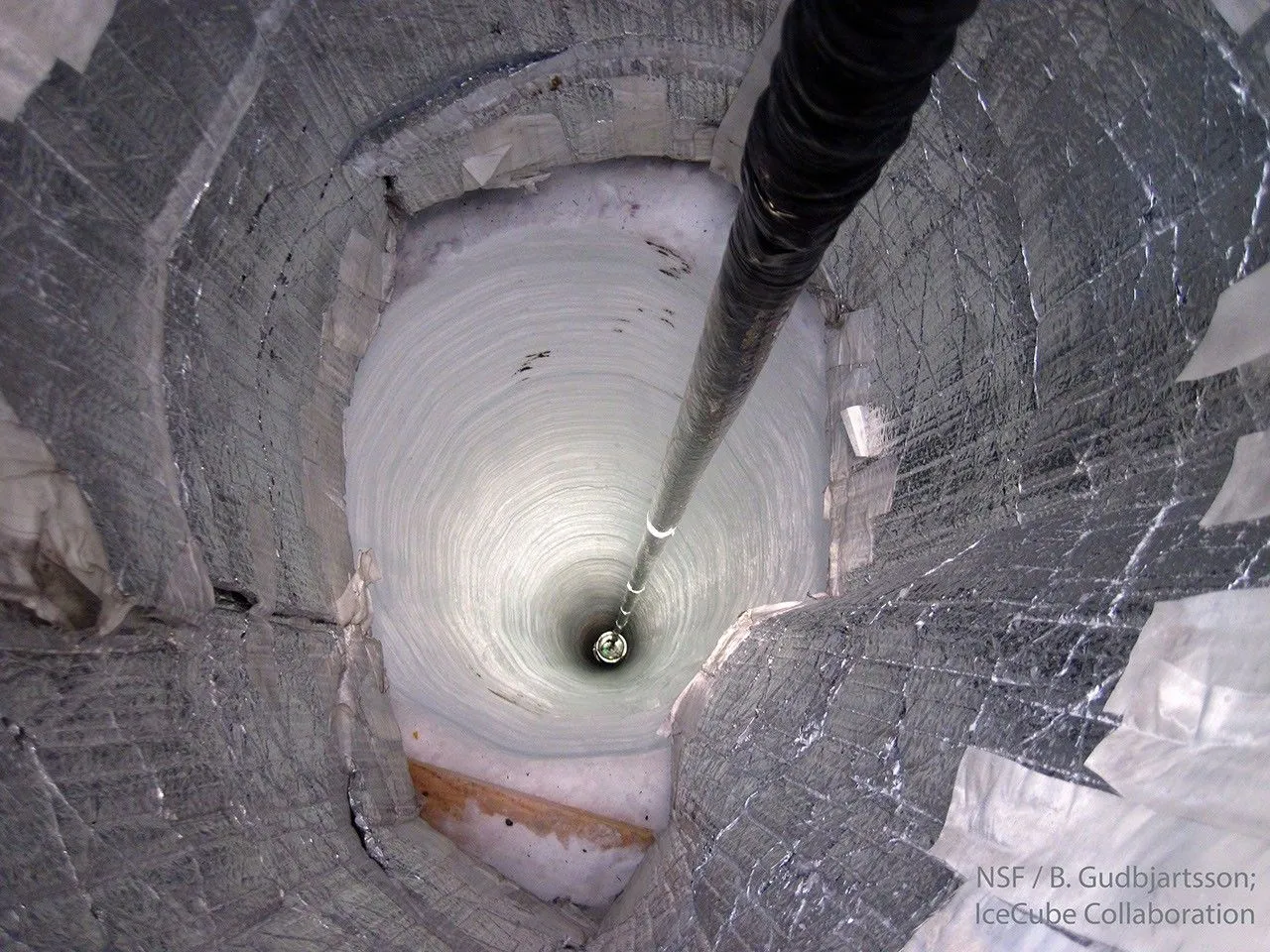
A founding leader of the IceCube Collaboration will receive the Nobel Prize in Physics, an announcement made this week that caps a project which melted nearly 100 holes in Antarctic ice to build the largest neutrino detector ever created. For decision-makers, the recognition signals that long-horizon, high-risk scientific infrastructure can deliver breakthrough discoveries - and that 'impossible' engineering bets are worth funding.
The Nobel Prize in Physics is going to a founding leader of the IceCube Collaboration, the team that built the largest neutrino detector ever created by melting almost 100 holes in the ice at the South Pole. The announcement came earlier this week, and it puts a Stockholm stamp on a project that NASA's Astronomy Picture of the Day describes as "ice fishing for cosmic neutrinos" - a hunt that has already detected "many illuminating neutrinos" from powerful processes across the universe.
The scale is almost absurd. Scientists melted vertical lakes into the Antarctic ice, lowered long strings knotted with basketball-sized light detectors into each one, and let the water refreeze around them. The detectors are tuned to catch blue light emitted when fast-moving secondary particles - liberated by high-energy neutrinos colliding with ice molecules - race through the clear ice. That blue flash is the neutrino's calling card, and IceCube has turned the ice itself into a telescope.
The 2010 image featured in NASA's APOD captures the moment one of the last detector strings was lowered into the freezing abyss. Each string is a vertical lake, each detector a basketball-sized eye, and the whole array is now the largest neutrino detector ever created. It is also a monument to patience: the holes freeze over quickly, but the science takes years. The ice must be exceptionally clear to transmit the faint blue light, which is why the South Pole's deep ice is ideal.
Why go to all this trouble? Neutrinos are ghostly particles that barely interact with matter, so catching them requires a detector of almost geological proportions. IceCube uses the Antarctic ice as both target and telescope: when a high-energy neutrino collides with an ice molecule, it produces secondary particles that emit the blue light the detectors are sensitive to. That light carries information about the neutrino's origin - and, by extension, about the most powerful processes in the universe. Because neutrinos pass through almost everything, they arrive at Earth from the farthest reaches of space without being absorbed or deflected. This is why IceCube's detections are so valuable: each neutrino is a messenger from a violent event that would otherwise be invisible.
For executives and investors, the Nobel nod is a case study in long-horizon, high-risk infrastructure. The project required drilling nearly 100 holes at the bottom of the world, deploying equipment in extreme cold, and waiting years for data. The image credit lists NSF and the IceCube Collaboration, a reminder that this kind of science is often publicly funded - and that the payoff can be a Nobel Prize. The recognition also validates the "unprecedented discoveries" the collaboration has made, a phrase that carries weight in a field where most experiments produce incremental results. For a board, the lesson is that patient capital can produce outsized returns, but only if you are willing to wait.
The strategic lesson for boards is uncomfortable: the highest-upside bets are often the ones that look most like boondoggles on a spreadsheet. Melting holes in Antarctica to catch particles that pass through the planet sounds like a joke, but it just earned a Nobel Prize. For companies and institutions deciding where to place R&D dollars, the IceCube story argues for tolerating long time horizons, unusual engineering, and outcomes that cannot be predicted in a quarterly earnings cycle. It also suggests that the biggest breakthroughs often come from asking a completely different question - not from optimizing an existing product. The same logic applies to corporate R&D: the projects that seem most speculative are often the ones that create entirely new markets.
The award also reframes how we think about "telescopes." IceCube is not a mirror or a lens; it is a block of ice instrumented with light detectors. That shift in mindset - from looking at the sky to listening to particles - is exactly the kind of unprecedented discovery the Nobel committee recognized. For decision-makers, the takeaway is to look for opportunities where the conventional toolset fails and a completely different approach is required.
The Nobel Prize in Physics is one of the most prestigious awards in science, and this year's recognition puts IceCube in the company of discoveries that have reshaped our understanding of the universe. For the scientists and engineers who spent years in one of the most hostile environments on Earth, it is a career-defining honor. For the rest of us, it is a reminder that the most valuable infrastructure is not always the most visible - sometimes it is buried under Antarctic ice, waiting for the right question.
This story's Key Insights and Take-aways are locked.
Create a free account to unlock Executive Actions for one credit.
Register to UnlockAlways free for Executives Club members. Join the Club
More in Science
France euthanized Félicette, the first cat in space, two months after her flight
Félicette's 1963 flight made France a space-race player, but her euthanasia and a crowdfunded statue reveal how high-risk programs are remembered.
Ultracold atoms just created a 'fractional Fermi sea' that breaks quantum rules
A new quantum state challenges decades of theory and hints at 'super-Fermions,' with real stakes for quantum computing and materials science.

Bangladesh's 202,000 measles cases are a 'real warning' to other nations
The world's worst measles outbreak is spreading as routine vaccination falters. Here is why every country's immunization program should pay attention.