
Nopia synth lands in months at about £550, after years of teasing
Creators Martin Grieco and Rocío Gal say the viral Nopia is basically finished and ready to ship soon.
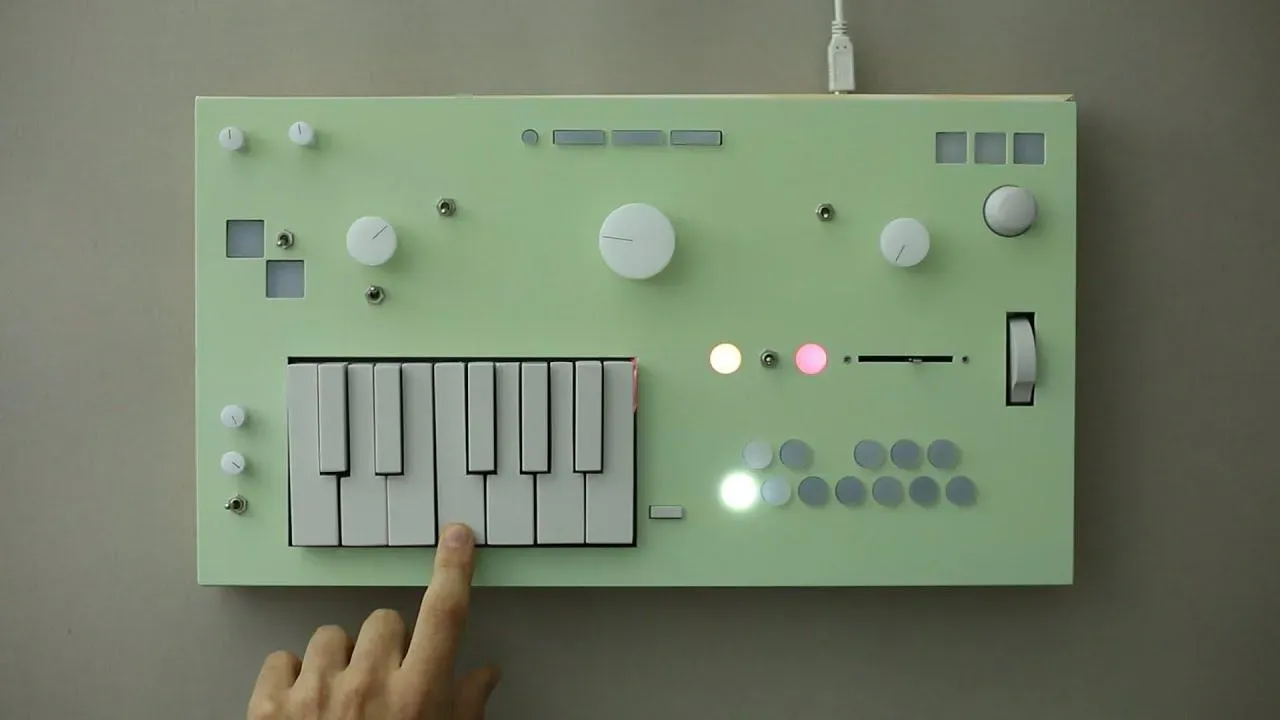
The Nopia synth, teased online since 2023 by creators Martin Grieco and Rocío Gal, is “basically finished” and will launch in “a couple of months” for around £550. For decision-makers, the key question shifts from hype to execution, supply, and how quickly a niche category can turn attention into revenue.
If you have spent any time in the music gear corner of the internet, you have probably seen the Nopia. It started as a tease in 2023, then basically became a recurring character in creator setups: mint green, weird in the best way, and always just out of reach. Now the wait is getting real. Creators Martin Grieco and Rocío Gal brought the viral Nopia to the MusicRadar offices for an in-depth first look, and the big update is that the instrument is “basically finished” and will be launching in “a couple of months” for around £550.
That “couple of months” and “around £550” matter because they move the Nopia from internet phenomenon to product math. At this price point, buyers are not just curiosity collectors. They are making a purchase decision that competes with established synth options and other boutique instruments. The story behind the price is also the story behind the design: Nopia is built around harmonic interplay in a unique way, and it is not trying to be another “few knobs and a keyboard” standard synth.
Here is the core concept: instead of controlling a single synth patch with a simple front panel, Nopia blends multiple modules - keys, bass, arp, and pad - into one continuous performance. The comparison given is to a drumless groovebox. In plain English, it is positioned as something that supports arrangement-like play, not just isolated sound sculpting. That matters commercially because it is easier for a new buyer to understand what they are buying when the instrument encourages a full musical loop rather than asking them to build everything from scratch.
One of the standout parts is the one-octave keyboard called the Chord Builder. A one-octave keyboard can sound limiting on paper, but in a system built for harmonic interplay, it can also be a feature, forcing you into patterns while the device handles how chords and related roles emerge across bass, arpeggios, and pads. The result, at least in the way the device is described, is that the instrument is designed to behave like a performance system. That is exactly the kind of framing that helps boutique hardware win over people who are tired of menu diving or who want more immediate musical output.
Timing is the other big lever. Nopia has been teased for years, starting with the first glimpse in 2023. Long development cycles have consequences. They can build demand, sure, but they also create pressure around delivery schedules, component sourcing, manufacturing quality, and support. Once you announce “a couple of months,” you are also setting expectations for fulfillment and customer experience. The verge of launch is where a lot of products either convert interest into repeatable sales, or discover that hype and supply chains do not negotiate. The fact that the creators are showing it in an in-depth first look at MusicRadar suggests they are trying to close that gap publicly before the first shipping wave.
There is also a broader market context hiding inside the “mint green synth” framing. Boutique synths are not just audio tools anymore. They are content engines. Players record loops, post patches, and turn hardware quirks into viral formats. Systems like Nopia, which blend multiple musical components into one performance, can reduce the friction between “I played it” and “it sounds like something” on day one. For executives and investors watching adjacent categories, this is an important second-order effect: the product is engineered to be demo-friendly, and demo-friendliness is basically marketing at low marginal cost.
Regulatory background may not be the headline here, but it still matters for launch planning. Musical instruments that connect to computers or use digital control often need to satisfy electrical and communications standards depending on how they are built and marketed. Even when the story is creative, operational readiness still includes compliance work, documentation, labeling, and region-specific requirements. The source does not detail any regulatory specifics for Nopia, but any company approaching retail launch “in a couple of months” typically has to have those wheels already turning. That is part of what makes “basically finished” a meaningful phrase. It implies the build is not just musically playable, but closer to production-ready.
So what should decision-makers take from this? The Nopia update is a reminder that internet hype can become tangible only when product systems are coherent. Nopia is not a single synth patch on a keyboard. It is keys, bass, arp, and pad blended into a performance, anchored by the one-octave Chord Builder. And with an expected launch window in “a couple of months” for around £550, Grieco and Gal are now in the phase where execution, manufacturability, and customer experience decide whether the next viral synth becomes a category moment or a one-cycle curiosity.
This story's Key Insights and Take-aways are locked.
Create a free account to unlock Executive Actions for one credit.
Register to UnlockAlways free for Executives Club members. Join the Club
More in Technology

Google quietly links your phone number to every Android account on your SIM
Adding a SIM now ties your phone number to all Google accounts - and future accounts inherit it. Here's the security and privacy stakes.

Hijacker AI 'Skynet mode' runs 100,000 attack steps against exposed models
Symantec caught a criminal AI agent that borrows other models, steals data, and mines crypto; the only relief is no confirmed victims yet.

Nvidia's AI-financier shift faces its first big test as neoclouds stumble
A rout in neocloud stocks is forcing investors to weigh Nvidia's hidden exposure as both supplier and lender to the AI buildout.