

Nursing student Jake Benoit says caregiving became his best friend
A Duke masters nursing student turns part-time eldercare into intergenerational work, training, and relationships.
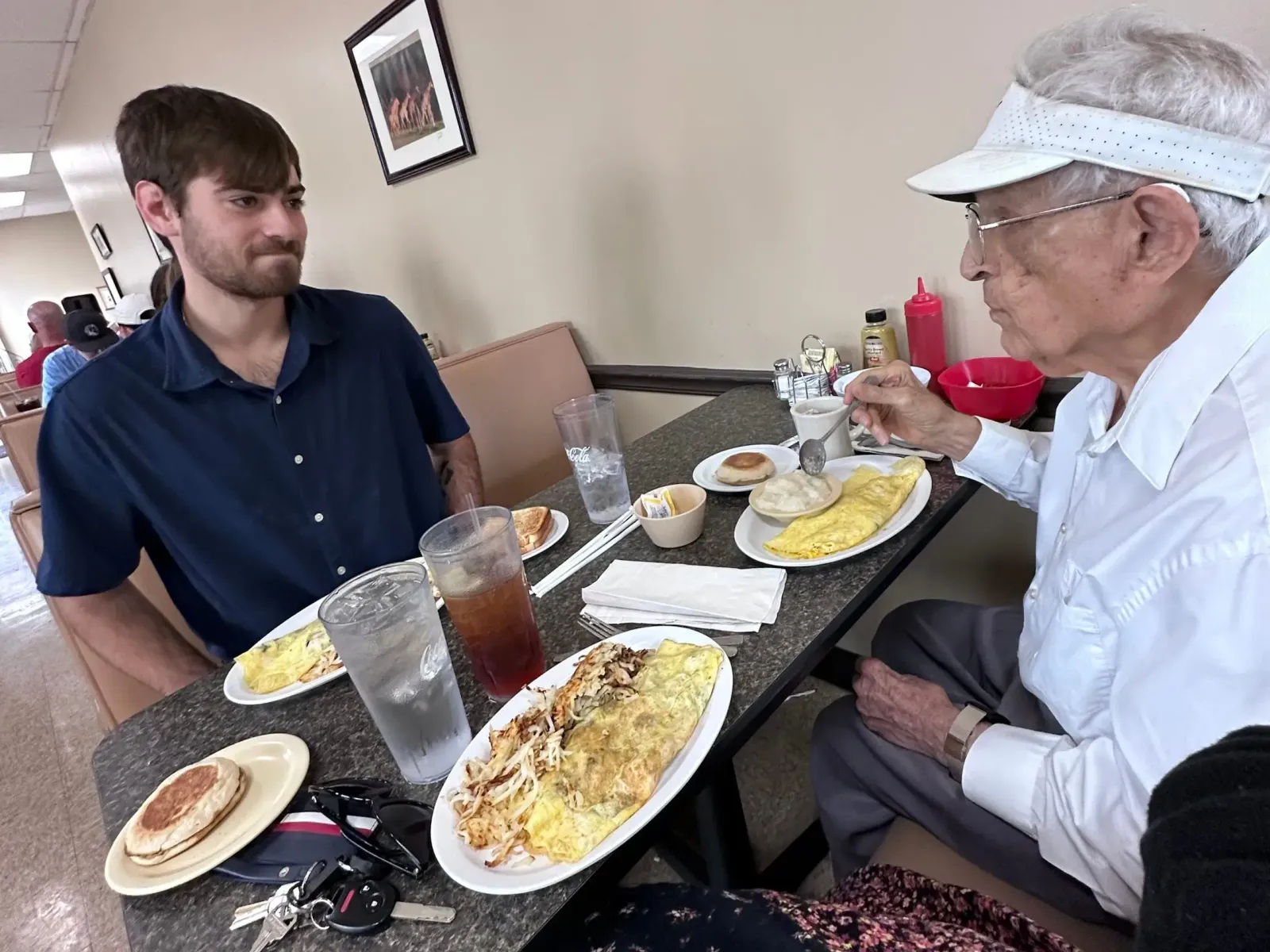
Jake Benoit, a 26-year-old Durham, North Carolina nursing student at Duke University, works part-time for Careyaya, an agency that matches young caregivers with older adults. His story shows how structured support, background checks, and platform-style matching can create durable bonds while he earns $18 to $26 an hour.
Jake Benoit did not set out to “network.” He set out to get through nursing school. The 26-year-old Durham, North Carolina student is studying for a master’s in nursing at Duke University, and one of the ways he supports himself is working for an agency called Careyaya, which employs young volunteers and students like him. Benoit describes the setup as a “Lyft for families who need eldercare”: families apply for the number of companionship hours they want, and they get matched with a background-checked carer.
In Benoit’s case, the match turned into a friendship he still talks about like it’s alive. One of his first clients was John, an ophthalmologist who retired at 94 two years before Benoit met him in the spring of 2024. Even with an age gap and mild dementia, Benoit says John became one of his best friends, driving him to church on Sundays, eating afterward, playing card games like Uno, and having nuanced conversations that Benoit found inspiring.
What’s interesting is that this is not “informal volunteering” dressed up as a mission. Benoit’s caregiving work is structured, and the structure matters. He says Careyaya trains carers to divert attention and help clients return to baseline contentment when agitation shows up. He cites practical techniques such as going on Spotify, asking about favorite music, and playing it. That kind of training is a major difference between a caregiver who shows up and one who can actually respond when the moment changes. In eldercare, the moment always changes.
Benoit also details the day-to-day tasks that translate companionship into measurable assistance. When John was ambulatory, Benoit would often help him walk to the restroom. He would make snacks and organize pill containers. Those tasks might sound small, but they are the kind of routine support that prevents tiny breakdowns from becoming bigger medical or safety problems, especially when dementia enters the picture.
The pay is part of the incentive story, too. Benoit says he is paid between $18 and $26 an hour. That range is meaningful for anyone evaluating eldercare employment as a serious part-time income stream, not just a résumé line. But Benoit’s emphasis is that the salary is only the beginning of value. He says the role has allowed him to find meaningful relationships with older adults. When John died, he says John’s daughter sent him the “longest, heartfelt email” that made him cry. The caregiving relationship, in other words, survives the shift.
From a market and operational perspective, Careyaya’s platform-style matching approach hints at why agencies and staffing models have been gaining attention in eldercare. Families want reliability. Care recipients want familiarity. Young carers often need both income and a pathway into healthcare. Benoit’s narrative ties all three together: he gets paid, he gets clinical-adjacent experience that supports his long-term goal, and the older clients get someone background-checked and trained. Benoit even frames the whole thing as an intergenerational win-win, and then backs it with examples.
After John, Benoit says he cared for other clients who “mean the world” to him. One example is an accomplished 85-year-old author who has traveled the world, with moderate mobility issues. Benoit says his job includes keeping her legs elevated and making sure she uses her compression device. That’s a reminder that eldercare is not only about conversation. It is also about adherence to care routines that protect circulation and reduce risk.
Benoit also describes working with an 86-year-old former US ambassador to the Middle East who “faithfully wrote his memoirs.” Benoit says they read through the pages and he asks clarifying questions. He says as the conversation progresses, it becomes easier for him to sustain longer trains of thought and his memory sharpens. That detail points to a second-order implication for operators: when you match a caregiver who can engage a client cognitively and emotionally, the benefits are not just comfort. They can look like improved conversation flow over time.
Finally, Benoit connects the caregiving work to his professional trajectory. He says he ultimately plans to be a nurse practitioner, and working with older adults is a “huge reason” he wants that future. He says he is not a religious man, but he drove John to church and would eat afterward, and he points to how hearing John’s sermon-related interpretations became inspiration. He also says they watched old movies like “Breakfast at Tiffany’s,” “Roman Holiday,” and “Lawrence of Arabia,” and he values how the older clients interpret the films.
For executives, investors, and boards watching eldercare staffing, Benoit’s story offers a clean takeaway: matching is not just logistics, it is the start of a care relationship that either holds up under cognitive shifts or collapses under them. Agencies that can pair background checks with training, and turn companionship into consistent routines, may create outcomes that show up in retention, word-of-mouth, and family trust. The strategic stake is simple: in a sector where trust is everything and needs compound daily, the best systems do not just fill shifts. They help people build the kind of connection that lasts beyond the hours.
This story's Key Insights and Take-aways are locked.
Create a free account to unlock Executive Actions for one credit.
Register to UnlockAlways free for Executives Club members. Join the Club
More in Business

Anthropic's S-1 reveals $80.7B loss as it races OpenAI to IPO
The Claude maker files publicly for a Nasdaq listing under 'ANT,' exposing staggering losses and a world-altering ambition before it can beat OpenAI to the market.

A flaw in PHP just forced governments to pull their own sites offline
European agencies from Belgium to Germany took websites dark to patch a critical weakness in the language behind almost 70% of the web, and the blast radius extends far beyond government portals.

BioWare shuts down, Mass Effect 5 dead after $55B EA buyout
The legendary RPG studio's closure lands months after a $55 billion investment group buyout of EA, raising tough questions for gaming's biggest acquirers.