
Nvidia CEO Jensen Huang says chip sales will double next year
A forecast that stretches the AI boom to six more quarters, raising the stakes for buyers, rivals, and regulators.

Nvidia CEO Jensen Huang said the company will sell twice as many chips next year, the latest forecast from the AI-chip leader pointing to massive growth for the next six quarters. For decision-makers, the projection confirms sustained AI demand and sets expectations for pricing, supply, and competitive positioning over the coming year.
Nvidia CEO Jensen Huang said the company will sell twice as many chips next year, a forecast that points to continuing massive growth for the next six quarters. It is the latest demand projection from the leader of the AI semiconductor market, and it signals that the boom powering Nvidia's historic run has no obvious off-ramp. For customers waiting on allocation, for competitors placing their own bets, and for executives planning AI budgets, that one sentence carries billions in consequences.
The doubling claim is not a revenue target in the traditional sense; it is a signal to the market that Nvidia sees demand for its processors remaining at extraordinary levels. The company's chips have become the default engine for training large AI models, and supply has historically been the bottleneck. If Huang's forecast holds, it would extend Nvidia's breakneck expansion to a sixth consecutive quarter of massive growth, cementing its position as the supplier the entire AI economy depends on. Every cloud provider, enterprise buyer, and AI start-up is effectively renting space on that roadmap.
Huang's comment is the latest forecast from Nvidia, and it gives the market something firmer than hope: a time frame. The company's rise has been one of the defining business stories of the decade, vaulting past trillion-dollar market valuations on the strength of its data-center GPU line, with quarterly results that have repeatedly beaten expectations. His projection suggests the next twelve months will look more like a continuation than a correction, and that matters because Nvidia's results have become a barometer for the entire AI trade. The hyperscalers that count as Nvidia's biggest customers, Amazon, Microsoft, Google, and Meta, will read this as a demand signal shaping billions in capital expenditure decisions.
The logistics are just as significant. Selling twice as many chips requires twice as much manufacturing capacity, advanced packaging, and memory, and Nvidia has historically depended on TSMC for its most cutting-edge production. The foundry has been expanding capacity in response to AI demand, but a doubling would pressure the entire chain, from high-bandwidth memory makers to power and cooling equipment for data centers. In practice, Huang's forecast is as much a promise to the supply chain as it is a message to Wall Street: gear up, because the orders are coming.
For rivals, the math is stark. AMD and a wave of custom silicon efforts from cloud providers are trying to break Nvidia's grip on AI compute, but the company retains the combination of software ecosystem, networking technology, and developer mindshare that makes switching costly. A doubling of volume next year would deepen that moat: more chips shipped means more customers locked into Nvidia's CUDA software stack and its networking gear. For challengers, the window to make a dent just got narrower.
There is also a regulatory dimension. Nvidia has faced export restrictions that limit which advanced chips it can sell to customers in certain countries, including China, as governments weigh the national-security implications of AI technology. Those curbs have historically forced the company to develop lower-spec products for constrained markets. A forecast of doubled shipments implies Nvidia sees enough demand elsewhere to keep growth at full throttle, and it will test how regulators respond to a more powerful player in a strategic technology.
For executives in any industry that consumes AI compute, the takeaway is straightforward: expect Nvidia's pricing power to remain formidable. When a supplier says demand will double, customer leverage does not improve. Companies planning AI roadmaps should consider allocation timelines, alternative suppliers, and whether project economics hold up if hardware costs keep rising. Scarcity is the forecast for next year, not abundance, and planning around scarcity is the difference between waiting in line and getting a delivery date.
The bigger picture: Huang's comment takes the open question, how long can this last?, and answers it: at least six more quarters. That gives investors and boardrooms something firm to plan around, and it raises the bar for anyone betting against the AI trade. For Nvidia, the challenge shifts from proving demand to proving it can deliver at scale, on time, without tripping over its own supply chain. For everyone else, the message is to treat AI infrastructure as a strategic bet with a known, expensive, and expanding price tag.
This story's Key Insights and Take-aways are locked.
Create a free account to unlock Executive Actions for one credit.
Register to UnlockAlways free for Executives Club members. Join the Club
More in Business
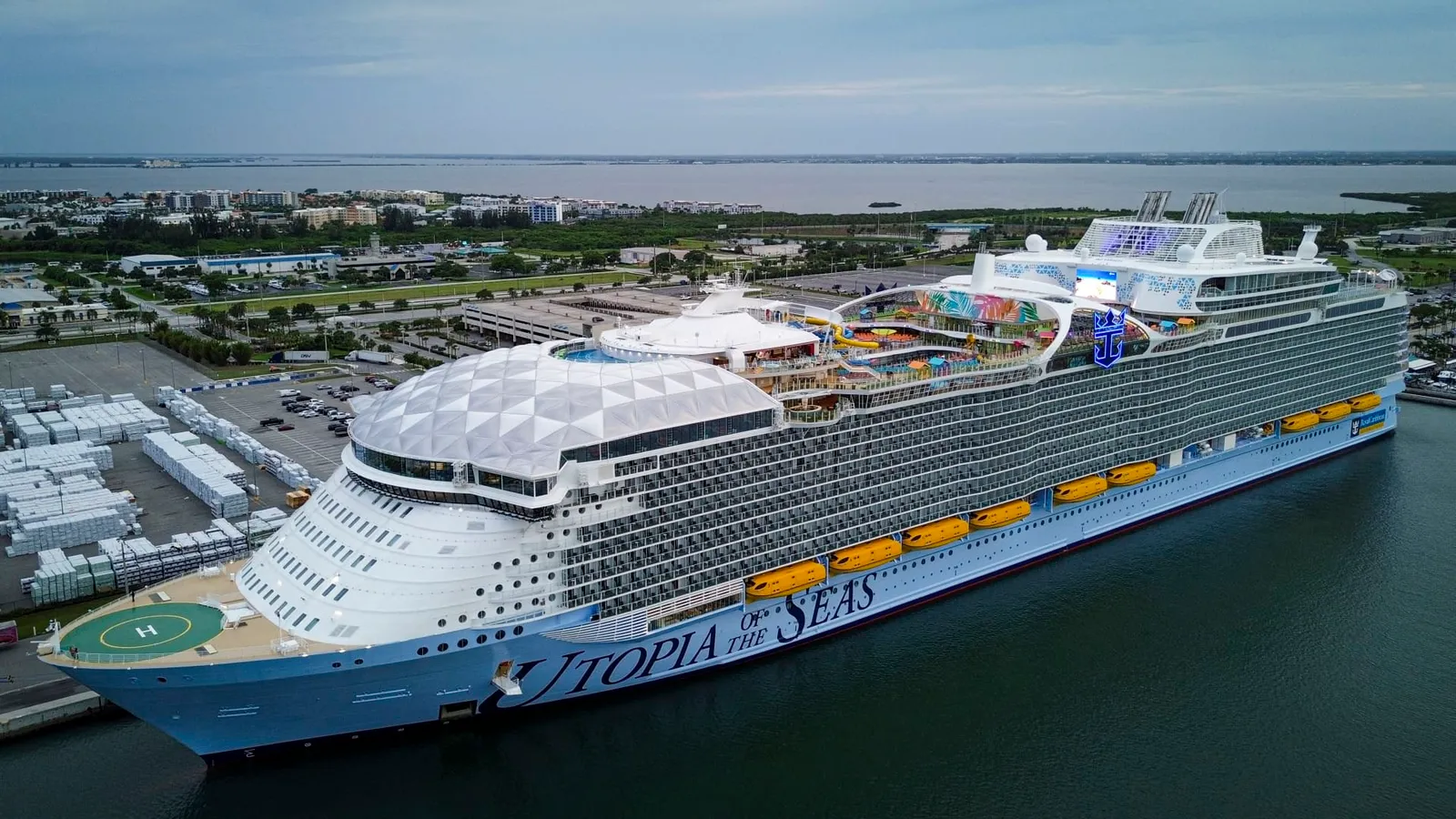
Royal Caribbean just spent $3B to own half of Sandals
The cruise giant is buying a 50% stake in the all-inclusive resort chain for $3 billion, a bet that land-based vacations are the next growth engine.

Paramount's Ellison: Merger Clearance Done, WBD Deal by Oct 1
David Ellison says the Paramount-WBD merger has full clearance after settling with state AGs, clearing the path for an October 1 close.

Paramount settles with 12 states, $110B Warner merger clears final hurdle
David Ellison's studio avoids a March trial and a $7M-a-day ticking fee by settling with state AGs over local job losses.