
Nvidia down 16% as China's DeepSeek sparks AI infrastructure rout
The Nasdaq leads a broad selloff in AI infrastructure stocks, wiping out billions and forcing a reckoning on the cost of AI compute.

Nvidia shares plunged 16% as U.S. markets tumbled in a broad AI rout sparked by China's DeepSeek. The selloff shows investors are suddenly questioning the pricing power and capital intensity behind the AI infrastructure buildout.
Nvidia lost 16% on the day, the sharpest single-session decline in recent memory for the world's most valuable chipmaker)Skip and the clearest proof yet that the AI trade can reverse as violently as it soared. The selloff came as U.S. stocks were mostly lower, with the Nasdaq leading the decline and pushing the broader market into what traders described as a shakeout. The trigger: China's DeepSeek, whose low-cost AI approach raised fresh doubts about whether the billions pouring into AI infrastructure will ever earn a proper return. The first two paragraphs rarely answer a headline this directly, but here it is: the 16% drop is real, and it is part of a rout where AI infrastructure makers saw losses in the double digits across the board. The catalyst is not a bad earnings report or a guidance cut; it is the arrival of a competitive alternative that threatens the economic logic of the entire AI buildout.
DeepSeek, a Chinese AI startup, has not released a shocking new product this week, but its emerging footprint in the AI model race is enough to spook investors. The concern is straightforward: if a Chinese lab can build powerful AI models with significantly fewer advanced chips, then the need for Nvidia's most expensive GPUs and the hyperscale data centers that house them may shrink. Suddenly, the forward-looking expectations baked into AI infrastructure valuations look less like a sure thing and more like a hope. The Nasdaq, heavily weighted with AI winners, bore the brunt of the selling as fund managers trimmed positions in names that had become crowded trades. Many AI infrastructure companies fell by double-digit percentages, erasing weeks of gains in a single session.
The rout reflects a deeper tension that has been building all year. AI infrastructure has been the most capital-intensive buildout in the history of computing, with tech giants and cloud providers committing hundreds of billions to data centers, networking gear, and semiconductors. Nvidia has been the primary beneficiary, posting record revenue and a market value above $3 trillion at recent peaks. The bull case rested on one assumption: scale. The more compute you throw at AI models, the better they get, and the more valuable the chips become. DeepSeek's method challenges that assumption directly. If smaller, cheaper models can achieve comparable results, the marginal value of each additional GPU declines, and the pricing power that made Nvidia the most important company in tech comes under threat.
This is not the first time AI stocks have wobbled, but the depth of the selloff suggests it is a different animal. Past pullbacks were often driven by profit-taking or macro jitters, and each time the dip was bought. This time, the worry is structural: what actually happened is a shift in the perceived supply-demand equation for AI compute. For decision-makers at companies building AI infrastructure, the day's price action is not a paper loss on a portfolio; it is a signal about the durability of their capital plans. A CFO who signed off on a $1 billion GPU cluster last year is now looking at a rapidly changing economic case for that investment. And a venture capitalist funding AI startups that are heavy on compute spending is being reminded that efficiency can disrupt even the most powerful monopoly.
There is also a geopolitical layer. DeepSeek is a Chinese company, and its rise comes amid years of U.S. export controls designed to limit China's access to advanced semiconductors. Those controls were meant to slow Chinese progress, but if DeepSeek achieved meaningful model quality under those constraints, it would challenge the assumption that cutting off chips also cuts off AI development. That could have broad effects on U.S. export policy, but for today the market is focused on the more immediate question: are the buying plans of hyperscalers about to change? In the absence of guidance from the major cloud providers, investors are guessing. And they are frequently guessing wrong in moments like this.
The strategic stakes for executives outside the tech sector are also real. Companies in finance, healthcare, and retail have been planning AI adoption around the expectation of high-performance, high-cost compute. A shift toward more efficient AI models would ease those costs and accelerate deployment, which is a positive for the broader economy, but it arrives as a shock to the vendors who built their roadmaps around a scarcity premium. Boardrooms that treated AI infrastructure as a safe, mandatory bet now face a more nuanced set of choices. Sticking with the old plan could mean overpaying for capacity; pivoting too early could mean missing the next wave. In other words, the same deep uncertainty that hit stock prices today is about to hit capital budgeting decisions across the Fortune 500.
The rout is a reminder that market narratives can turn in a single session. For months, the story of AI was one of unstoppable demand and ever-expanding compute needs. DeepSeek's arrival frames the story differently: what if AI gets cheaper and smarter with less hardware? The answer is not clear yet, and it will not be determined by one down day. But the people who run public companies, those who sign procurement contracts, and those who allocate capital are now asking a question they did not ask yesterday. That question, along with the 16% drop in Nvidia, will echo through earnings calls and infrastructure announcements for the rest of the quarter.
This story's Key Insights and Take-aways are locked.
Create a free account to unlock Executive Actions for one credit.
Register to UnlockAlways free for Executives Club members. Join the Club
More in Technology

SpaceX's AI engine just delivered a $4.4 billion profit quarter
The rocket giant's third-quarter net income shows AI demand is now a decisive force in the space economy.
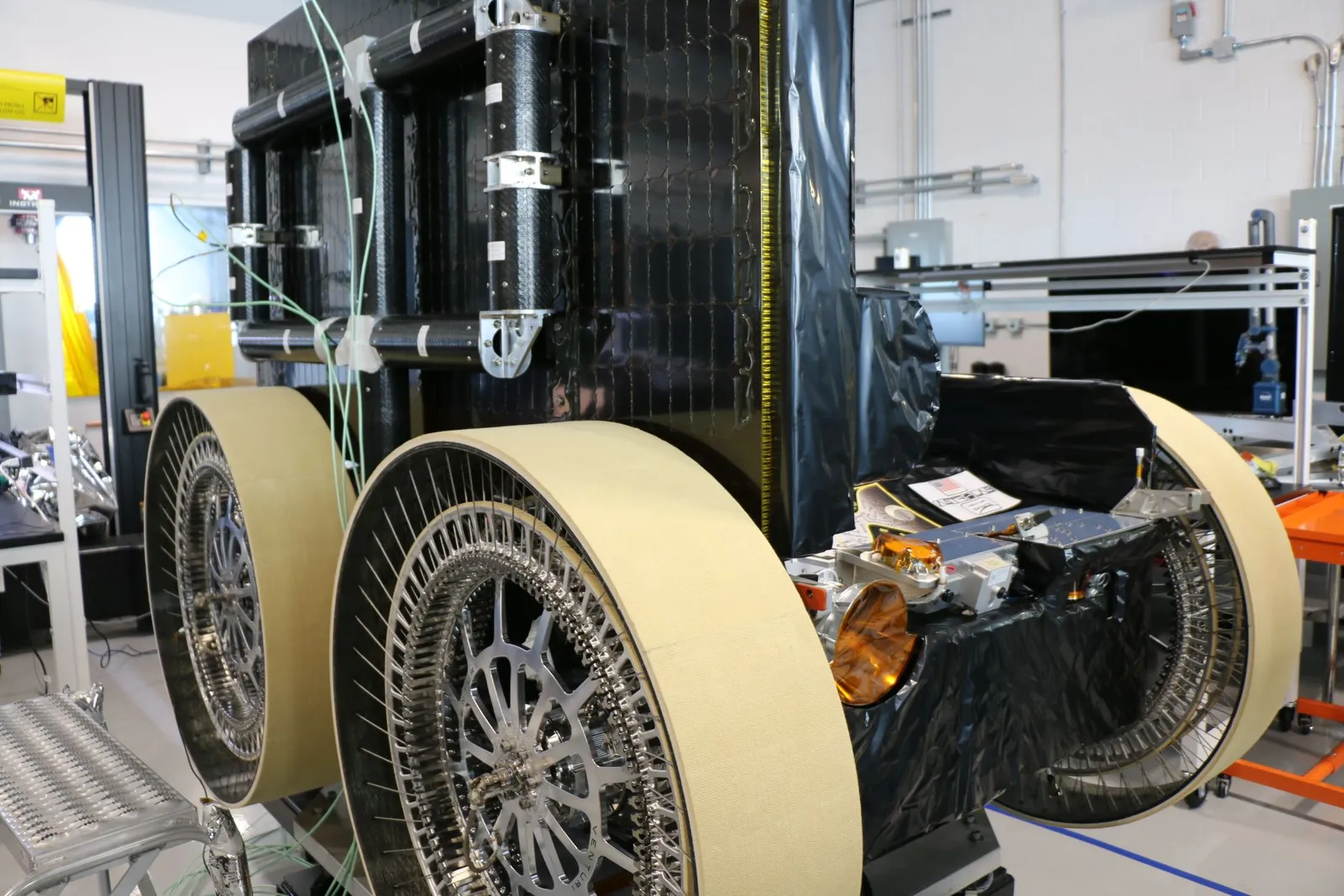
The moon's first supercomputer launches this year with AI aboard
Astrolab's FLIP rover will test HPE's Spaceborne Computer-4 at the lunar south pole, a milestone for edge computing, autonomous navigation and the commercial moon economy.

Meta's Muse hits 10M downloads in 40 days, beating AI rivals on retention
Muse's fast start puts it in rare company - and early data shows users stick around longer than ChatGPT or Gemini.