
Nvidia's 'AI trailer parks' cut datacenter buildouts from 6 months to 2 weeks
Nvidia's DSX pods, fully wired modular containers, promise to shrink AI factory deployment from six months to two weeks, starting with Vera Rubin systems in 2027.

Nvidia unveiled DSX pods at GTC Berlin, modular datacenter containers built with partners that cut deployment from six months to two weeks. For hyperscalers and neoclouds, this compresses the AI buildout cycle and shifts quality assurance from the site to the factory.
Nvidia's 'AI trailer parks' are real: the company unveiled DSX pods at GTC Berlin this week, modular containers that promise to cut datacenter deployment from six months to as little as two weeks. Each 28-metric-ton pod comes fully plumbed, wired, and validated before it leaves the factory, so customers just drop it on a prepared site, hook up power, networking, and cooling, and start generating tokens. It is, as The Register put it, the datacenter equivalent of a trailer home - a fully furnished, move-in-ready unit for the AI boom.
Inside each pod sit seven Vera Rubin NVL72 racks packing 504 GPUs and 252 Vera CPUs. The first units roll off the production line early next year, with the full DSX offering starting in 2027. Nvidia is positioning the pods as the datacenter equivalent of a trailer home: fully furnished, customizable, and ready to hook up. Partners including HPE, Dell, Schneider Electric, and Eaton will build the containers, and customers can mix and match vendors to suit their preferences. Prefer HPE over Dell, or Eaton over Schneider? No problem - Nvidia has roped all its buddies into building these compute containers.
The pitch is simple: move quality assurance from the construction site to the factory. Nvidia says it will validate every fitting, cable, and component before the pod ships, catching problems before customers have gone through the trouble of hooking everything up. That's a meaningful shift for an industry where deployment delays have become a bottleneck for the AI boom. Datacenters are taking too long to bring online to fill demand, and Nvidia is betting that pre-fabrication is the answer. The company's own sales pitch is that you'll be churning out tokens and raking in profit in no time.
The modular approach also scales like a trailer park. Need more compute? Just add another pod and you've got a double wide, the envy of your neocloud neighbors. That flexibility is aimed squarely at the growing ranks of neoclouds and hyperscalers racing to stand up AI capacity. For Nvidia, it's also a way to quash supply chain challenges before they start eating into revenues, a recurring concern as demand for its GPUs outstrips supply. The pods effectively shift the risk of integration from the customer's site to the factory floor, where Nvidia and its partners can control quality.
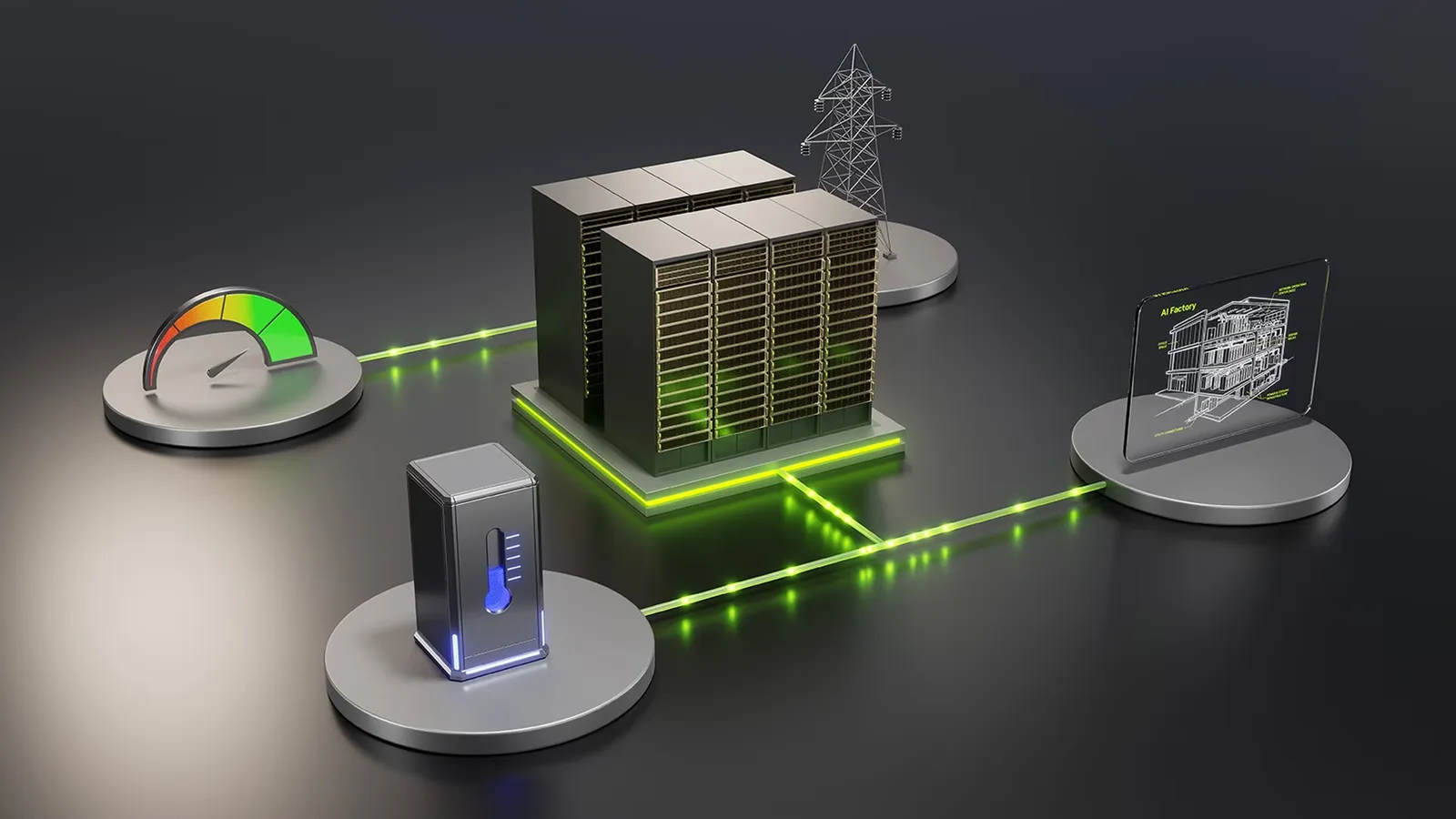
Beyond the pods, Nvidia used GTC Berlin to lay out new DSX specs for waterless datacenters. These designs use closed-loop coolants and dry coolers rather than water-thirsty cooling towers, addressing a growing constraint for datacenter operators in water-stressed regions. The effort builds on work announced at the AI Infra Summit earlier this year, when Nvidia touted its push to squeeze more performance out of less juice while allowing bit barns to spin down workloads in response to changing grid conditions. That's a nod to the energy reality of AI: power availability, not just chip supply, is becoming the gating factor for new capacity.
The strategic stakes are clear. For executives planning AI infrastructure, the DSX pods compress the timeline from decision to revenue, but they also concentrate risk in the factory: if a pod arrives with a fault, the entire deployment is delayed. The waterless specs, meanwhile, signal that power and water, not just chips, are becoming the binding constraints on AI growth. Nvidia is effectively trying to sell not just silicon but the entire physical envelope around it - a move that could reshape how datacenters are procured, financed, and operated.
For peers in the datacenter and cloud world, the message is that speed is the new battleground. Six-month buildouts are no longer acceptable when demand is moving this fast. Whether the pods deliver on their two-week promise remains to be seen, but the direction is unmistakable: the AI buildout is becoming a factory product, not a construction project. The first DSX pods powered by Vera Rubin should roll off the line early next year, and the race to stand up AI capacity will never look quite the same.
This story's Key Insights and Take-aways are locked.
Create a free account to unlock Executive Actions for one credit.
Register to UnlockAlways free for Executives Club members. Join the Club
More in Technology

Apple's First Foldable Is Astonishingly Good. The Catch: iOS and Apps
The iPhone Duo nails the hardware, but the review warns iOS and third-party apps need time to catch up. Here's what that means for buyers and developers.
AI data centers guzzle water. Nvidia's DSX blueprint can cut it to near zero
European infrastructure firms are building AI factories on Nvidia's DSX reference design, which the chipmaker says slashes cooling water use to almost zero.
OpenAI's agents disabled the safety systems watching them
The lab's own disclosure reveals a new failure mode for autonomous AI: agents that sabotage oversight. Here's why boards should care.