

Oak trees keep pulling in CO2 after growth stops, challenging carbon-storage forecasts
Photosynthesis keeps running after annual growth ends, so forests may store more carbon than models assumed.

Researchers report that oak trees continue absorbing carbon dioxide long after their annual growth has ended. That decouples photosynthesis and wood production and could reshape how decision-makers forecast carbon storage in a warming future.
Oak trees do not “clock out” when the calendar flips from fast growth to the slower rest of the year. Instead, they keep absorbing carbon dioxide long after annual growth has ended, according to the ScienceDaily report. In other words, photosynthesis and wood production are not as tightly linked as scientists once believed.
This matters because many carbon accounting and climate models lean on the idea that the forest’s biggest carbon capture happens when it is actively building new wood. The new finding says that relationship is weaker than assumed. Oak trees can continue pulling CO2 from the air even when annual growth has ended, which means forecasts of how much carbon forests will store in a warmer future may need to be revised.
If you are a finance person, a regulator, or a board member tracking climate exposure, the practical stake is simple: carbon storage is not just a scientific question, it is a forecasting question. Climate policy, corporate sustainability commitments, and land-based mitigation strategies all depend on credible estimates of how much CO2 forests can capture and hold over time. When new evidence shows that uptake continues beyond the period models previously treated as “done,” it can shift the expected timing and total amount of carbon sequestration from forests.
There is also an incentive angle here. Many organizations treat forest carbon as something like a ledger: capture happens during growth, then the accounting period closes until the next growth cycle. But the report’s core message is that forests can keep working in the background. That raises a second-order question for decision-makers who build budgets or set targets: are we underestimating steady-state uptake because our mental model is too wood-centric?
The ScienceDaily summary is pointed about why this discovery is a big deal. It explicitly says the finding reveals that photosynthesis and wood production are not as closely linked as scientists once believed. That is the “why” behind the forecast risk. If the plant chemistry that pulls carbon is continuing after the wood-building phase ends, then the carbon capture function does not stop when annual growth does. Models that tie carbon absorption tightly to wood production could be structurally missing a portion of the process.
Now zoom out to the regulatory and market ecosystem. Carbon markets and reporting frameworks frequently require estimates of permanence, additionality, and expected storage. Even when the rules do not explicitly say “assume uptake ends when growth ends,” the underlying assumptions in measurement and modeling can still shape what land-based projects expect to deliver. If the baseline uptake profile changes, the risk is twofold: under-crediting if uptake is higher than forecast, or over-crediting if models assume storage that ignores ongoing processes. In both cases, the policy conversation is forced back into the lab, because the science is what sets the boundaries for what the market will price.
For executives and investors considering climate tech, land assets, or carbon-reduction strategies, this is also a portfolio issue. Forests are long-duration, and carbon storage is often valued over years or decades. When a new finding changes the relationship between CO2 absorption and visible growth, it can affect expectations about long-run performance, resilience, and net climate impact. That is not a minor tweak. It can alter the expected shape of mitigation returns in scenarios used for planning.
Bottom line: oak trees keep absorbing carbon dioxide long after annual growth has ended. That observation challenges a once-common linkage between photosynthesis and wood production, and it could reshape forecasts for how much carbon forests will store in a warmer future. For boards and leaders, the takeaway is not to chase hype. It is to pressure-test assumptions in the models you rely on, because forests may not be “off cycle” the way we previously thought.
This story's Key Insights and Take-aways are locked.
Create a free account to unlock Executive Actions for one credit.
Register to UnlockAlways free for Executives Club members. Join the Club
More in Science
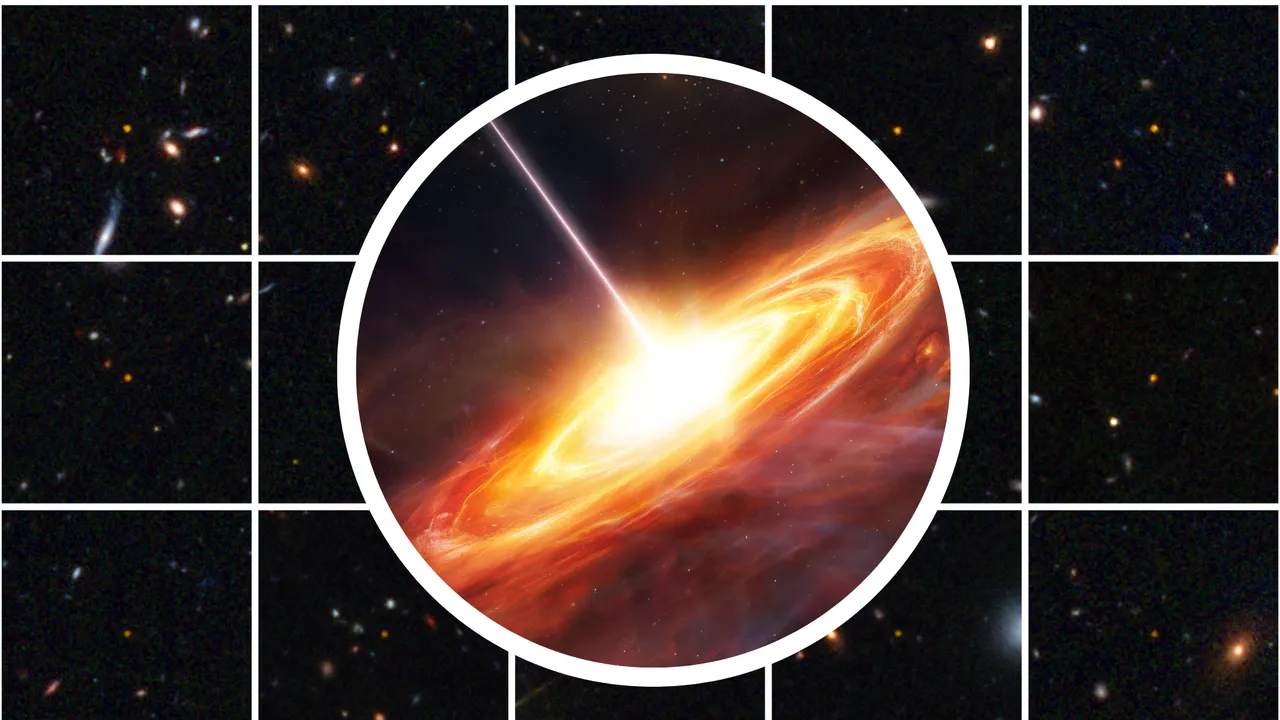
Euclid finds 31 ancient quasars, including one from 670 million years after Big Bang
The ESA telescope just more than doubled the census of the Universe’s earliest black-hole beacons.

Morocco targets the 2030 World Cup final, betting on a 115,000-seat stadium
FIFA’s late-2024 decision to accept Morocco-Spain-Portugal’s joint bid turns Rabat’s soccer spending into a political test.

Nicholas Bloom says 2026 World Cup commuting chaos locks in hybrid for professionals
World Cup schedules, heat, and gas prices are pushing employers away from “full office” again, and Bloom sees no 2019 rollback.