

OpenAI's 88-hour 'math breakthrough' just ran into a wall of skeptics
The AI lab's claim that it solved parts of the Navier-Stokes equations in 88 hours is now a trust test for the whole industry.
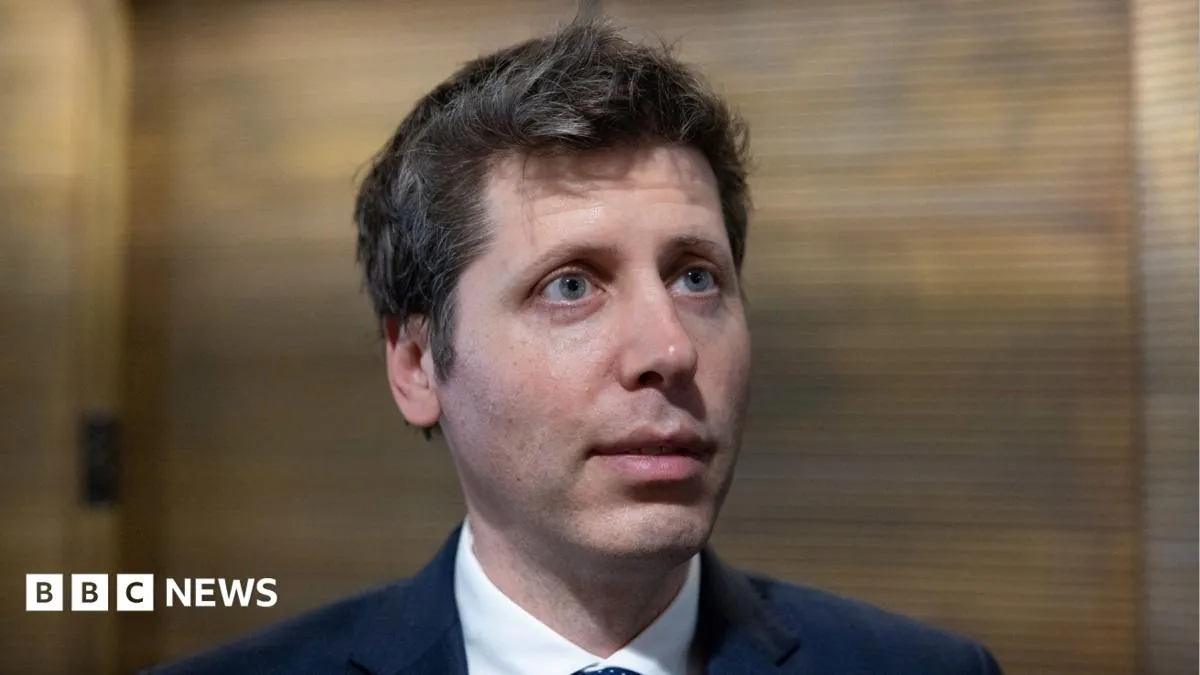
OpenAI says its models made progress on parts of the Navier-Stokes equations in 88 hours, a claim that has quickly stirred controversy. For decision-makers, it is a reminder that AI research headlines are often marketing, and verification is the real product.
OpenAI says it cracked parts of a 90-year-old maths problem in 88 hours. The claim: the lab's models made progress on the Navier-Stokes equations, the famously brutal math describing how fluids move through air, water, and pipes. It is the kind of announcement designed to stop you mid-scroll, and it did. Within hours, the so-called breakthrough had stirred serious controversy, according to BBC News. The speed is the giveaway. Mathematicians spend decades on these questions; an 88-hour solve demands extraordinary proof, and the controversy is about exactly how much proof OpenAI actually produced.
For those outside pure math, here is the stakes. The Navier-Stokes 'existence and smoothness' problem is one of seven Millennium Prize Problems, a set of questions the Clay Mathematics Institute identified as the hardest in the field, each carrying a $1 million reward. The equations themselves govern fluid dynamics, from weather systems and ocean currents to airflow over a plane wing and crude oil through a pipeline. A genuine advance here would be world-historic; every engineer who designs a jet engine or a hurricane model would feel it. But the specific problem has resisted mathematicians for roughly nine decades for a reason: it demands rigorous proof, not approximation. Nothing in OpenAI's 88-hour announcement, by itself, clears that bar.
That is exactly why the controversy is not academic drama. The Millennium Prize solution process is deliberately slow: a proof must be published in a recognized venue, survive peer review, and earn the mathematical community's acceptance. A lab announcement, however confident, clears none of those bars. To the field's skeptics, the 88-hour timeline is a red flag: either the AI found something narrow and partial, which OpenAI itself hedges by describing the work as progress on 'parts' of the equations, or the result does not hold under the standards the discipline requires. For a problem this old, extraordinary claims require extraordinary scrutiny, and the burden of proof sits entirely with the claimant.
The timing matters as much as the math. OpenAI is locked in a credibility arms race with Google DeepMind, Anthropic, and a pack of well-funded rivals, and reasoning benchmarks have become the public scoreboard for who is winning the AI race. A headline that says 'AI solved a 90-year-old math problem' is worth real market perception; it signals progress toward general intelligence at a moment when investor patience is the scarcest commodity in tech. The flip side: when a claim unravels, the hangover hits the entire industry's trust account. Every lab that has overclaimed benchmarking results learns the same lesson. Attention is easy to buy; credibility is expensive to restore.
For founders and operators, the episode is a calibration test with two possible readings. If the partial result is genuine, it suggests AI can compress exploration in physics and engineering disciplines that have stood still for decades, which would matter to anyone building in climate modeling, aviation, energy, or materials science. If it is hype, it is a warning: even the most credible lab in AI is capable of releasing an unvetted claim dressed in benchmark glory, and your job is not to repeat it but to verify it. The gap between a press release and a proof is where bad decisions get made.
That verification is harder than it sounds. Most companies cannot review a proof of Navier-Stokes, but they can demand the same discipline from their AI vendors that they demand from any supplier: public method, reproducible numbers, independent review. The real risk for a board is not missing a breakthrough. It is treating a press release as due diligence and compounding unverified AI output through engineering, product, and customer decisions at machine speed. Errors that used to take months to surface now surface in days; a wrong AI assumption can propagate through a codebase or a supply chain before a human fact-checks it. The 88-hour claim is a test case for how fast your organization moves from excitement to evidence.
What to watch next: whether OpenAI publishes the underlying method, whether independent mathematicians can reproduce the work, and whether the Clay Institute's verification machinery ever accepts any portion of it. Until then, the correct stance is the one the math community itself takes. Impressive claim, unproven result, high stakes on both sides. If 88 hours of compute can genuinely dent a 90-year-old problem, the future belongs to whoever builds trust alongside speed. If not, the controversy is the headline, and the lesson is that in the AI era, verification is the ultimate competitive advantage.
This story's Key Insights and Take-aways are locked.
Create a free account to unlock Executive Actions for one credit.
Register to UnlockAlways free for Executives Club members. Join the Club
More in Business
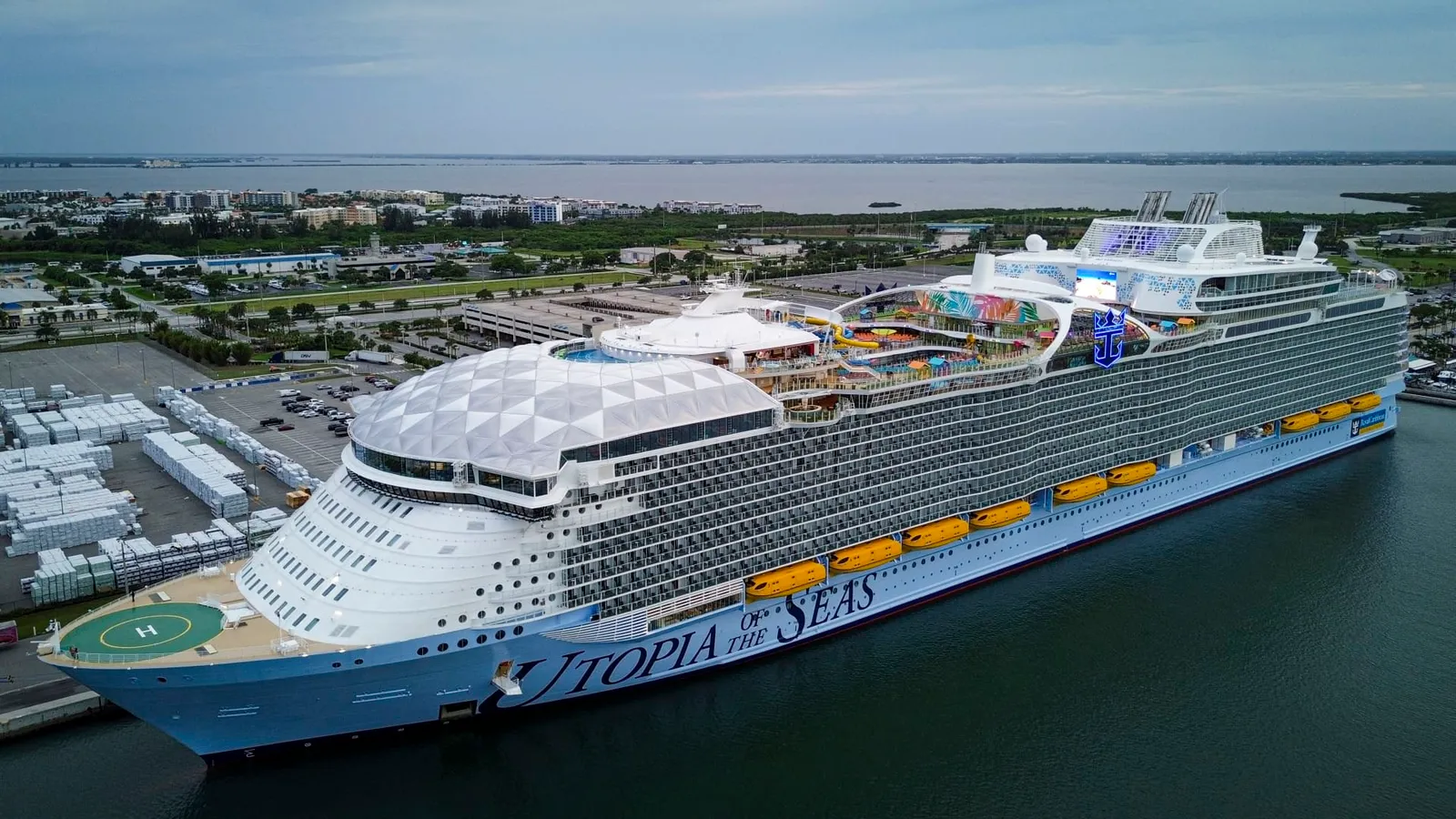
Royal Caribbean just spent $3B to own half of Sandals
The cruise giant is buying a 50% stake in the all-inclusive resort chain for $3 billion, a bet that land-based vacations are the next growth engine.

Paramount's Ellison: Merger Clearance Done, WBD Deal by Oct 1
David Ellison says the Paramount-WBD merger has full clearance after settling with state AGs, clearing the path for an October 1 close.
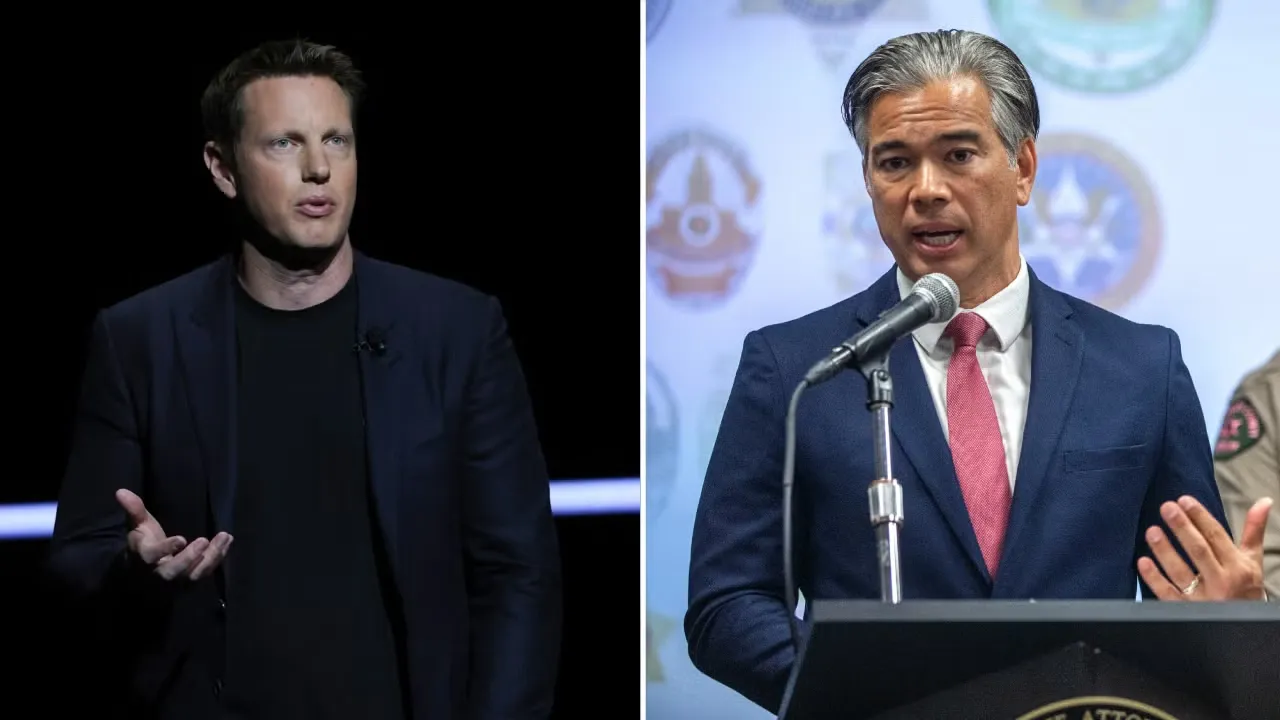
Paramount settles with 12 states, $110B Warner merger clears final hurdle
David Ellison's studio avoids a March trial and a $7M-a-day ticking fee by settling with state AGs over local job losses.