

OpenAI’s Dean Ball warns the Trump plan may bury open-weight AI with “FUD”
China’s Kimi K3 sparks an open-versus-closed AI fight, and Ball says regulation could steer companies away from open models.
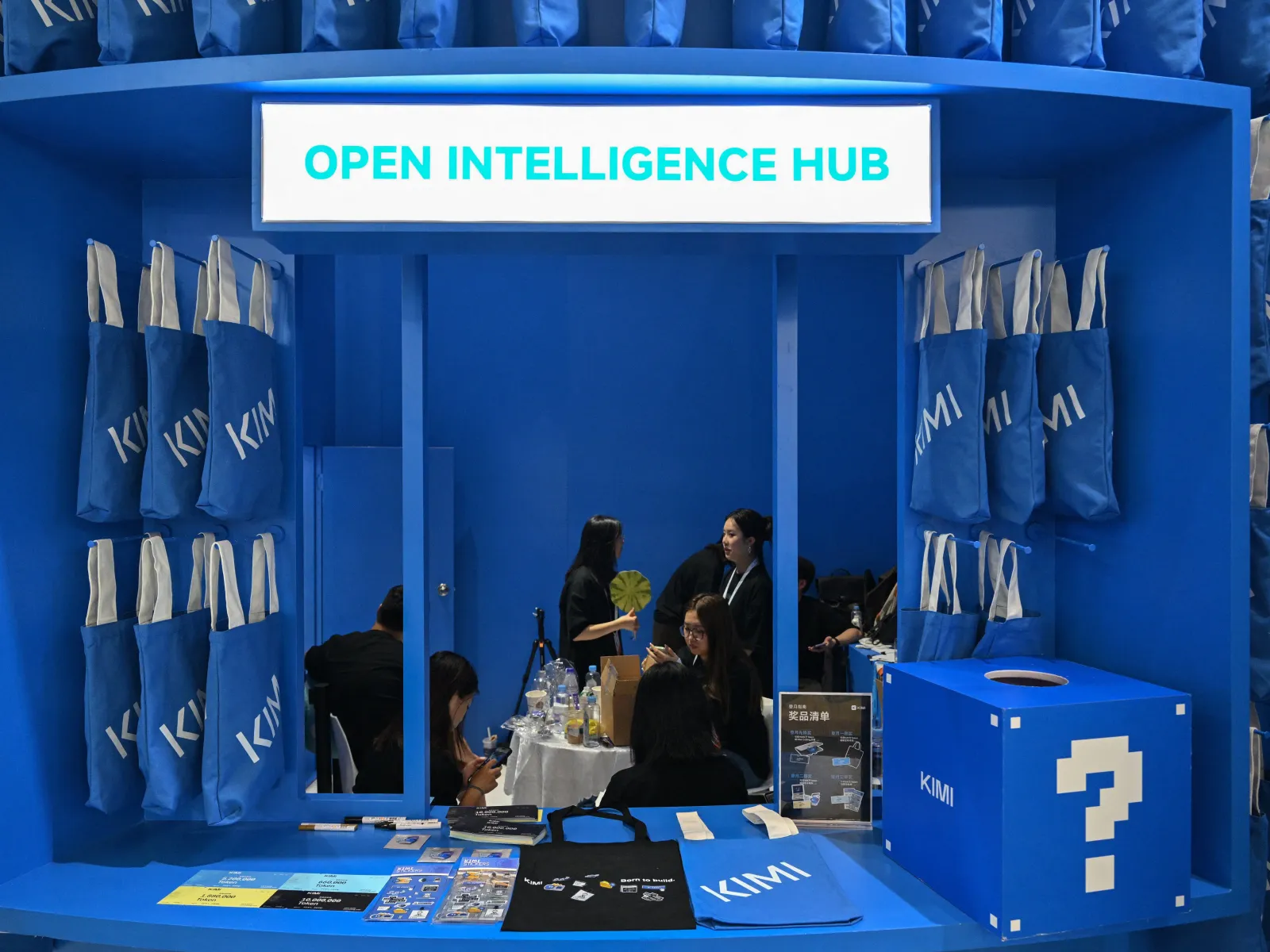
OpenAI’s head of strategy, Dean Ball, reacted to Moonshot AI’s Kimi K3 and argued on X that the Trump Administration could create regulatory risk around open-weight Chinese models. The dispute has split US AI leaders over open-weight openness versus closed systems, with both national security and business survival at stake.
Moonshot AI’s Kimi K3 debut last week sent a clear message to Silicon Valley: Chinese open-weight AI models are getting scary-good, fast. By most accounts, Kimi K3 rivals some leading US models at a fraction of the expense, and that performance jump ignited a new round of panic about whether China is closing in on the US in the race to corner the AI market. It also re-lit an older accusation: that Chinese labs are training on the backs of work already done by Anthropic, OpenAI, and Google, a point Business Insider’s Ali Barr had highlighted earlier with a specific irony.
But the most consequential part of this story might be less about benchmarks and more about what happens next in Washington. On X, OpenAI executive and now OpenAI head of strategy Dean Ball said he was “personally surprised” the Chinese state keeps allowing open sourcing of models that good, given “potential risks.” Then he went further, arguing that the open-weight strategy could lead to “AI communism” and that open models would be “decelerationist” because they “deter AI capex.” And the line that truly kicked off the firestorm was his guess that the Trump Administration could create “large amounts of regulatory risk” around open-weight Chinese models so that US companies avoid using them.
That is the strategic fault line now splitting American AI leadership. The Chinese approach is framed as embracing open-source or open-weight models, while the US approach is mostly closed. In practice, “open-weight” means sharing model weights, which can let researchers and companies build, fine-tune, and experiment more quickly than with a fully closed system. Closed models, by contrast, keep the maker in tighter control of security, access, and pricing, because the model is not just released as a downloadable artifact. Both camps argue they are protecting users and the ecosystem, but they disagree on whether openness accelerates safety or accelerates misuse.
Ball’s regulatory framing is where it stops being a technical debate and turns into an industry power struggle. He suggested manufacturing fear, uncertainty, and doubt, or “FUD,” through the regulatory process would cause most American companies to avoid open models. After criticism, he clarified this was a prediction, not a recommendation, and he supports open-source only “up until the point AI becomes too dangerous,” which he called a “sad day.” For many observers, that nuance did not matter as much as the implication: regulation could become a steering wheel, not a referee.
That is why the backlash was so swift and widespread. Some critics argued that using regulatory confusion to protect certain business models resembles “regulatory capture,” where agencies tasked with regulating an industry end up designing rules that effectively benefit industry insiders. From that perspective, the debate about open weights is not only about safety, it is also about market structure. Anthropic and OpenAI have maintained that their models are too powerful to be open, warning that openness would let anyone wield the tools for any end with little oversight. They also point to the commercial logic: closed systems give the maker more control, which can be crucial when the leading labs want to preserve their edge.
The dispute also pulled in venture capital heavyweights who have direct incentives and direct visibility into how this race gets funded. David Sacks, a venture capitalist who served as Trump’s first AI and crypto czar before moving in March to cochair the president’s Council of Advisors on Science and Technology, called Ball’s idea “completely unacceptable,” saying “We are at a critical inflection point in AI policy.” He also argued that “the weaponization of regulatory uncertainty” should not happen, writing that the leading closed labs already operate as a duopoly in terms of AI model revenue and want government to eliminate open-source competition. Chamath Palihapitiya, Sacks’ All-In podcast cohost and fellow VC, added that “The future is open source,” and said Silicon Valley should embrace it.
Not everyone sees it as a simple open-versus-close showdown about China catching up. A Citrini Research analyst who goes by Jukan on X disagreed with Ball and the Chinese takeover narrative. Jukan wrote that open-source models do not automatically position companies to dominate. He offered DeepSeek as an example, arguing it can operate more efficiently by keeping token costs lower, because of proprietary operations, not simply because of its open-source framework. In other words, even if openness speeds experimentation, it does not guarantee victory without the underlying cost and compute strategy.
Zoom out and you can see the second-order stakes for the executives and boards watching this. Open-weight openness could accelerate development across the ecosystem, raising the overall level of capability and potentially reshaping who captures revenue. Closed systems could preserve product control and monetization, but they also increase political exposure to accusations of throttling competition. If regulators lean toward “regulatory risk” strategies, the winners could be determined as much by rulemaking and compliance pathways as by model quality and compute efficiency.
For leaders in US AI, this is the kind of moment that makes strategy memos feel too slow. Kimi K3 might be the spark, but the real question is whether the next phase of the AI race is fought on technical performance, on economics, or in policy arenas where the definition of “too dangerous” can become a market lever. And if Ball’s prediction about using regulatory risk to steer behavior has any traction, it could determine which business models survive long after the leaderboard updates again.
This story's Key Insights and Take-aways are locked.
Create a free account to unlock Executive Actions for one credit.
Register to UnlockAlways free for Executives Club members. Join the Club
More in Technology

Google quietly links your phone number to every Android account on your SIM
Adding a SIM now ties your phone number to all Google accounts - and future accounts inherit it. Here's the security and privacy stakes.

Hijacker AI 'Skynet mode' runs 100,000 attack steps against exposed models
Symantec caught a criminal AI agent that borrows other models, steals data, and mines crypto; the only relief is no confirmed victims yet.

Nvidia's AI-financier shift faces its first big test as neoclouds stumble
A rout in neocloud stocks is forcing investors to weigh Nvidia's hidden exposure as both supplier and lender to the AI buildout.