

OpenAI’s head of Safety Systems Johannes Heidecke leaves as safety gets folded into research
What OpenAI says about reorganizing safety under Mia Glaese, and why the staff churn is now the story.

Johannes Heidecke, OpenAI’s head of Safety Systems, has left as OpenAI integrates safety more deeply across its research under Mia Glaese. The consequence for decision-makers: an increasingly public talent drain from safety leadership and a credibility stress test as regulators and partners watch.
Johannes Heidecke, OpenAI’s head of Safety Systems, is leaving the company, and OpenAI says it’s doing it as part of a reorganization that folds safety work more closely into its broader research organization under Mia Glaese. OpenAI framed the shift as a structural fix for how the company makes decisions, not a sign that safety is being deprioritized. But the timing lands inside a bigger, ongoing pattern: OpenAI has struggled to retain top safety and alignment leaders, and the cumulative departures are starting to look less like normal turnover and more like a governance and incentives problem.
Mark Chen, OpenAI’s chief research officer, told Business Insider that “We’re grateful for Johannes’ contributions to OpenAI,” and that the next chapter is “under Mia Glaese’s leadership across research and safety.” OpenAI also provided a rationale to Business Insider via a spokesperson: “you can’t make good safety decisions without understanding the underlying model capabilities, and you can’t make good research decisions without understanding the safety implications.” In plain English, OpenAI is arguing that the best safety outcomes come from tighter coupling between what models can do and how they’re assessed for risk.
That sounds sensible. The trouble is that OpenAI’s safety organization has been a revolving door for years, and some departing researchers have said the culture and prioritization did not match the rhetoric. When Jan Leike, who once co-led OpenAI’s superalignment team, left in May 2024, he wrote on X that “safety culture and processes have taken a backseat to shiny products.” He also said OpenAI needed to devote more resources to preparing for future models and called building machines smarter than humans an “inherently dangerous endeavor.” Whether or not you agree with his framing, it matters that these critiques were public, specific, and timed to leadership exits.
OpenAI’s current move comes with extra context because the company is actively reconsidering how research and safety relate internally. The reorganization is meant to integrate safety across research teams under Glaese, who will now serve as vice president of research and safety. That structure is also a response to an obvious technical interdependence: capabilities and safety are not separate worlds. Safety teams need to know what capabilities the model can reliably produce, and research teams need to understand safety implications of what they build. If those loops are loose, the decision-making can become performative. If they are tight, the company can iterate faster, test more, and reduce blind spots.
But integration is only half the story. The other half is staying power. Business Insider notes that Heidecke is “the latest in an ever-growing list of safety team leaders to quit the company.” The article lists eight leaders across safety-focused teams who have left in recent years, starting with OpenAI cofounder and chief scientist Ilya Sutskever, who left in May 2024 after co-leading the Superalignment initiative with Leike. When Sutskever departed, he said OpenAI’s progress had been “nothing short of miraculous,” and later founded Safe Superintelligence, an AI lab dedicated solely to its namesake.
Then came Leike, leaving days after Sutskever, and after that the Superalignment team itself was dissolved and its remaining employees were distributed across other research groups. In October 2024, Miles Brundage left OpenAI after six years, writing in a Substack essay that “Neither OpenAI nor any other frontier lab is ready, and the world is also not ready.” He also warned that staying at OpenAI is an implicit agreement with the company’s values and argued that people’s actions and statements contribute to culture and create path dependencies as OpenAI stewards extremely advanced capabilities.
Other departures show how wide the talent churn has been. Lilian Weng, previously leading OpenAI’s Safety Systems team, left in November 2024 after almost seven years. Andrea Vallone, head of model-policy safety research, left at the end of 2025 after leading how OpenAI’s models respond in sensitive situations, including emotional dependence and mental-health crises; she later joined Anthropic’s alignment team. Aleksander Madry, former head of preparedness, was moved out of that leadership role in 2024 and shifted to AI reasoning before leaving in May 2026. Joshua Achiam, formerly chief futurist, left in July after previously leading Mission Alignment. The specific reasons for some exits were public, and some were not, but the cumulative signal is hard to ignore.
There is also competitive and sector context that decision-makers can’t pretend isn’t there. Anthropic cofounder Dario Amodei left OpenAI in 2020 over disagreements about direction and approach to AI safety, and later founded Anthropic as an AI model maker committed to safety. Anthropic has also seen departures, including in February when Mrinank Sharm, who led its Safeguards Research Team, left and publicly warned that AI companies face pressure to “set aside what matters most.” Dylan Scand left this year to become OpenAI’s head of preparedness, suggesting not everyone’s “safety first” journey stays put inside one company.
For boards, investors, and partners, the second-order issue is credibility. When safety leadership changes repeatedly, regulators, enterprise customers, and internal staff all start asking whether safety is a standing capability or a temporary unit that gets reorganized when the product roadmap gets hot. Even OpenAI’s own mission statement, cited in the article, defines safety as core to its mission: enabling AI’s positive impacts by mitigating negative ones. The reorg language frames Heidecke’s exit as operational, with safety better embedded in research. The market, though, hears something else too: a structural stress test of whether OpenAI can retain the people most responsible for preventing bad outcomes.
In the end, Heidecke’s departure is not just a personnel update. It is a stress point in the governance model of frontier AI companies: can you align incentives so that safety leadership stays stable enough to do long-horizon work, while still iterating quickly on capabilities? OpenAI is betting that tighter integration under Mia Glaese will improve the feedback loops between model capabilities and safety implications. The question for everyone else watching is whether they will also be able to keep the leaders who are tasked with making those loops real, every day, not just on paper.
This story's Key Insights and Take-aways are locked.
Create a free account to unlock Executive Actions for one credit.
Register to UnlockAlways free for Executives Club members. Join the Club
More in Business
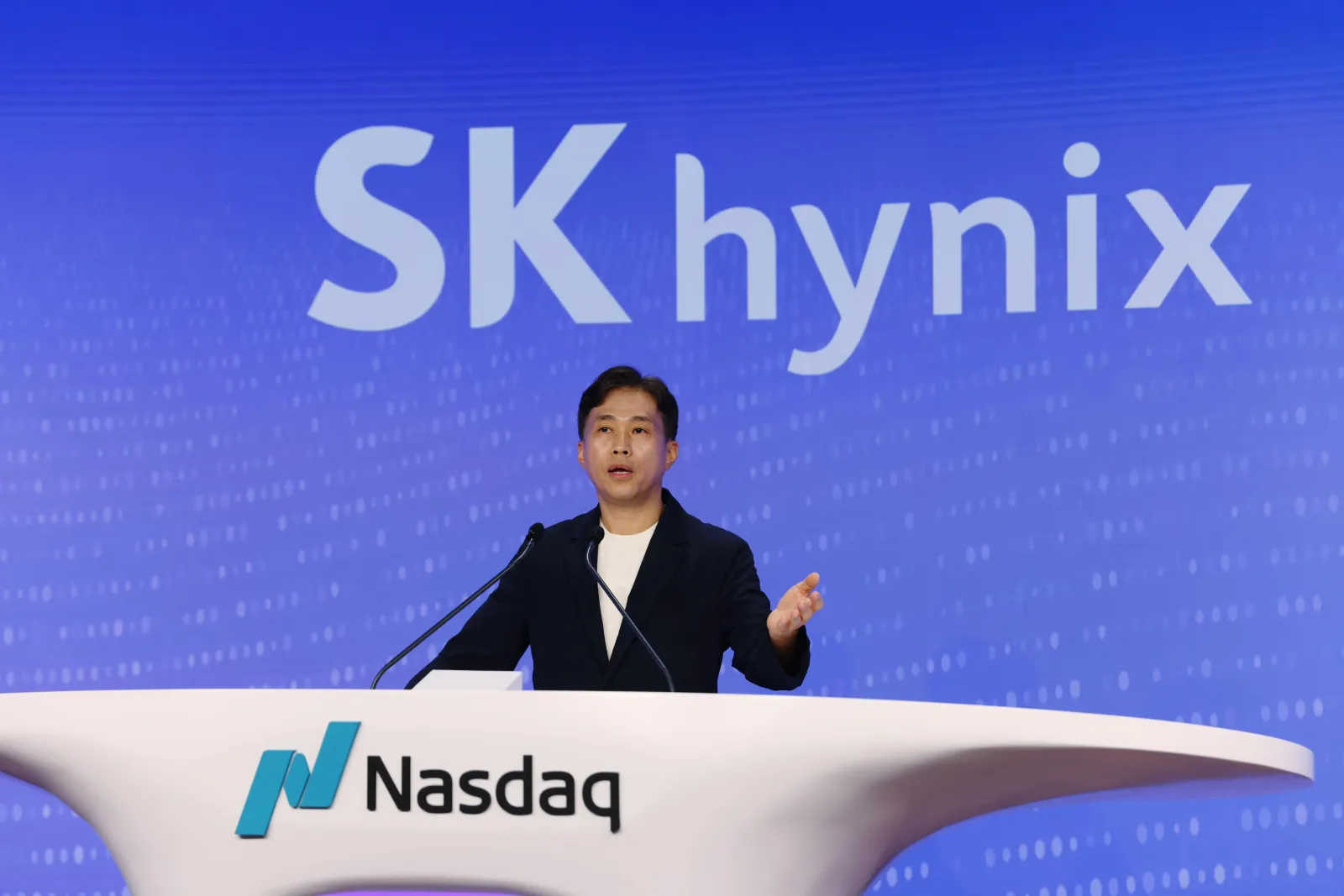
SK Hynix opens at $170, raises $26.5B, and tops foreign IPO records
In Friday's Wall Street debut, SK Hynix turns AI RAM demand into a $26.5B fundraising moment that rewrites comps.
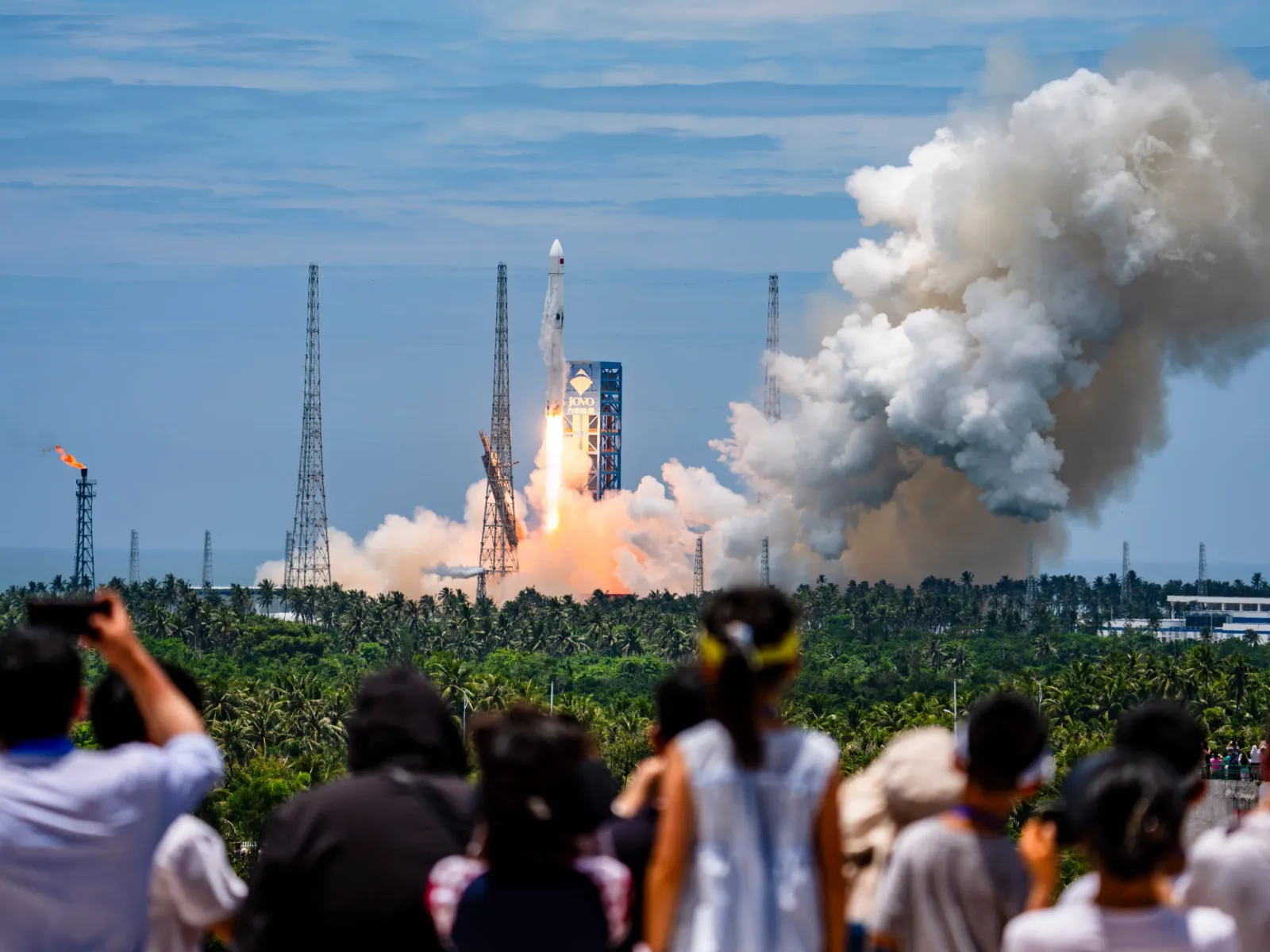
China lands a reusable Long March booster, a first that matches SpaceX and Blue Origin
A barge landing and net-based recovery move China from theory to proof, reshaping the reusability race and satellite ambitions.

AstraZeneca $27B wipeout as Wainua late trial misses cardiovascular target
A failed late-stage heart study triggered a swift market punishment, forcing investors and boards to reset timelines and risk.