

OpenAI's New Release Delivers Hundreds of Math Breakthroughs in a Single Day
Mathematicians call it 'breathtaking' and 'devastating' as A.I. moves the field's frontier overnight, forcing a rethink of research, funding, and the human role.

OpenAI's latest release generated hundreds of new A.I.-produced findings in higher mathematics in a single day, leaving mathematicians describing the moment as 'breathtaking' and 'devastating.' For decision-makers, the event signals that A.I. is now a frontier-moving force in abstract knowledge, with implications for research strategy, talent, and competitive advantage.
Hundreds of new A.I.-generated findings moved the frontiers of higher mathematics in a single day, according to a New York Times report on OpenAI's latest release. The scale is staggering: what might normally take a research community years to produce arrived in a 24-hour window, leaving mathematicians scrambling to absorb the implications. The report states plainly that the release 'dispelled any doubt that the field is forever changed.'
The reactions were visceral. Mathematicians quoted in the report described the moment as 'breathtaking' and 'devastating.' For an academic discipline built on slow, careful proof and peer review, the idea that a machine can generate hundreds of valid findings at once is both exhilarating and existentially unsettling. The 'devastating' part is the recognition that human mathematicians are no longer the sole authors of mathematical progress.
For context, higher mathematics has long been considered one of the last bastions of human intellectual superiority. A.I. systems have historically assisted with routine calculations or pattern recognition, but the production of novel, frontier-moving findings has been a distinctly human endeavor. This release changes that calculus overnight. The findings are not just incremental; they are described as moving the frontiers of higher math, meaning they open new questions and connections that researchers had not yet seen.
The immediate consequence is a verification bottleneck. Every new finding must be checked, formalized, and integrated into the broader body of knowledge. That work still requires human mathematicians, but the sheer volume of output means the bottleneck shifts from discovery to validation. Research institutions and funding agencies will need to rethink how they allocate resources: do they train more verifiers, or do they focus on the strategic selection of which A.I. findings to pursue? The answer will shape the next decade of mathematical research.
This also lands at a pivotal moment in the A.I. race. OpenAI, the company behind ChatGPT, has been locked in a high-stakes competition with other labs to demonstrate that models can do more than generate text or images. Mathematics is a particularly potent proving ground because it requires rigorous reasoning, not just statistical pattern matching. A release that produces hundreds of valid findings in a day sends a signal to investors, partners, and rivals that the frontier of A.I. capability is expanding faster than many anticipated. For tech executives, this is a competitive wake-up call.
For executives and boards, the implications extend beyond academia. If A.I. can accelerate discovery in mathematics, it can likely accelerate discovery in physics, engineering, materials science, and any field built on formal reasoning. Companies that rely on research and development should watch this space closely: the ability to generate and validate hypotheses at machine speed could compress product development cycles and reshape competitive moats. At the same time, the 'devastating' reaction is a reminder that these tools will disrupt labor markets in knowledge work, not just manual work. The mathematicians' mixed emotions are a preview of what every knowledge worker may feel as A.I. moves from assistant to originator.
The field is not obsolete; it is being redefined. The human role shifts from generating ideas to curating, verifying, and interpreting machine-generated ones. Leaders in any research-intensive organization should start planning for that shift now: invest in A.I. literacy, build verification pipelines, and create cultures where human judgment is applied to machine output rather than competing with it. The New York Times report makes clear that the genie is out of the bottle. 'Forever changed' is not hyperbole; it is a statement of fact. The question for decision-makers is not whether to engage with A.I.-driven discovery, but how quickly they can adapt their workflows, talent strategies, and quality controls. The mathematicians who thrive will be the ones who learn to ride the wave. The same will be true for companies.
This story's Key Insights and Take-aways are locked.
Create a free account to unlock Executive Actions for one credit.
Register to UnlockAlways free for Executives Club members. Join the Club
More in Science
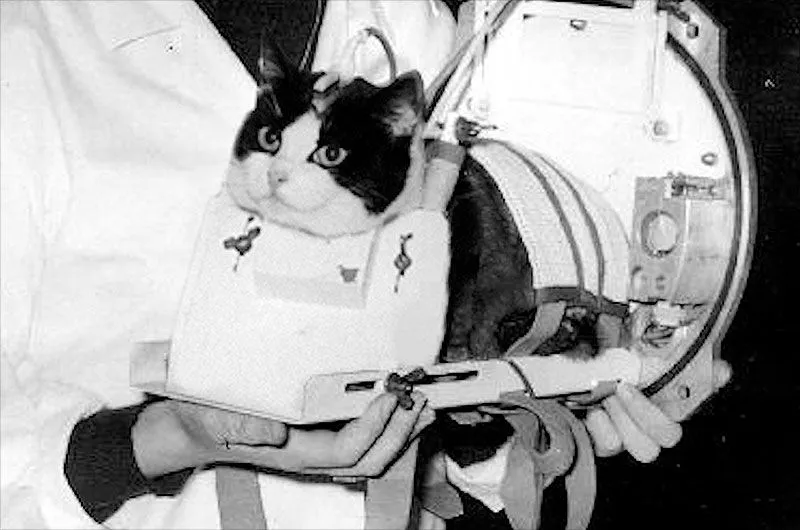
France euthanized Félicette, the first cat in space, two months after her flight
Félicette's 1963 flight made France a space-race player, but her euthanasia and a crowdfunded statue reveal how high-risk programs are remembered.

Ultracold atoms just created a 'fractional Fermi sea' that breaks quantum rules
A new quantum state challenges decades of theory and hints at 'super-Fermions,' with real stakes for quantum computing and materials science.

Bangladesh's 202,000 measles cases are a 'real warning' to other nations
The world's worst measles outbreak is spreading as routine vaccination falters. Here is why every country's immunization program should pay attention.