

Oregon AG withdraws bid to delay Paramount-Warner Bros. merger, deal now eyes July 22
A Friday court filing clears the path for a fast close, even as Oregon and other states still investigate the $111B deal.

Oregon's attorney general's office withdrew its motion to delay the closing of the Paramount-Warner Bros. merger, per a Friday filing in Multnomah County Circuit Court in Portland, Ore. That move could let the transaction close as soon as July 22 while state investigations into the $111 billion price tag continue.
Oregon's attorney general's office has withdrawn its motion to delay the closing of the Paramount-Warner Bros. merger, according to a filing submitted Friday in the Multnomah County Circuit Court in Portland, Ore. The practical effect is straightforward: the procedural brake Oregon asked for is now off, and the deal could close as soon as July 22.
That timing matters because regulators do not move at “business as usual” speed, even when the business wants to. The merger is valued at $111 billion, and the source notes that several states, including Oregon and California, are investigating whether the transaction should proceed on those terms. With Oregon no longer pushing for delay in this particular case posture, the question shifts from “will it be stopped right now” to “how much scrutiny can catch up before closing.”
To understand why this is a big deal for anyone watching media M&A, you have to remember how deals like this usually work. Large combinations are rarely just one courtroom event. They are a stack of approvals and challenges across different jurisdictions, different timing windows, and different legal theories. Even when one effort to delay gets pulled, other states can still pursue their own investigations. The source explicitly flags that investigations are ongoing, including in Oregon and California, even as Oregon withdraws this specific motion.
Also, delay motions are not purely about facts. They are about leverage. A party that wants the transaction paused can use time as a bargaining tool, whether for remedies, commitments, or simply forcing the parties to slow down and negotiate with regulators at the pace regulators prefer. Oregon withdrawing its motion does not automatically mean the underlying concerns disappeared. It does mean Oregon is no longer asking the Multnomah County Circuit Court for a delay on the procedural track that was previously activated.
From the companies' perspective, fast closings are not just a calendar win, they are operational and financial wins. The longer a deal stretches, the more everything gets exposed: integration planning has to keep running, funding arrangements can face shifting assumptions, and internal teams remain in a suspended state where they cannot fully commit to the “after” structure. When the source says the deal could close as soon as July 22, it is basically pointing to a world where these transaction mechanics could snap into place quickly, even while the broader regulatory ecosystem remains active.
For executives and boards at companies in the same universe, this is a reminder that antitrust timelines are increasingly “many-front” affairs rather than single-decision milestones. One state’s withdrawal can reduce friction in one procedural lane, but it does not end the investigation story. The source names Oregon and California as among the states investigating the $111 billion merger, which is the kind of fact that should keep deal teams focused on what happens after closing, not only before. If concerns are still being examined, decision-makers should assume that remedies, negotiations, and oversight can continue in some form even if a merger completes.
There is also a strategic implication that goes beyond Paramount and Warner Bros. When investors and competitors evaluate the odds of a major media consolidation, they look for patterns: which jurisdictions tend to push, which tend to settle, and which tend to let deals run with conditions. A withdrawal like this is a data point. It suggests that at least in this court posture, Oregon’s attorney general's office is not seeking to freeze the transaction. That can change how other parties model probability, especially when the source highlights an imminent possible closing date.
So the stake here is time, money, and uncertainty all at once. If closing accelerates toward July 22, the merged company can lock in corporate structure and move faster on integration. But the $111 billion price tag and the continuing investigations by states including Oregon and California mean oversight does not simply vanish. For executives who sit on boards or run corporate development, the lesson is to plan for both scenarios: a fast procedural path to closing and a regulatory afterlife that may still be in progress. In deals this large, you are never done at signing, and you are rarely fully done at closing either.
This story's Key Insights and Take-aways are locked.
Create a free account to unlock Executive Actions for one credit.
Register to UnlockAlways free for Executives Club members. Join the Club
More in Business
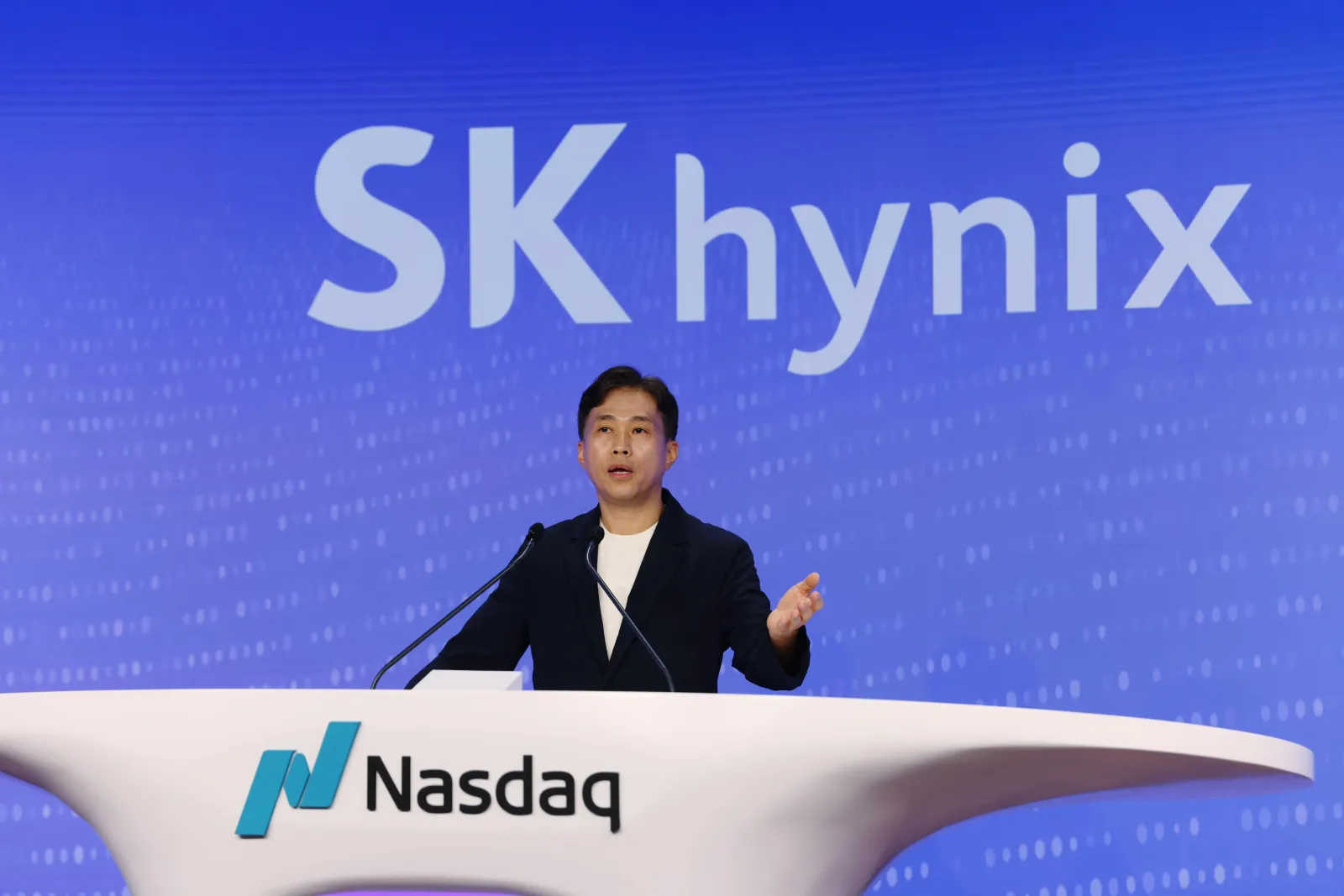
SK Hynix opens at $170, raises $26.5B, and tops foreign IPO records
In Friday's Wall Street debut, SK Hynix turns AI RAM demand into a $26.5B fundraising moment that rewrites comps.

China lands a reusable Long March booster, a first that matches SpaceX and Blue Origin
A barge landing and net-based recovery move China from theory to proof, reshaping the reusability race and satellite ambitions.

AstraZeneca $27B wipeout as Wainua late trial misses cardiovascular target
A failed late-stage heart study triggered a swift market punishment, forcing investors and boards to reset timelines and risk.