

Oxford finds Mars had molten-rock rivers 15 miles below the surface
A boundary under Mars, decoded from NASA Insight seismic data, points to deep magma pooling.
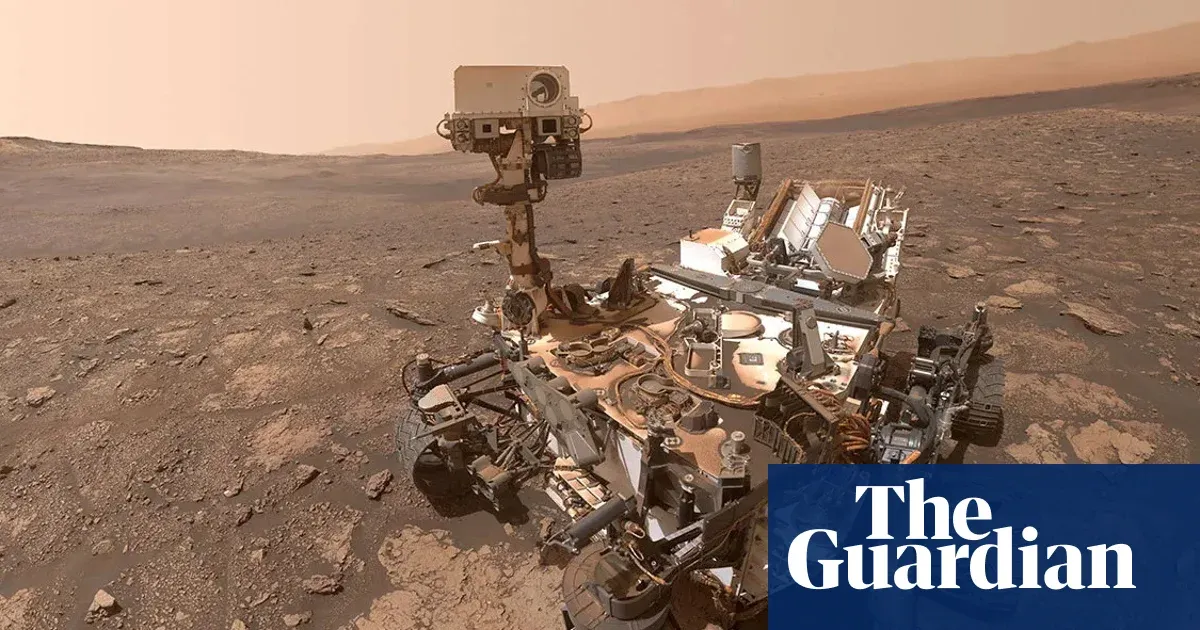
Researchers at the University of Oxford analyzed NASA's Insight Lander seismic records to study a mysterious boundary 15 miles (24km) below Mars' surface. Their Nature Astronomy findings suggest molten rock pooled underground and spread sideways for hundreds to thousands of miles, reshaping what Mars could have done.
Mars used to be quieter than we thought. A new study, led by researchers at the University of Oxford, analyzes NASA's Insight Lander data and points to a surprising kind of interior activity: molten rock pooling deep underground and spreading sideways for hundreds or even thousands of miles.
The key clue is a boundary located 15 miles (24km) below the surface of Mars. The researchers used seismic waves recorded by Insight, which was designed to listen for Mars. Specifically, Insight captured seismic waves caused by meteorite impacts and by Martian quakes. Those waves let the team probe what sits below the planet, and the pattern they saw, published in Nature Astronomy, narrows the most likely explanation for that boundary: deep magma that was not just present, but able to move and reshape the interior.
In plain terms, this is the difference between a planet that has a “rocky crust and some history” and a planet that once ran like a plumbing system. Molten rock pooling underground implies the interior could have been hot and dynamic enough to drive long-range processes. The study frames this as a widening of the selection of rocky planets that may once have been habitable, because Mars becomes a stronger candidate for having had conditions that could support life at some point.
That word, “habitable,” matters more than most people realize. In the planetary science world, it is not a switch that flips from unlivable to livable overnight. Habitability depends on environments that can persist and evolve, and heat is often the engine behind those environments. If molten rock pooled and stretched sideways, it suggests subsurface energy and chemical processing could have been more extensive than a simple story of cooling and shutdown. The source is careful on causality, but it clearly states the effect of the new evidence: it makes it more probable Mars could have supported life.
Now zoom out to why executives, investors, and anyone funding science programs should care. This is not “space trivia.” The habitable-planets search is an allocation problem. Governments and research funders must decide which targets, instruments, and missions deserve budget and political capital. When a study updates how plausible habitability is for Mars, it influences the roadmap for future missions and the questions future hardware must answer. Even if you are not funding Mars directly, you are funding the broader ecosystem: modeling, instrumentation, data processing, and the pipeline that turns signals into credible scientific narratives.
There is also a second-order effect in how this kind of discovery shapes trust in mission data. Insight’s seismic listening was not a glamorous headline compared to rockets and landings, but it was the type of measurement that can change interpretations years later. By linking quake and impact seismic waves to a specific sub-surface boundary, the research shows why seismology is strategically valuable. When boards and agencies talk about “return on scientific investment,” this is the kind of evidence they mean: data that can be reanalyzed, reinterpreted, and leveraged into stronger conclusions.
From a governance perspective, the Nature Astronomy publication matters because it sits inside the formal science validation loop. That matters for decision-makers who need to justify continued funding and risk. A credible peer-reviewed result helps departments and oversight bodies defend why they should keep spending. It also helps in managing stakeholder expectations: the more robust the measurement, the easier it is to say what is known, what is uncertain, and what the next mission should test.
Finally, the “rivers of magma” framing in the study is not just dramatic language. It points to a mechanism that could expand Mars’ timeline of potentially life-friendly processes. The discovery widens the selection of rocky planets that may once have been habitable, and it does so by making Mars itself a more credible example. For leaders watching the future of exploration, the strategic stake is clear: the baseline assumptions used to prioritize missions and investments can shift when a single layer of a planet reveals it once had deeper, longer-running heat than expected.
This story's Key Insights and Take-aways are locked.
Create a free account to unlock Executive Actions for one credit.
Register to UnlockAlways free for Executives Club members. Join the Club
More in Science

Alaska's 1,580-foot tsunami had warning signs. Scientists just found them.
Rapid glacier retreat, heavy rainfall, and thousands of tiny tremors preceded Alaska's 1,580-foot tsunami, a warning for every coastal community in a warming world.

The rare mutation that lets high-risk brains dodge Alzheimer's
Scientists found a natural defense against protein buildup, opening a new path to preventive treatments.

3,000 steps a day may halve Alzheimer's decline, study finds
New research links a modest daily walk to less tau buildup and nearly half the cognitive and functional decline, even for those with early signs.