

Palmer Luckey's Warhound exits stealth with $200M for genetically modified military dogs
The Oculus founder's new venture has $200 million to build bioengineered 'elite working dogs' with advanced armor, and defense and biotech should pay attention.
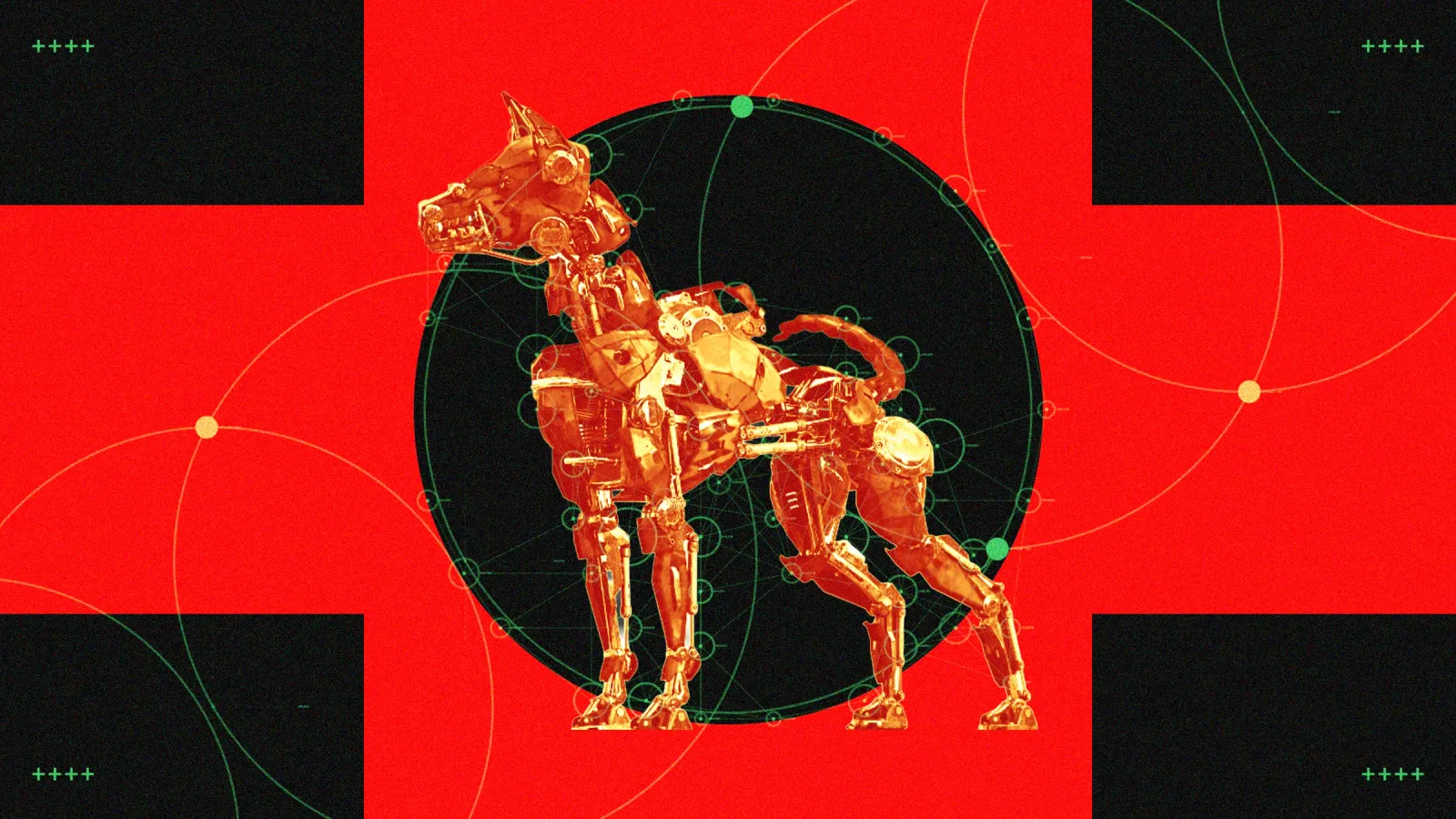
Palmer Luckey, the Oculus founder, launched Warhound out of stealth on Wednesday with $200 million in funding to create genetically modified 'elite working dogs' equipped with advanced body armor. The move signals a new frontier where biotech meets military hardware, and it could force incumbents in defense and security to rethink their R&D priorities.
Palmer Luckey, the Oculus founder turned defense entrepreneur, has a new project: Warhound, a startup that emerged from stealth on Wednesday with $200 million in funding and a mission to build 'elite working dogs' equipped with 'advanced body armor.' The company is betting that genetic modification and cutting-edge materials can produce canines purpose-built for military and security work, a concept that sounds like science fiction but now has serious capital behind it.
The $200 million figure is the first thing to stop on. That is a massive war chest for a company that has yet to reveal a product, and it immediately puts Warhound in the top tier of well-funded defense tech startups. For context, Luckey's previous company, Anduril Industries, which builds autonomous defense systems, raised hundreds of millions over several rounds before reaching a multi-billion-dollar valuation. With Warhound, Luckey is applying the same playbook: announce a bold vision, raise big money, and move fast to deliver something the Pentagon and allied forces might want. The funding also signals that investors see a real market for bioengineered animals, not just a novelty.
Luckey is no stranger to controversy or big bets. He sold Oculus to Facebook for $2 billion in 2014, then left to found Anduril in 2017, a company that has become a major defense contractor with a focus on AI-powered surveillance and autonomous vehicles. His pivot to genetically modified dogs is a natural extension of his belief that technology can solve national security problems, but it also raises questions about where the line between biology and engineering should be drawn. Luckey has also been a polarizing figure in Silicon Valley, known for his libertarian views and his support for Trump, which led to his departure from Facebook. That history adds a layer of political and cultural tension to Warhound's debut.
The specifics of Warhound's technology remain under wraps. The company has not disclosed which genes it plans to edit, what traits it is targeting, or how the 'advanced body armor' will integrate with the animals. But the mission statement suggests a future where working dogs are not just trained but engineered, with enhanced strength, endurance, sensory perception, or resilience to extreme environments. The armor could include sensors, communication gear, or ballistic protection, turning a dog into a node in a networked battlefield. It is a vision that blends the oldest form of animal partnership with the newest tools of genetic science.
This is not just a novelty. Military working dogs are already used for bomb detection, patrol, and search-and-rescue, and they have a long history of service. But they are limited by biology. Genetic modification could push those limits, creating animals that are faster, stronger, or better able to withstand heat, cold, or toxic environments. The potential operational advantages are obvious, which is why investors are willing to bet $200 million on the idea. The global market for military working dogs is small but growing, and the U.S. military alone has thousands of dogs in service. If Warhound can deliver even a modest improvement in capability, the payoff could be significant.
However, the road to deployment is fraught with regulatory and ethical hurdles. Genetically modified animals for commercial or military use face scrutiny from agencies like the FDA and USDA, and the Department of Defense has its own procurement and testing standards. Animal welfare groups are likely to object to the creation of animals designed for combat, and there are unresolved questions about the long-term health and welfare of these creatures. International treaties on biological weapons and the ethics of using modified organisms in warfare could also come into play. The U.S. military has strict rules about the treatment of working dogs, and any genetic modifications would need to pass rigorous safety and efficacy reviews.
For the defense industry, Warhound's emergence is a signal that biotech is becoming a core component of national security strategy. Traditional defense primes like Lockheed Martin and Raytheon have focused on hardware and software, but the integration of living organisms into military systems is a new frontier. This could spur a wave of investment in bioengineered solutions, from enhanced soldiers to synthetic biology for logistics and medical applications. Startups that can navigate the regulatory maze and prove their technology will be well positioned. The $200 million round also validates the idea that venture capital can flow into areas that were once the domain of government labs.
For executives and boards, the takeaway is clear: the intersection of biology and defense is no longer theoretical. Luckey's track record suggests he can turn audacious ideas into real products, and $200 million gives Warhound the runway to try. Companies in defense, biotech, and security should monitor Warhound's progress, assess the competitive landscape, and consider whether their own R&D pipelines need a biological component. The dogs are coming, and they are not just man's best friend anymore. The question is whether the rest of the industry will adapt before Warhound sets the standard.
This story's Key Insights and Take-aways are locked.
Create a free account to unlock Executive Actions for one credit.
Register to UnlockAlways free for Executives Club members. Join the Club
More in Business
A flaw in PHP just forced governments to pull their own sites offline
European agencies from Belgium to Germany took websites dark to patch a critical weakness in the language behind almost 70% of the web, and the blast radius extends far beyond government portals.

BioWare shuts down, Mass Effect 5 dead after $55B EA buyout
The legendary RPG studio's closure lands months after a $55 billion investment group buyout of EA, raising tough questions for gaming's biggest acquirers.
Musk barred from the room as Tesla, SpaceX boards weigh $3.5 trillion merger
The CEO of both companies is a 'conflicted party' watching independent directors negotiate a tie-up that would create a $3.5 trillion giant he would own about a third of.