

Palworld publishing chief John Buckley says ARK, No Man's Sky, Enshrouded depend on “making sense.”
Buckley lays out the crossover logic, and why asset work, not wishlists, decides the timeline.
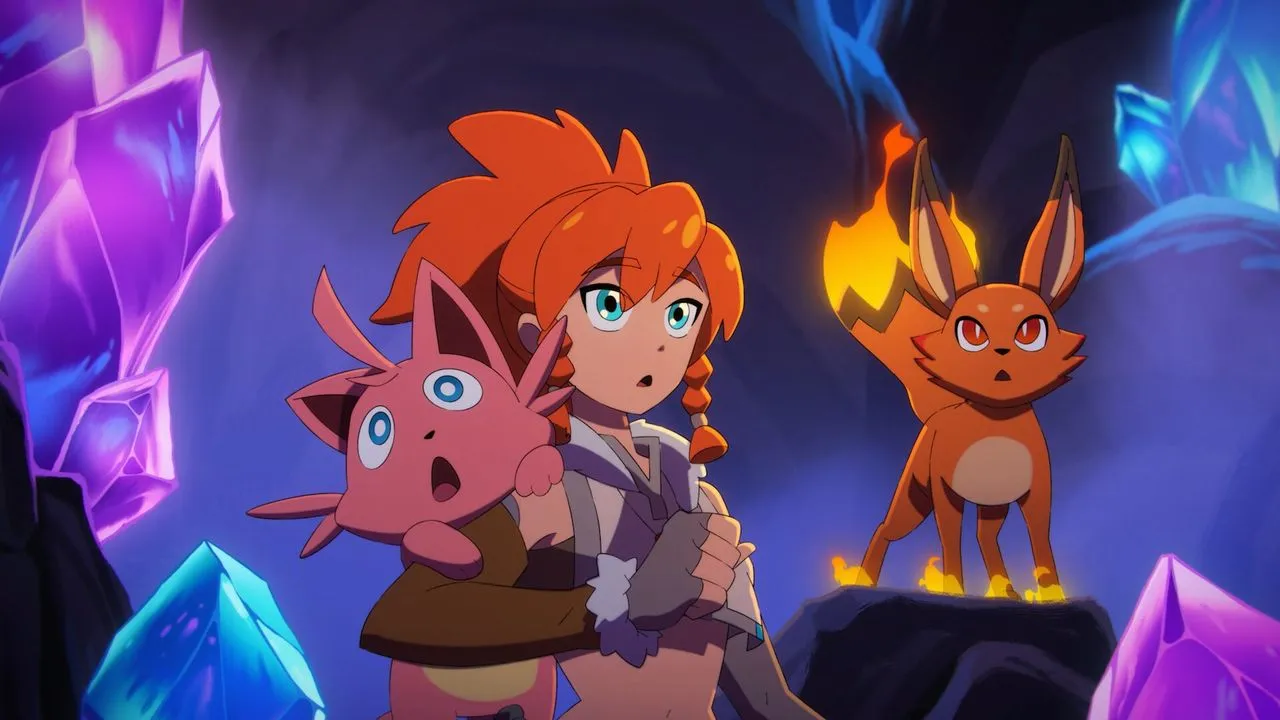
Palworld publishing chief John Buckley says Pocketpair wants to collaborate with games like ARK, No Man's Sky, and Enshrouded, but those crossovers only happen if they “make sense” logistically. The implication for publishers and operators: canon and production reality, not hype, will govern which IP crossovers actually ship.
Palworld publishing chief John “Bucky” Buckley just basically gave crossovers a reality check: Pocketpair would do an ARK, No Man's Sky, or Enshrouded collaboration “tomorrow” only if they could “make it make sense.” He told Game8 that while he wants the crossovers, the hard part is not the imagination. It is the logistics, especially asset collaborations that take time and planning.
That “make it make sense” line is the entire story. Buckley says they are close to Studio Wildcard already, including releasing a bundle with ARK, but “actual asset collaborations [take] a lot of time.” He even frames the problem in plain, visual terms: “How do you put dinosaurs in Palworld? It's hard to figure that out.” So the crossover question is not “would it be cool?” It is “can you integrate it without breaking the game’s logic, pipeline, and effort budget?”
To see why executives should care, look at how Palworld has handled collaboration so far. Pocketpair has not treated IP crossovers as a once-a-year marketing stunt. Last year, the Terraria crossover delivered a themed dungeon, weapons, and armor, plus a new crossover raid boss, and even fishing. Later that same year, Pocketpair added an Ultrakill collaboration that introduced new guns and base customization. Those updates suggest a pattern: when Pocketpair does collaborate, it does so by building playable content that fits the Palworld loop, not by slapping on superficial skins.
That matters because crossovers are where production complexity quietly multiplies. Asset collaborations are time-consuming by default, because they require more than just art files. You need compatibility across systems, animation, balance, and how the new elements interact with existing mechanics and progression. Buckley’s dinosaur example is more than a joke. Dinosaurs imply a whole chain: model and animation work, gameplay and balance decisions, and how those Pals would fit into the game’s canonical ecosystem. If that chain cannot be completed efficiently, the “tomorrow” timeline turns into a longer wait.
The other reason Buckley’s logic is a big deal is that it keeps incentives aligned between the developer and the publisher side of the house. Publishing chiefs usually live and die by launch windows, update cadence, and measurable player retention. Crossovers can drive engagement, but only if they land as actual content updates players can use, not as feature promises that become evergreen “soon” posts. Buckley’s framing signals that he is trying to prevent “wishcasting” from overrunning roadmap discipline.
Even his ARK comments reveal a specific kind of relationship-building that executives recognize immediately. Buckley says Pocketpair is “very close to those guys” because they “just released a bundle with them.” That indicates there is collaboration appetite and commercial alignment. But it also highlights a two-step reality: bundles are one thing, and asset collaborations are another. Bundles can be faster because they often involve packaged access or simpler integrations. Asset collaborations demand deeper work, and Buckley makes it explicit that the time cost is the gating factor.
Buckley also names two additional crossover targets: Enshrouded and No Man's Sky. But the conditional logic is the same. “If we could make it make sense, we would do it tomorrow,” he said. No Man's Sky in particular has a natural audience fit with Palworld’s “collect, customize, explore” energy, but Buckley is still emphasizing logistics. That is a subtle warning to anyone who assumes audience match automatically equals feasibility. Crossovers need to be coherent inside the game world, and they need production schedules to survive contact with reality.
There is also an operational backdrop here: Palworld’s ongoing update work. The article notes that Palworld 1.0’s first update stops teleporting that could temporarily freeze your game and discard save data “unintentionally after certain operations.” That kind of stability fix is not the sexy part of publishing, but it is the prerequisite for making big content drops land. If your base game loop is unstable, crossover assets become even harder to integrate safely, because you do not want new content to amplify bugs or complicate support.
So what should executives take from Buckley’s comments? For founders and publishers eyeing crossovers, the strategic stake is simple: IP collabs are not just brand chemistry, they are engineering, production, and logic problems. Buckley is telling you the pipeline will decide the calendar. If you are planning your own cross-IP roadmap, the winning question is not “which universe would print best?” It is “can we integrate it in a way that makes sense, ships reliably, and respects canonical game logic, not just marketing timelines?”
This story's Key Insights and Take-aways are locked.
Create a free account to unlock Executive Actions for one credit.
Register to UnlockAlways free for Executives Club members. Join the Club
More in Entertainment

12TB Steam 'teraleak' goes beyond Valve: GTA 3, Mafia 2 prototypes exposed
A 12-terabyte dump of Steam data reveals prototypes and builds of third-party classics like GTA 3 and Mafia 2, plus unreleased Valve content, rewriting game history.

LinkedIn's romance problem: 1 in 4 workers say dating on it is fair game
A new survey shows a quarter of U.S. employees treat the professional network as fair game for romance, even as LinkedIn bans it and removes hundreds of thousands of offending posts.

Enhypen's first No. 1 album breaks K-pop's Billboard 200 streak
The K-pop group's 98,000-unit debut tops the chart while Dolly Parton's catalog reentry shows how death reshapes streaming.