

Parafin locks in Goldman-led credit to push embedded lending across Amazon, DoorDash, and Walmart
A Goldman Sachs credit facility with One William Street Capital Management gives small businesses more access to platform-based loans.

Parafin, an embedded financial infrastructure company on the 2026 Forbes Fintech 50 list, secured a credit facility led by Goldman Sachs alongside One William Street Capital Management. For decision-makers, it signals the next competitive battleground in small-business lending: finance embedded directly into everyday commerce platforms.
Parafin just landed a new credit facility led by Goldman Sachs, with One William Street Capital Management also involved. The embedded financial infrastructure company, which is on the 2026 Forbes Fintech 50 list, plans to use that funding to expand access to embedded lending for small businesses through platforms including Amazon, DoorDash, Gusto, TikTok Shop, and Walmart.
In plain English, the point is to move lending closer to the transaction. Instead of routing small-business borrowing through a standalone bank portal, Parafin’s model pushes credit inside the places where merchants already buy, sell, hire, and manage their work. That matters because these platforms generate the kinds of business signals lenders care about, and those signals are most useful when they are timely, frequent, and tied to real customer activity.
This is also a capital-and-infrastructure story, not just a product story. A credit facility is how the money side gets scaled, and Goldman Sachs’ leadership role is a strong indicator that the economics are real enough for a major bank to back the mechanism. Pair that with the fact that Parafin is working through multiple distribution partners, and you get a clear ambition: make embedded lending something small businesses encounter as part of the platform experience, rather than something they hunt for when cash gets tight.
Embedded finance tends to win when it solves a daily operational problem. Small businesses do not just need “credit,” they need cash flow at the moments they can actually use it. If a merchant is expanding inventory, funding operations, hiring, or bridging time until payouts hit, the timing and friction matter. When lending is embedded in the workflow, the merchant benefits from fewer steps and faster navigation from need to funding. Platforms benefit too, because lending can increase engagement, deepen the relationship, and potentially create additional economic activity around the merchant base.
There is a regulatory and risk-management backdrop to all of this. Lending inside commerce platforms generally means more parties are touched by compliance and underwriting decisions, even if the final lender of record structure varies by deal. Over time, regulators have increasingly focused on consumer protection, disclosure quality, and fair treatment, and they tend to look closely at incentives, fees, and repayment terms when credit is offered at scale through non-traditional channels. For executives, the operational takeaway is simple: embedded lending is not just “tech plus a bank credit line.” It is a compliance workflow product, where governance, monitoring, and documentation have to scale as quickly as distribution.
The competitive implications are immediate. Parafin’s approach leans on distribution, and its listed platform set reads like a map of where merchants already spend attention. Amazon and Walmart represent massive retail ecosystems. DoorDash brings ordering and service economics into the picture. Gusto connects to payroll and workforce management, while TikTok Shop ties lending to a fast-moving creator and commerce loop. When a company can plug into multiple high-traffic surfaces, it can out-market rivals that rely on one channel, one underwriting lane, or one merchant segment.
For boards and senior leaders evaluating embedded finance, the second-order question becomes: who controls the relationship when the money moves inside the product? Parafin is positioned as the embedded financial infrastructure layer, but the platforms in the network are the storefront. That dynamic can shape negotiating power, data sharing, and long-term economics. The credit facility led by Goldman Sachs shows that financial institutions see an opportunity to participate in lending at the interface layer. The risk is that distribution can become the real moat, and whoever owns the embedded moment can determine how quickly lending offerings evolve and how easily customers can switch between funding options.
Bottom line: Parafin’s new Goldman-led credit facility, alongside One William Street Capital Management, is designed to expand embedded lending for small businesses across major platforms like Amazon, DoorDash, Gusto, TikTok Shop, and Walmart. For decision-makers in fintech, banking, and platform businesses, this is a reminder that lending is being re-platformed, and the next competitive edge may not be a better application form. It may be where the financing sits in the customer journey, and how fast it can be delivered when business changes in real time.
This story's Key Insights and Take-aways are locked.
Create a free account to unlock Executive Actions for one credit.
Register to UnlockAlways free for Executives Club members. Join the Club
More in Business

A flaw in PHP just forced governments to pull their own sites offline
European agencies from Belgium to Germany took websites dark to patch a critical weakness in the language behind almost 70% of the web, and the blast radius extends far beyond government portals.

BioWare shuts down, Mass Effect 5 dead after $55B EA buyout
The legendary RPG studio's closure lands months after a $55 billion investment group buyout of EA, raising tough questions for gaming's biggest acquirers.
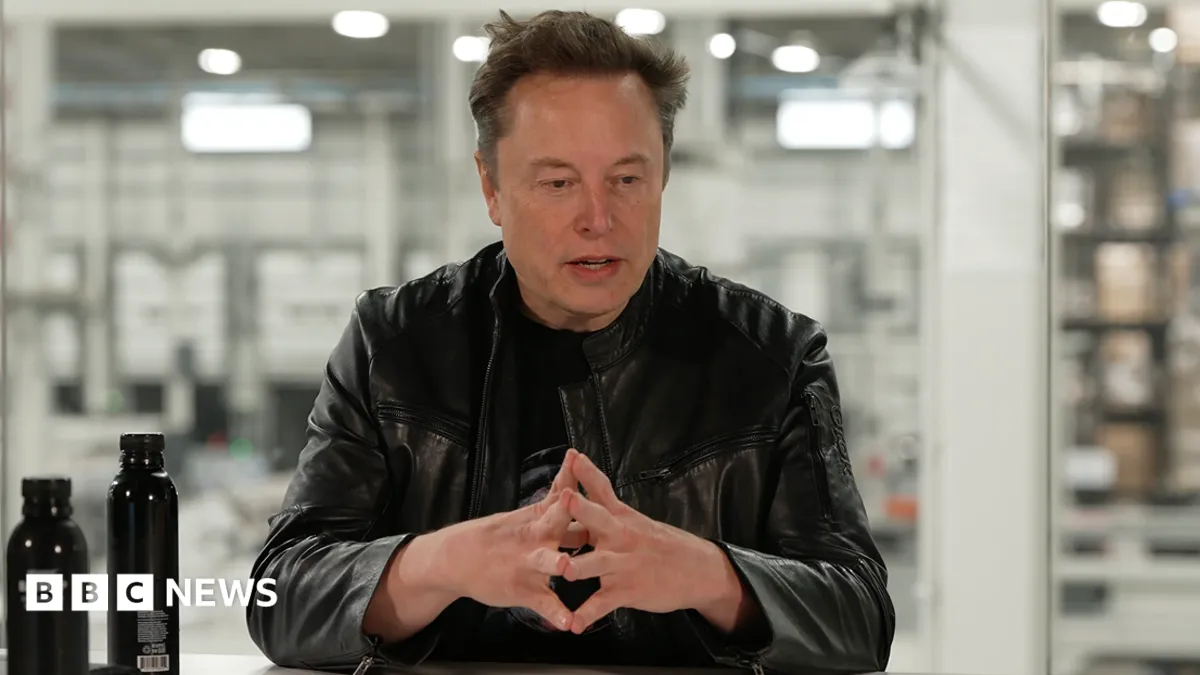
Musk weighs Tesla-SpaceX mega-merger as boards form review panels
Special committees at both companies will examine a tie-up that could fuse electric vehicles and space launch, forcing a fresh look at governance and valuation.