
Perplexity CEO Aravind Srinivas says Jensen Huang taught “30 days” survival math
Two founder lessons from Nvidia and Tesla: urgency as a survival tool, and work as an identity, not a trophy.
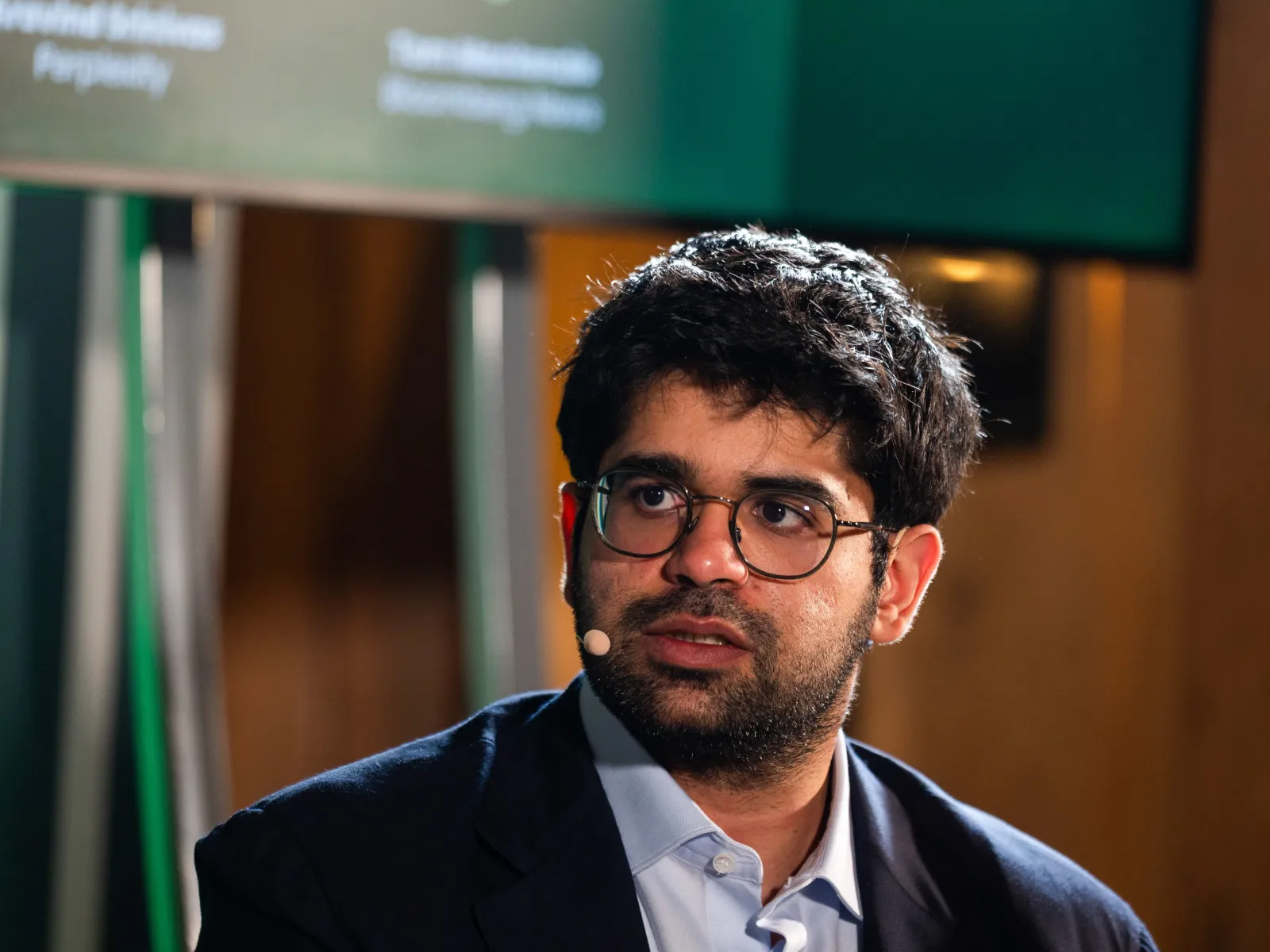
Perplexity cofounder and CEO Aravind Srinivas, speaking on the “20VC” podcast released on Monday, shared entrepreneurship lessons he learned from Nvidia CEO Jensen Huang and Tesla CEO Elon Musk. For founders and boards, his argument is a direct counter to the FIRE playbook and a reminder that incentive design and operating tempo shape everything.
Perplexity CEO Aravind Srinivas didn’t just praise Nvidia’s Jensen Huang and Tesla’s Elon Musk. On the “20VC” podcast episode released on Monday, he said Huang’s operating mentality is built around a brutal time horizon: the kind of urgency that assumes the company could be 30 days away from going out of business.
Srinivas tied that lesson to concrete details from Huang’s approach. He pointed to Huang’s mindset at a massive scale, framing it as a company that has the most advanced chips in the world and could generate enormous revenue, but still runs as if failure could arrive quickly. Srinivas said Huang operates with the mentality that it could be “30 days away from going out of business,” and he added that Huang tells others around him the chip company is “a month away from going out of business.” The takeaway is not motivational fluff. It is a survival math habit.
Then Srinivas pivoted to the second lesson, and it is the one that sounds almost like a personal value declaration. From Musk, he said he learned that working should be about purpose beyond money. Srinivas referenced Musk’s SpaceX pay package, saying it is structured around creating a colony on Mars with a million inhabitants, rather than being motivated by “being worth 10 trillion in net worth or something.” In other words, the incentive is engineered to pull effort toward a mission with a long horizon, not just toward immediate personal wealth.
This matters because Perplexity is not a lifestyle company. It is an AI search engine cofounded in 2022, built by someone who previously worked as a researcher at Google’s DeepMind and OpenAI. That background helps explain why Srinivas’s advice is so operational, not sentimental. He is talking about how leaders think under risk, and how they turn that thinking into daily decisions.
There is also a very real capital context underneath what sounds like philosophy. In August, Business Insider reported that Perplexity was seeking fresh funding at a $20 billion post-money valuation. The investors listed include SoftBank, Nvidia, and Jeff Bezos. That kind of cap table is not just a trophy. It creates board pressure, expectations, and a constant need to show execution traction, especially when a valuation suggests a high bar. Srinivas’s “30 days” framing reads like an answer to that environment: if the business is always being evaluated, you should run as if the evaluation could turn into a survival test.
Srinivas then took the gloves off on work and entrepreneurship culture. He said he does not agree with the mindset of founding a company, selling it, and then staying home once you have generational wealth. He said this approach can let children of founders receive trust funds, but he argued it is not a good example for them to see their dads sitting at home. He boiled it down to a line that lands because it is simple: “You always need to be doing something,” and “You need to work forever.”
That stance directly contradicts the rapidly growing financial independence, retire early (FIRE) movement, which many in tech view as an endpoint. FIRE centers on retiring in your 30s or 40s after accumulating enough net worth to live off it. The tension is more than cultural. It is a question of what work is for. FIRE treats work as a means to stop working. Srinivas, at least as he presented it, treats work as the product itself, and as identity.
He is also in a broader debate that the source notes is already heated. The Shark Tank judge and investor Kevin O’Leary is described as a vocal opponent of FIRE. The source adds that O’Leary retired for a few years after selling his first company and described it as a period when he was “bored out of my mind.” In a 2019 CNBC interview, O’Leary said, “Working is not just about money. People don't understand this very often, until they stop working,” and he added, “Work defines who you are.” Put next to Srinivas, the point becomes sharper: incentive design and purpose messaging are not just HR topics. They are strategies that influence how long teams stay engaged, how quickly they respond to threats, and how they handle the temptation to coast.
So what should executives and boards take from this? Srinivas is offering two linked principles: survival urgency and mission-based incentives. Huang’s “30 days” mindset, as Srinivas describes it, emphasizes operating tempo under uncertainty. Musk’s SpaceX pay structure, as described by Srinivas, emphasizes incentives that aim at outcomes bigger than personal wealth. And Srinivas’s “work forever” argument challenges the cultural default of exiting and disengaging. For leaders at fast-moving AI startups and high-expectation tech companies, it is a reminder that the toughest threats are often the ones you cannot see until you assume you are safe, and the biggest alignment problem is often when money becomes the only reason to keep pushing.
This story's Key Insights and Take-aways are locked.
Create a free account to unlock Executive Actions for one credit.
Register to UnlockAlways free for Executives Club members. Join the Club
More in Business

Gina Rinehart backs SpaceX with a $1B+ stake after its $2.5T debut valuation
The Aussie mining billionaire just put Hancock Prospecting behind Musk's rocket-and-satellite combo, and markets noticed.

Fox agrees to buy Roku for $22B, paying $160.00 per share
What looks like a simple streaming bet is actually a $22 billion corporate reshuffle with board and regulatory gravity.

Mena construction CPMI slips 12% in April 2026, but execution momentum rebounds to 1.01
GlobalData’s April CPMI shows resilience masking pre-execution caution, with conflict risk surfacing unevenly by country and sector.