

Peshawar school roof collapse kills 28 - a warning for every emerging-market operator
A teacher and 27 pupils died in a Peshawar classroom; the tragedy exposes the cost of neglected infrastructure for companies and investors across South Asia.
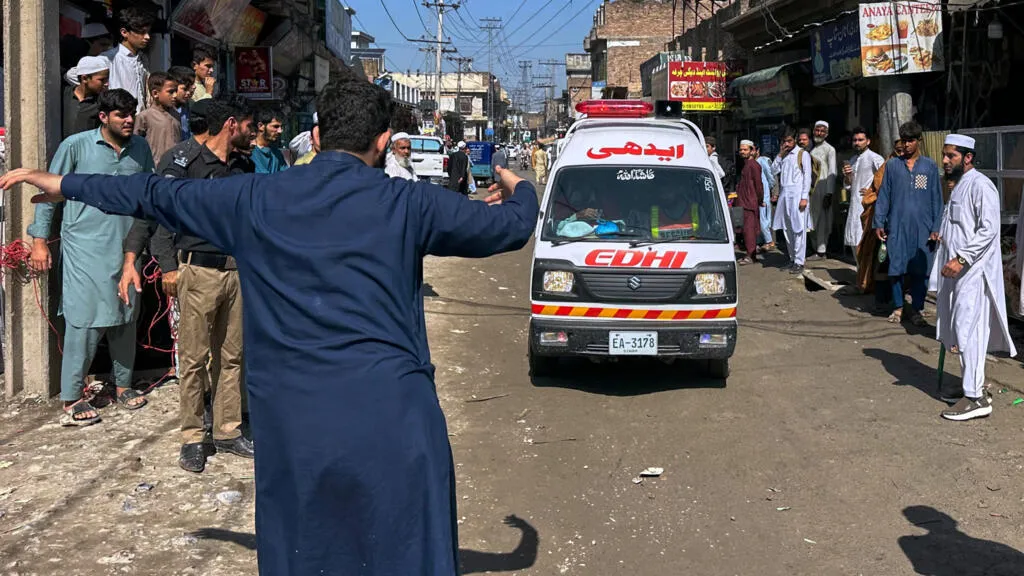
A hospital official confirmed that a teacher and 27 pupils were killed when a school roof collapsed in Peshawar on Thursday, with more than 30 injured and six critical. For decision-makers, the incident is a stark reminder that physical infrastructure risk in emerging markets can turn into sudden, catastrophic loss of life and operational disruption.
The numbers are brutal: 28 dead - a teacher and 27 pupils - after a school roof collapsed in Peshawar on Thursday, a hospital official told France 24. More than 30 people were injured, six of them in critical condition. The collapse turned a routine school day into a mass-casualty event, and the official's account leaves no room for ambiguity about the human cost.
For executives and investors, the tragedy is more than a distant news item. It is a live case study in how quickly physical infrastructure can fail in markets where building codes are unevenly enforced and maintenance is deferred. The official did not specify the cause, but the pattern is familiar: roofs that were never designed for the load they carried, concrete that was mixed too thin, and inspections that never happened. The result is a sudden, catastrophic loss that no balance sheet can absorb.
This is not an isolated phenomenon. Across South Asia, rapid urbanization has outpaced the institutions that are supposed to keep buildings safe. Schools, factories, warehouses, and offices are often constructed by local contractors with little oversight, and retrofits are rare. For multinational companies operating in these regions, the risk is twofold: the direct threat to employees and customers, and the indirect threat to reputation and operations when a failure occurs. A single incident can shutter a facility, trigger investigations, and erode trust in a brand that took years to build.
The financial implications are equally stark. Property insurers typically price risk based on historical claims and engineering assessments, but localized building failures are notoriously hard to model. A roof collapse in a school is not a hurricane or an earthquake; it is a slow-burning defect that surfaces without warning. For CFOs, this means that standard insurance policies may not cover the full cost of a structural failure, and that business interruption coverage often excludes losses from building code violations. The gap between perceived and actual risk is where companies get hurt.
Regulators in Pakistan and across the region have long promised stricter enforcement, but the gap between policy and practice remains wide. Building codes exist on paper, but inspections are often underfunded, understaffed, or simply bypassed. For companies, this means that compliance with local law is not the same as safety. The only reliable safeguard is independent engineering audits, conducted by firms with no stake in the outcome. That is a cost that many executives are reluctant to bear, but the alternative is far more expensive.
For investors, the lesson is about due diligence. When evaluating assets in emerging markets, physical infrastructure is often treated as a given - a building is a building. But the Peshawar collapse shows that the quality of that building is a variable that can change everything. Investors who underwrite deals without inspecting structural integrity are taking on a risk that is not reflected in the financial model. The same logic applies to supply chains: a supplier's factory or warehouse can be a single point of failure, and its safety record is a leading indicator of operational resilience.
The human dimension is the one that matters most. Twenty-seven children and their teacher did not go to school on Thursday expecting to die. Their deaths are a failure of oversight, of priorities, and of the systems that are supposed to protect the most vulnerable. For executives who operate in similar environments, the question is not whether this could happen in their facilities, but whether they have done everything in their power to prevent it. The answer, for too many, is no.
The immediate response in Peshawar will focus on rescue and recovery, and on holding those responsible to account. But for the broader business community, the takeaway is strategic. Physical risk is not a footnote in an annual report; it is a core operational concern. Companies that treat building safety as a compliance checkbox rather than a live operational issue are one roof collapse away from a crisis. The cost of prevention is measurable; the cost of a tragedy is not.
This story's Key Insights and Take-aways are locked.
Create a free account to unlock Executive Actions for one credit.
Register to UnlockAlways free for Executives Club members. Join the Club
More in Politics
Obama Defends Ilhan Omar After Agents Search Her Home in Trump Inquiry
The former president's intervention raises the stakes in a federal probe into immigration paperwork that has put a prominent progressive lawmaker in the crosshairs.

Blair-era minister: cut welfare to fund youth job support
Alan Milburn's call for welfare cuts to fund employment support opens a Labour fight over benefits and the Neet crisis.

Hot September CPI: energy costs surge, voters feel the squeeze before midterms
The latest inflation print lands as Trump campaigns for GOP control of Congress, putting cost-of-living worries at the center of the midterm fight.