

Pete Hegseth’s Pentagon fitness clips fail military form rules, experts say
The Defense Secretary’s bench, push-ups, and pull-ups are scrutinized for range-of-motion, consistency, and “no-go” standards.
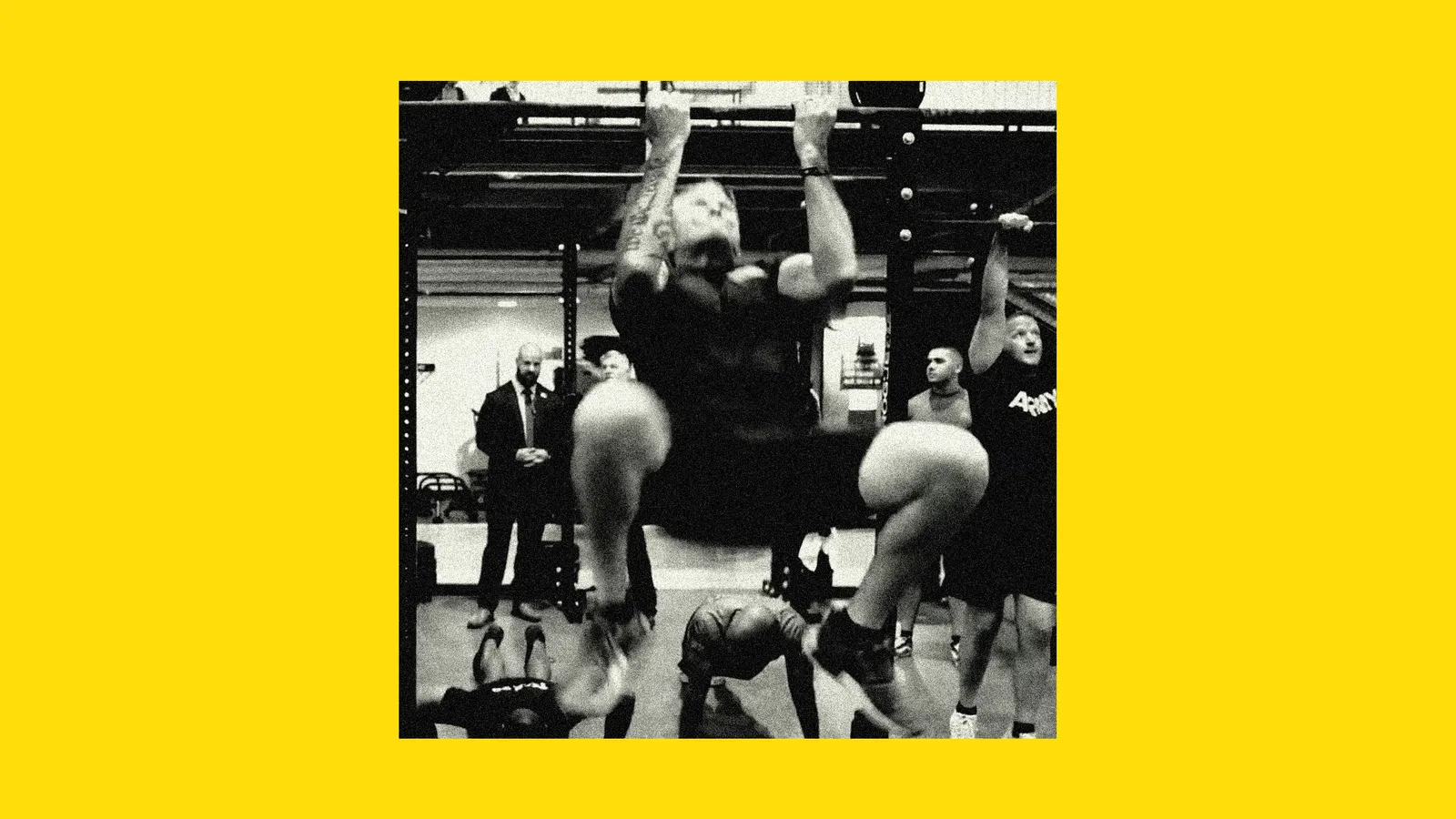
Secretary of Defense Pete Hegseth has built a “Boot Camp Pete” style of fitness messaging with Pentagon-published workout videos. Experts and military training manuals suggest his form cuts corners, raising doubts about self-reported performance in the “Pete & Bobby Challenge.”
Pete Hegseth’s Pentagon workout footage is supposed to prove something simple: if the Secretary of Defense can sweat, so should everyone else. But multiple military fitness manuals and exercise experts say his form repeatedly falls short of the standards used to evaluate performance, including range-of-motion rules that can mean a “no-go” on military tests.
The clearest flashpoint is the “Pete & Bobby Challenge,” launched last summer with Health Secretary Robert F. Kennedy Jr., where participants attempted 50 pull-ups and 100 push-ups in less than 10 minutes. Hegseth’s push-ups and pull-up variations are described as partial “half-ups” and inconsistent technique, and he reportedly claimed at the end of the video that he finished in less than six minutes. The problem, per the scrutiny laid out in the source: he appears to flout the rules while asking others to treat the feat as evidence of superior fitness.
Hegseth’s fitness media strategy is not subtle. Videos of him in a T-shirt and shorts training alongside military personnel have become a “trademark” of his tenure. The source notes clips of Hegseth running on Omaha Beach, swinging a kettlebell on a university campus, and doing jumping jacks on an amphibious assault ship. There is also a bench-press clip at the Guantánamo Bay naval base, which a Defense Department X account described as “America’s @SECWAR CRUSHED 44 reps on the bench after a morning run.” Critics, however, say the reps do not meet the required form, including a failure to fully extend his arms, making the total easier to achieve and therefore suspect.
This is not the kind of dispute that belongs in the category of “everyone has their own style.” The source ties the criticism directly to published standards. It explains that U.S. military training manuals include detailed, movement-by-movement instructions for exercises. The Army’s Holistic Health and Fitness Testing manual, for example, provides guidance on the bench press, warning that you must not “jerk or shrug the shoulders, arch the back, or allow the hips to rise off the bench” and cites “p. 65, Appendix B.” It also spells out specific execution details for other movements, including how to stretch thighs, how to plank, and how to throw a four-pound ball from a seated position, where the manuals caution not to throw the medicine ball “like shooting a basketball.” In the military context, these are not “tips.” The source emphasizes that failing to meet standards can produce a “no-go,” meaning the test portion is not passed.
Standards vary across branches, even for basics, and the source highlights that variation as part of why the scrutiny has teeth. Take the push-up: for the Army’s fitness test, soldiers must perform a hand-release push-up, sticking arms straight out to the side after each repetition. The Marine guide describes traditional push-ups with constraints on how far and how the body can move, including that the chest may not rest on the deck “except as required to ensure that the upper arms are at least parallel to the deck.” In the Air Force, feet spacing cannot exceed 12 inches and the body must hold a “rigid head to heel form.” By this logic, Hegseth’s push-ups are not just “not optimized.” They are argued to be outright non-compliant with the kinds of rules used to score other people.
The pull-up portion adds another layer: technique and consistency, not just “number of reps.” The source says Hegseth’s pull-up form at times is more or less textbook, but notes that during the challenge he raises his knees to his chest to generate extra momentum. That technique is called “kipping,” and it is forbidden in an eight-page pull-up guide published by the Marines. In one clip, the source says he kips while using an underhand grip, technically turning what he is doing into a chin-up rather than a pull-up, and it notes that Marines permit both pull-ups and chin-ups. But kipping is “always forbidden,” and the guide warns: “Poor quality work will prevent you from getting the most from your workout and can lead to injury.” The source then frames the operational risk: if form is treated as optional for the show, the performance math becomes unreliable.
The kettlebell clip extends the criticism beyond rep counting into how the body generates force. In January, Hegseth was filmed swinging a kettlebell with recruits at UCLA. The source says the proper method is to keep the kettlebell near your body and generate momentum through legs and hips. Instead, it describes Hegseth squatting like he is doing deep knee bends and bringing the weight far too close to the ground, which the source says puts strain on shoulders and back. The kettlebell coach quoted in the source, Joel Del Rosario, is a retired Marine. He told the interviewer he is “glad to see Hegseth encouraging better fitness,” and he also described that most people fail at first when attempting kettlebells, offering that he would be honored to show Hegseth how to do it properly if asked.
None of this is happening in a vacuum. The source also points to Hegseth’s public posture toward standards, including last September when he gathered generals and admirals to upbraid them for being overweight, telling them leaders set the standard and that when “you let the small stuff go, the big stuff eventually goes.” In other words, the credibility issue is not just about exercise technique. It is about whether the messenger applies the same standard he demands.
For decision-makers, that matters because fitness messaging in the military is effectively an accountability tool, not a lifestyle flex. When the Pentagon posts highlight reels, and when a challenge is framed as a test of conditioning, form becomes part of institutional signal. If the standards used to evaluate others are ignored in the videos that are used to inspire them, trust erodes and the second-order effect is messier: it becomes harder to align training expectations, harder to enforce consistent evaluation, and easier for critics to question whether compliance is selective.
This story's Key Insights and Take-aways are locked.
Create a free account to unlock Executive Actions for one credit.
Register to UnlockAlways free for Executives Club members. Join the Club
More in Politics

LA County: DOJ's 20,000 'noncitizen' voter list is 'unreliable,' includes U.S.-born
Preliminary review by Los Angeles County election officials finds errors in the federal list, raising the stakes for voter roll integrity ahead of November.

Trump's $1.5B Pentagon chip investment lands in North Carolina
A $1.5 billion defense infusion for North Carolina chipmaking signals a new era of Pentagon-backed reshoring - here's what it means for the industry.

Nigeria confirms first Ebola case in Abuja, a woman just off a Uganda flight
Health Minister Muhammad Ali Pate says the patient flew in from Uganda, putting Africa's latest outbreak on Nigeria's doorstep.