

Pinterest launches 'Ask Pinterest', an AI shopping app that answers your search in chat
The experimental shopping experience turns Pinterest from inspiration boards into a conversational commerce assistant.
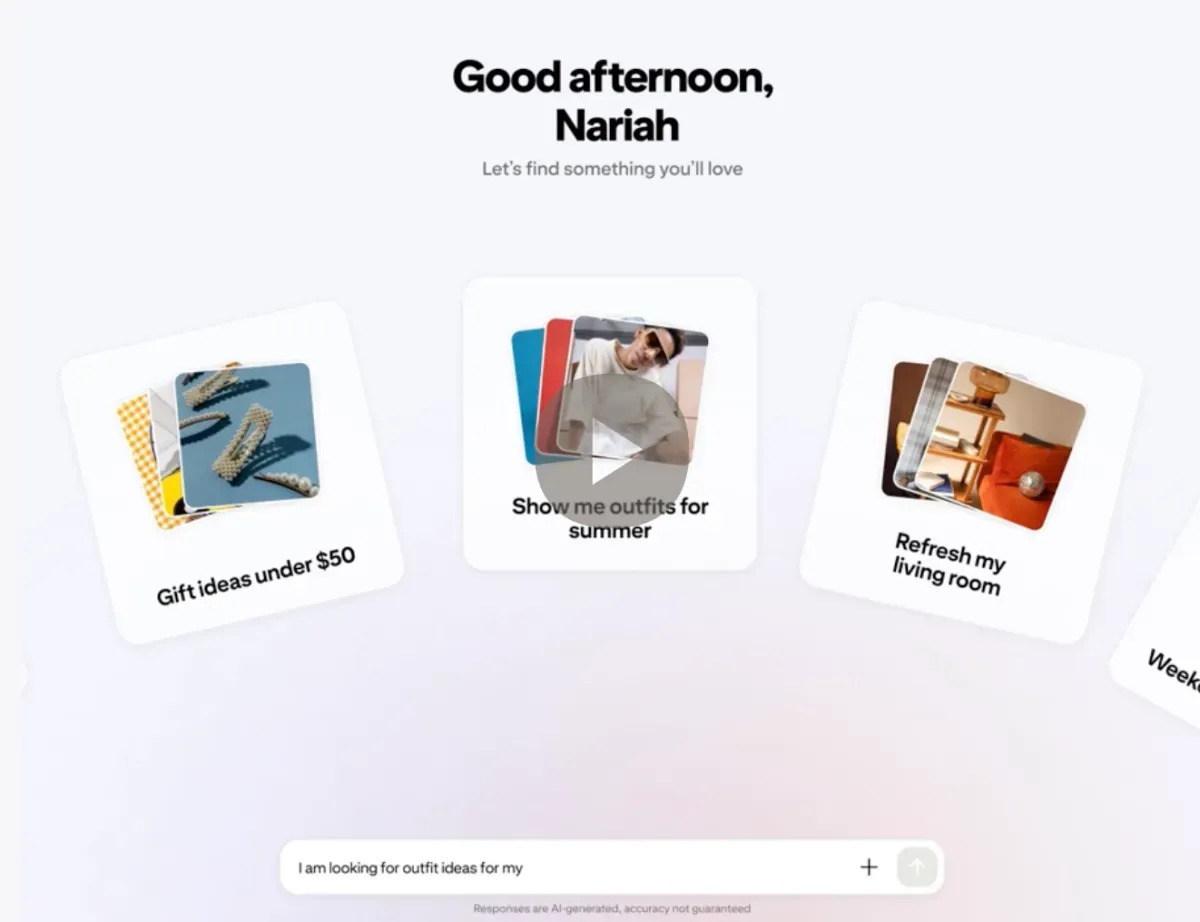
Pinterest has launched 'Ask Pinterest,' an experimental AI-powered shopping app using a conversational interface. For decision-makers, it signals how quickly social discovery is being reshaped into AI-guided shopping funnels.
Pinterest just launched something small on paper and big in implication: an experimental AI-powered shopping app called “Ask Pinterest.” The idea is simple, and that is exactly what makes it strategically loud. Instead of users browsing pins and searching the usual way, “Ask Pinterest” lets people seek recommendations and inspiration through a conversational interface.
In other words, Pinterest is moving commerce discovery toward the same mode users already trust for answers: chat. When you ask, you get suggestions and inspiration framed as recommendations, not just an endless scroll. That is the core product bet in the TechCrunch report: a shopping experience where AI becomes the guide, not the background feature.
To understand why this matters, it helps to zoom out at how Pinterest has historically worked. Pinterest is fundamentally a discovery engine. People come for ideas, save them, and use them later when they want to buy, decorate, plan, or upgrade. The platform monetizes that discovery by connecting intent to purchases. An AI layer that can interpret a conversation and turn it into shopping recommendations changes the user journey. It compresses steps. It potentially reduces friction between “I want inspiration” and “show me options I can buy.”
Now consider what this does to the competitive landscape. Most consumer internet businesses with sizable content libraries are wrestling with the same question: when AI can summarize, recommend, and respond, does the user still need the original interface? Pinterest’s answer is to embed AI into its own signature format. By launching an “Ask” experience specifically for shopping and inspiration, Pinterest is trying to keep users inside the Pinterest ecosystem while still giving them the more direct, conversational flow they are getting elsewhere.
There is also a trust and safety angle that executives will care about, even if the report keeps it high-level. An AI shopping app that provides recommendations and inspiration sits right on top of consumer decision-making. Recommendations can influence what people buy, what they choose to trust, and how they interpret product relevance. That means Pinterest will likely face heightened scrutiny on correctness, transparency, and how it handles sensitive or misleading content, even if no specific regulatory actions are mentioned in the source. In jurisdictions across the EU and the US, regulators have been moving toward expectations that AI systems used in consumer contexts be explainable enough, auditable enough, and not deceptively steer users. Shopping adds an extra layer because there is money on the other end.
For the board and leadership team, the other second-order effect is measurement. A conversational interface changes what “success” looks like. Traditional Pinterest metrics focus on engagement, saves, and clicks. A chat-based funnel pushes the team to evaluate whether users are satisfied with the recommendations, whether the app leads to product exploration, and whether those recommendations convert. That can also complicate attribution. When a user interacts through multiple back-and-forth prompts, the platform has to determine which conversational turns drove downstream actions.
Then there is the product strategy question that often drives these experiments: does “Ask Pinterest” act as an experiment with a narrow scope, or does it become a default layer across Pinterest’s experiences? The TechCrunch report describes “Ask Pinterest” as experimental, which suggests an early stage approach. But even experiments tend to become templates. Once a platform proves that users will ask for shopping recommendations in chat, it is hard to go back to a world where the interface only provides ideas via browsing.
Finally, this move is a reminder for peers in social, retail media, and shopping platforms: the UI is becoming an AI contract. Users are increasingly willing to replace search and browse with dialogue, especially when the assistant seems able to personalize recommendations based on their question. Pinterest launching “Ask Pinterest” is not just a feature announcement. It is a signal that the company wants to own the moment of intent, and that it believes AI can help it capture that moment inside Pinterest rather than losing it to a chatbot that links out elsewhere.
If you lead a product team, run growth, or sit on the board of a platform that monetizes discovery, this is the strategic stake you should clock: the route to purchase is shifting from feeds and search boxes toward conversational interfaces. “Ask Pinterest” is Pinterest’s attempt to make that shift in its own direction, turning inspiration into an answer, and turning the answer into shopping.
This story's Key Insights and Take-aways are locked.
Create a free account to unlock Executive Actions for one credit.
Register to UnlockAlways free for Executives Club members. Join the Club
More in Technology

Nvidia's $89B data center quarter: the 9 companies cashing in
The AI buildout is minting fortunes beyond GPUs, and memory, cloud, and cooling suppliers are riding the same wave.

A YouTuber dissected the iPhone Duo and thinks he found crackgate's cause
CuriousHagi's teardown of Apple's foldable reveals a gear-like hinge that may explain why screens crack in the same spot within hours.

Google quietly links your phone number to every Android account on your SIM
Adding a SIM now ties your phone number to all Google accounts - and future accounts inherit it. Here's the security and privacy stakes.