

PixVerse raises $439M and pushes valuation past $2B on 15M monthly users
A Singapore video-generation startup’s Series C extension ties fresh capital to 15 million monthly active users.
Singapore-based video generation startup PixVerse closed a Series C extension, raising $439M and pushing valuation past $2B, it said. For decision-makers, the round signals how scaled usage is becoming the main proof point for funding new media AI platforms.
PixVerse just pulled in a $439M Series C extension, and the company says the move has pushed its valuation past $2B. The reason investors are leaning in, according to the company, is simple and specific: PixVerse has 15 million monthly active users.
That 15M monthly active user figure is doing heavy lifting. Instead of selling purely on demos or promises of future demand, PixVerse is linking its next capital step to a current usage base, in a category where “will people actually use this?” has historically been the biggest question. If you are a board member or growth executive at any AI-native media startup, that matters because it reframes what credibly counts as traction.
Zoom out a bit and you can see why the market cares. Video generation is computationally expensive, quality can vary wildly, and outputs can trigger messy questions around copyright, consent, and distribution. Those frictions have made many investors cautious, even when models look impressive. By tying a valuation jump to monthly active users, PixVerse is effectively arguing that it has cleared the hardest adoption barrier first: enough people are returning to the product often enough to create a measurable habit.
This is also a fundraising signal to everyone playing in generative media. In these rounds, investors often underwrite a mix of product velocity, model capability, and defensibility. But when a company can point to active users at a scale like 15 million, the conversation shifts. The capital question becomes less “can you build it?” and more “can you keep it sticky, keep quality acceptable, and maintain growth while costs rise with usage?” That shift can change board dynamics too, because leadership teams spend less time defending the premise and more time executing on retention and unit economics.
There is another angle: regulatory and platform pressure is rarely a single moment. It is usually an ongoing backdrop that can reshape product features, labeling, moderation, and distribution agreements over time. Video generation touches multiple policy domains, from intellectual property to platform governance and, increasingly, requirements around how synthetic media is handled. The TechCrunch source does not detail any specific compliance steps for PixVerse, but the broader reality is that scaled usage can bring both upside and scrutiny. When adoption is real, regulators and large distribution partners pay closer attention.
That is why the “second-order” effect of this round is not only that PixVerse got funded. It is that scaled users can raise expectations for responsible deployment. For executives, that usually translates into more formal policies, clearer user controls, and stronger moderation systems, even if those efforts are not glamorous and do not show up in a pitch deck as quickly as output quality.
For peers evaluating their own paths to capital, PixVerse’s numbers sketch a benchmark. A Series C extension with a $439M raise is not just a liquidity event, it is a market statement about the fundraising ceiling for scaled video generation products. If you are leading a company in adjacent generative categories, boards will likely ask harder questions about monthly active users, repeat usage, and the operational readiness required to support them.
In the end, the story is straightforward and the stakes are real. PixVerse is a Singapore-based video generation startup that says it closed a Series C extension, raised $439M, and surpassed $2B valuation, backed by 15 million monthly active users. The implication for decision-makers is that usage at scale is increasingly the anchor for valuation in AI media, and the companies that can turn novelty into repeat behavior are the ones that get the next big check.
This story's Key Insights and Take-aways are locked.
Create a free account to unlock Executive Actions for one credit.
Register to UnlockAlways free for Executives Club members. Join the Club
More in Business
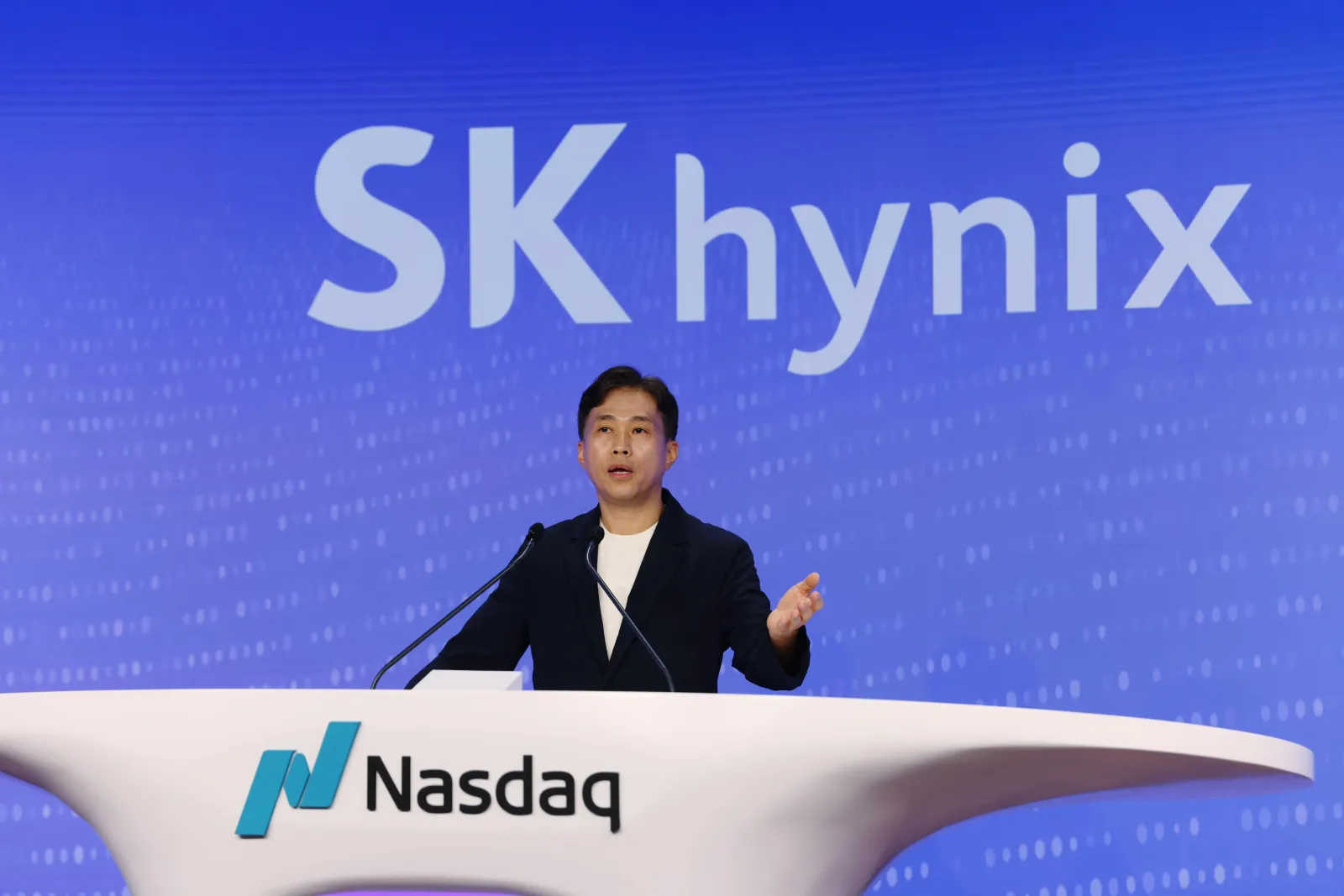
SK Hynix opens at $170, raises $26.5B, and tops foreign IPO records
In Friday's Wall Street debut, SK Hynix turns AI RAM demand into a $26.5B fundraising moment that rewrites comps.

China lands a reusable Long March booster, a first that matches SpaceX and Blue Origin
A barge landing and net-based recovery move China from theory to proof, reshaping the reusability race and satellite ambitions.

AstraZeneca $27B wipeout as Wainua late trial misses cardiovascular target
A failed late-stage heart study triggered a swift market punishment, forcing investors and boards to reset timelines and risk.