

Poland weighs cutting Ukraine arms aid after WWII remembrance as nationalist spat drags on
A WWII remembrance day is colliding with today’s battlefield reality, and Poland is signaling possible limits on military support.

Poland is observing a day of remembrance for the victims of a Ukrainian nationalist military unit, while signs increase that it could cut off military aid to Ukraine. For decision-makers, the key risk is that political and historical disputes could translate into tangible changes in battlefield resupply.
Poland is observing a day of remembrance for the victims of a Ukrainian nationalist military unit, and the historical dispute is starting to bleed into current strategy. Even while the war against Russia continues, “increasing signs” suggest Poland could cut off its neighbor from military aid.
That is the part that matters for executives and operators: this is not a vague diplomatic chill. The source frames the situation as a real possibility, and it is timed to an emotionally charged moment in Poland, tied to WWII-era victims of a Ukrainian nationalist military unit. In other words, the war footing is colliding with unresolved grievances about the past, and Poland appears to be treating that collision as strategically relevant.
To understand why this can become immediate and material, zoom out to how wartime aid works in Europe. Military support to a country under attack is not just logistics and hardware. It is also political permission, budget planning, and domestic legitimacy. When governments decide to sustain arms aid, they need the story to hold at home: why continuing support is necessary, why the partner is credible, and how historical narratives do not fracture public trust. When those narratives get messy, aid can become conditional, delayed, or reduced.
Here, the source explicitly ties the remembrance day for victims to the growing risk of a cutoff. That implies Poland is using the moment to underline a moral and historical claim, not merely to observe. If political messaging hardens into policy, Ukraine may face a sudden change in expectations around replenishment and resupply, even if the strategic case for resistance against Russia remains unchanged.
There is also a compounding effect. Poland is not operating in a vacuum. In any coalition-like wartime support environment, if one key contributor becomes uncertain, the burden shifts. Other partners may try to backfill, but the source does not claim that will happen, and executives should treat “could cut off” as a serious stress signal rather than background noise.
The second-order implication is about timing and planning horizons. Battlefield requirements do not wait for diplomatic reconciliation. If Poland signals a potential aid interruption, Ukrainian procurement and military planning could be forced to re-optimize under uncertainty. In practical terms, that affects everything downstream: maintenance schedules, ammunition and equipment pipelines, and how commanders allocate resources when they cannot fully model supply.
For boards and senior leadership teams at companies tied to defense supply chains, the same logic applies. Even if Poland does not implement a cutoff immediately, rising political risk can trigger earlier decisions: contract revisions, inventory decisions, and compliance reviews for cross-border shipments. When political disputes move from headlines into policy choices, they can change procurement patterns quickly, creating both risk and opportunity for suppliers with flexible manufacturing and diversified logistics.
Finally, the strategic stake is not just bilateral. The source highlights that this is happening “even as the war against Russia continues.” That detail matters because it shows that the conflict’s central logic is not dissolving the political past. It is reshaping it. If Poland cuts Ukraine’s arms aid, other governments observing the precedent will calibrate their own support calculations based on how much domestic historical pressure they can absorb while keeping alliance commitments steady. In a region where security policy can pivot on political legitimacy, that is the kind of signal that travels fast.
This story's Key Insights and Take-aways are locked.
Create a free account to unlock Executive Actions for one credit.
Register to UnlockAlways free for Executives Club members. Join the Club
More in Politics
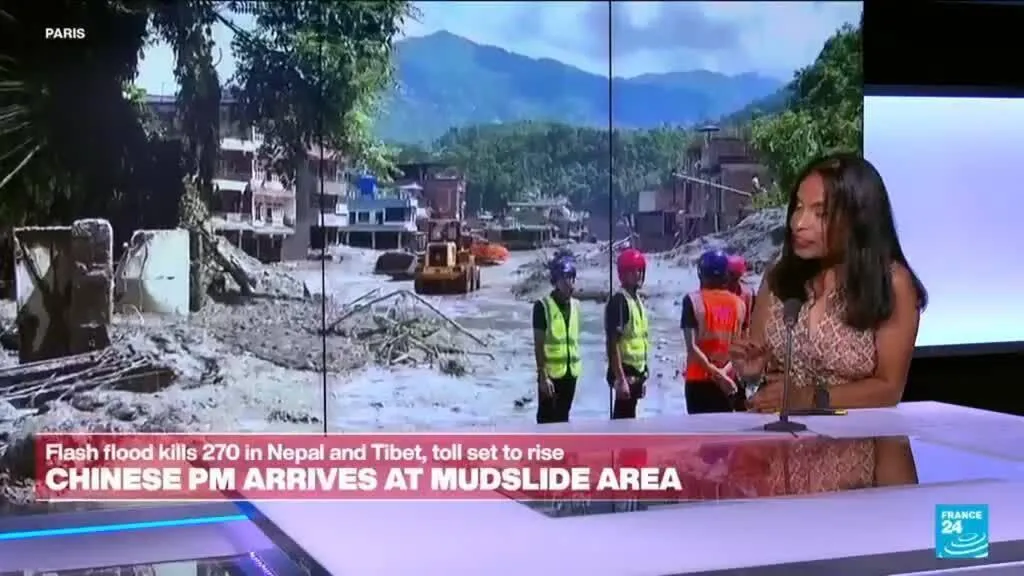
Glacial collapse, not rain, killed 180 in Nepal's Himalayan flood
The Himalaya's extreme geography hid the true cause of Nepal's catastrophic flood, a glacial collapse that turned a geological battleground into a mass-casualty zone.
Iran’s Esmail Baghaei says Oman talks start shipping via Hormuz, not US talks yet
Temporary route plans with Oman aim to restart commerce while Tehran says Washington dialogue is not on the table.
Standards watchdog opens probe into Reform UK deputy leader Richard Tice over interests
The parliamentary standards commissioner says it began an investigation on 28 July into a possible undeclared interest.