
Poll puts Trey Gowdy at 38% for Lindsey Graham’s seat, even before Trump-endorsed Darline Graham
A 900-voter GOP primary survey finds Gowdy leading until Trump’s endorsement shifts votes to Darline Graham.
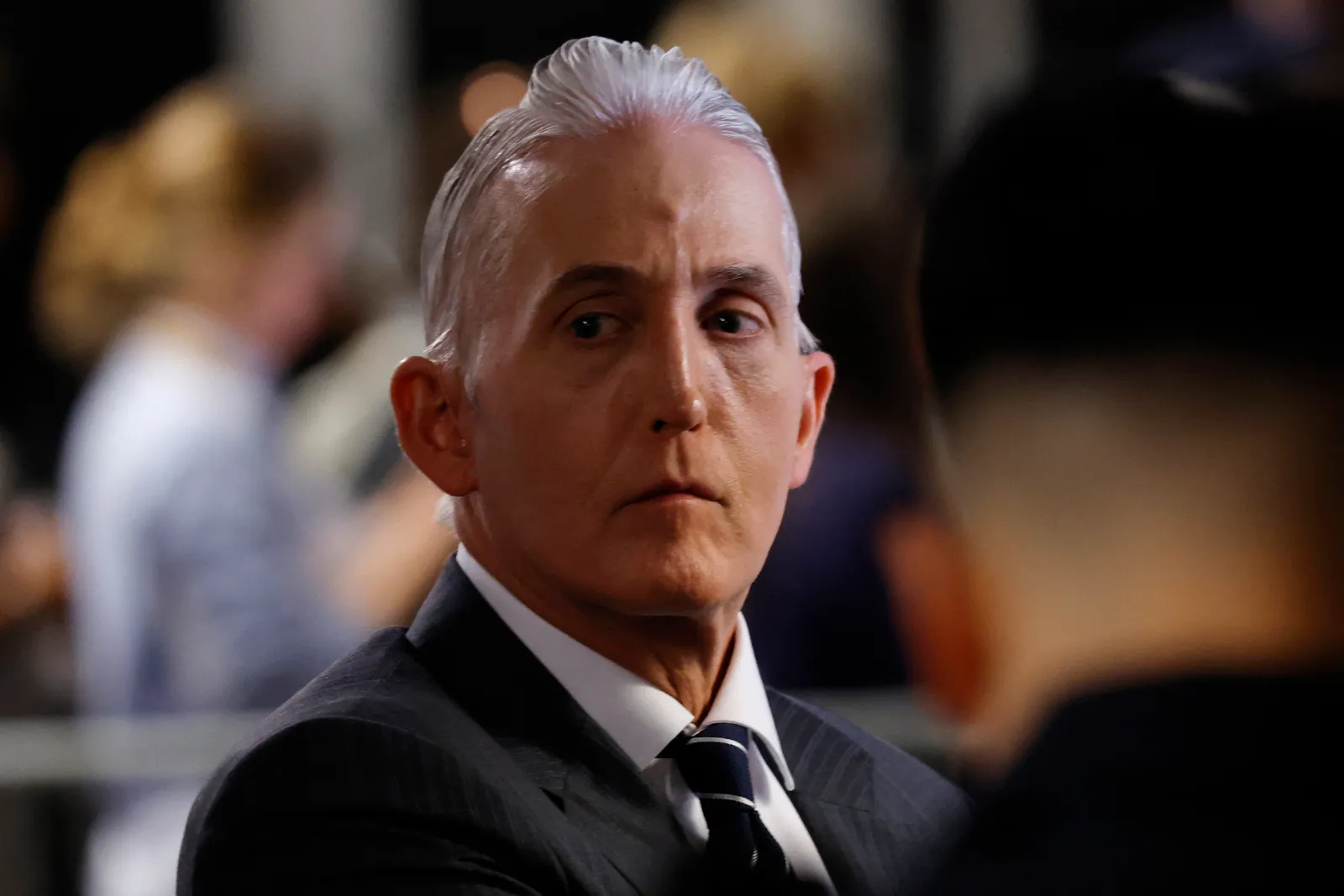
Former Rep. Trey Gowdy, who says he is not interested in the South Carolina special election for late Sen. Lindsey Graham’s seat, leads in a Peak Insights poll obtained by POLITICO. The poll’s vote shift after Trump’s endorsement tests how quickly the GOP electorate will realign in high-stakes Senate succession politics.
Former Rep. Trey Gowdy, who says he has no interest in running for South Carolina’s open Senate seat, is still polling at 38 percent in a new Peak Insights survey for the late Sen. Lindsey Graham’s special election, according to a poll obtained by POLITICO. In a crowded field of seven other potential and declared GOP candidates, that kind of lead is a flashing warning light for everyone who thought this would be an even, anyone-can-win race.
The headline figure matters because the survey also shows what it takes to move it. When respondents are told that President Donald Trump “asked Darline Graham Nordone to run in the special election for U.S. Senate, saying if she runs, she has his complete and total endorsement,” Darline Graham’s support jumps from 9 percent to 16 percent, while Gowdy falls from 38 percent to 35 percent. So yes, the Trump endorsement helps Darline Graham. But it does not wipe out the outsider-turned-frontrunner advantage that Gowdy would bring if he changed his mind.
That distinction is the whole story. In the poll, Rep. Ralph Norman trails at 13 percent support. Rep. Russell Fry and Sen. Darline Graham, Lindsey’s sister who is running for a full term after being appointed, both sit at 9 percent. Businessman Mark Lynch, a self-funder who lost a Senate primary to Graham last summer, pulls 7 percent. The field is tightly packed outside the top slot, which is exactly why a credible contender with name recognition and a measurable ceiling tends to attract attention from party leaders. Gowdy is not just “one of the names.” He is the only name with real separation.
For decision-makers, this is less about South Carolina trivia and more about how control of the agenda is traded in election cycles that are supposed to be about persuasion. The Politico report frames the special election as “a test of Trump’s power.” That is the lens party strategists use when endorsements are deployed as signals, not merely statements. In this case, Trump’s involvement appears to produce a bump, but the electorate does not fully consolidate around the endorsed candidate. The second-order message is that personal brand, perceived electability, and voter familiarity may be winning alongside endorsement cues.
Timing also matters. The survey of 900 likely GOP primary voters was conducted before anyone formally entered the contest. That means voters were evaluating candidates based on prior visibility and political expectations, not a fully ratcheted campaign environment with announcements, fundraising, and ground-game expansion. When you hear a candidate is at 38 percent in a pre-entry snapshot, the reason boards and senior staff should care is that the lead could harden if the candidate actually enters. Or it could implode if negatives emerge once the campaign machinery fully turns on. Either way, it is not a lead you can ignore.
So why is Gowdy even on this list, given his own posture? Through a spokesperson, he said he “has not had any conversations about the open senate seat and does not have any interest in it.” That did not stop prominent Republicans from trying anyway. Sen. Tim Scott, a longtime friend of Gowdy, is directly tied to the recruitment effort. Scott is a power player here because he chairs the National Republican Senatorial Committee, as well as the NRSC and the Republican National Committee among many others, and Peak Insights has polled for Scott. Scott advocated for Gowdy to be appointed after Lindsey Graham’s death, but Gov. Henry McMaster instead appointed Darline Graham.
Scott’s push is not subtle. The report says Scott announced last week he was recruiting Gowdy to run in the special election, before Darline Graham announced she would run. During a press conference Wednesday, Scott said, “I can't think of a better person that I think best represents the heart of South Carolina than Trey Gowdy.” He added, “I'm trying to get him interested in it, but we'll see if that works out at all.” Scott and the NRSC have not yet issued an endorsement in the special election. The lack of an NRSC endorsement while the field is forming is itself strategic: party leaders often wait until they can reduce internal fragmentation, and the poll suggests that if Gowdy enters, leaders may have to decide whether they want to rally behind the most formidable vote-getter or follow the preferred Trump-aligned path.
Even the parallel messaging from Scott underscores the tension. Scott praised Darline Graham during a Fox News interview Monday, saying she is “strong so far, calm under pressure, and really poised.” Yet the poll indicates she starts lower than the top of the field and, even after Trump’s endorsement script is added, still does not supplant Gowdy. For executives and board-level operators watching from outside politics, that combination is a useful stress test: endorsements may increase support, but they do not automatically erase competitor momentum.
The election is a succession moment with national consequences. Lindsey Graham’s seat is not just a local seat; it is a Senate seat that affects legislative arithmetic, committee dynamics, and the balance of power. If Gowdy truly sits at 38 percent in early polling and remains near 35 percent even after a major Trump endorsement cue, then party strategists should prepare for a scenario where “endorsement plus branding” is not enough to fully control the outcome. The strategic stakes are simple: the closer the race stays to a two-candidate tension, the more every party resource, donor decision, and message discipline becomes about winning the middle of the map, not just firing the loudest shots at the base.
This story's Key Insights and Take-aways are locked.
Create a free account to unlock Executive Actions for one credit.
Register to UnlockAlways free for Executives Club members. Join the Club
More in Politics

LA County: DOJ's 20,000 'noncitizen' voter list is 'unreliable,' includes U.S.-born
Preliminary review by Los Angeles County election officials finds errors in the federal list, raising the stakes for voter roll integrity ahead of November.

Trump's $1.5B Pentagon chip investment lands in North Carolina
A $1.5 billion defense infusion for North Carolina chipmaking signals a new era of Pentagon-backed reshoring - here's what it means for the industry.

Nigeria confirms first Ebola case in Abuja, a woman just off a Uganda flight
Health Minister Muhammad Ali Pate says the patient flew in from Uganda, putting Africa's latest outbreak on Nigeria's doorstep.