

Post Modern Times removed menu prices, then business improved even as most meals stayed donation-free
Dylan Alverson turned a failing independent model into pay-what-you-can after pandemic, inflation, and labor costs wrecked margins.

Dylan Alverson, owner of Minneapolis restaurant Post Modern Times, removed menu prices during a community crisis and shifted to pay-what-you-can. The move helped the restaurant stabilize financially, keep staff paid at least $25 an hour, and fund a model that relies less on sales tax and more on donations.
Post Modern Times, a Minneapolis restaurant owned by Dylan Alverson, pulled menu prices and switched to pay-what-you-can. It was not a marketing experiment. It followed a brutal stretch where, despite steady traffic, Alverson said he could not find a sustainable profit margin amid the pandemic, inflation, and rising labor costs.
The numbers tell the weird part. The restaurant serves about 155 meals daily, and around 90% of those meals are served without a donation. Alverson says business is better now, donations support staff earnings of at least $25 an hour, and for the first time in years he can pay himself about $50,000 annually. In other words: turning off posted prices did not kill the business. It changed what paid for it.
To understand why this matters to decision-makers, start with the baseline math of running a restaurant like a restaurant. At Post Modern Times, diners enjoy hot, home-cooked meals at pay-what-you-can prices. But the “traditional model” depends on predictable sales. When annual sales were about $1.3 million the year before the latest transition, Alverson believed the equation was workable. Then everything else moved at once: the pandemic shifted demand and costs, inflation squeezed budgets, and labor costs rose. He described working 7 shifts a week, fixing equipment himself, carrying flour up stairs until hip problems developed, and sometimes borrowing money to make payroll. That last detail is the quiet red flag investors and boards recognize instantly: cash flow can be technically “busy” while still being unsustainable.
This is also where the neighborhood and the policy stack up. Late last year, federal immigration raids shook the community, and the restaurant began offering free meals with help from a local grant. Alverson noticed something immediately: people who needed food often would not ask for it. That is a common dynamic in assistance programs, and it is one reason many organizations build “universal access” designs rather than means-tested ones. Then the community crisis intensified when neighbor Alex Pretti was killed during an immigration operation. With the neighborhood “reeling” and “everyone angry,” Post Modern Times took prices off the menu as part of a tax strike. Alverson said the point was straightforward: by not charging for meals, the restaurant was not generating sales tax. It was both a way to fight back and a way to provide comfort so anyone could get a hot meal if they needed one.
Once you remove menu prices, you do not just change the customer experience. You change the revenue mechanism. The restaurant can no longer count on sales as the primary driver. Instead, the model leans on donations and ongoing community goodwill. Alverson said supporters donated about half a million dollars over the winter after the story spread online. Four months later, Post Modern Times is still operating without menu prices. Those donations are effectively underwriting the gap created when most meals happen without a donation.
If you are an executive, operator, or investor, the second-order implication is that “free” does not automatically mean “no money.” Here, the restaurant is essentially running a hybrid: universal access at point of consumption, with funding arriving through donations. That also reframes the labor incentive. Alverson said the restaurant is not trying to maximize profits anymore. The goal is a financially sustainable restaurant that pays staff a living wage and ensures anyone in the neighborhood can eat. He cited concrete outcomes: paying employees $25 an hour, with a goal of reaching $30 an hour. He also described adding guidelines to keep the space welcoming for everyone and constantly adjusting how meals are distributed to serve as many people as possible.
There is, of course, no guarantee this translates cleanly to other contexts. Alverson does not pretend it is finished. But he does put a sharper edge on the truth boards sometimes avoid: “restaurant owners need to stop pretending everything is fine.” He pointed to shame as a structural issue when businesses are not working, and he argued small business owners should be more honest with each other. That matters because the traditional model, in his view, is not working for a lot of independent restaurants anymore. For peers trying to navigate the same squeeze of inflation and labor costs, the strategic stake is simple: if posted prices and sales tax-driven revenue are no longer stable, then the question becomes what replaces them, and what incentives you are willing to build into the system.
Alverson says that ironically, the restaurant is in a better financial position than before the transition. For the first time in years, he can pay himself about $50,000 annually. The restaurant is still figuring it out, but it has already demonstrated something that gets executives attention fast: when the cash register model cracks, you can rebuild around sustainability, living wages, and neighborhood access, and still keep the doors open. And if he has his way, he will not keep it to himself. “I’d give the model away,” he said, because the whole point is that if this works even partially, more operators should be able to adapt it rather than each failing alone.
This story's Key Insights and Take-aways are locked.
Create a free account to unlock Executive Actions for one credit.
Register to UnlockAlways free for Executives Club members. Join the Club
More in Business
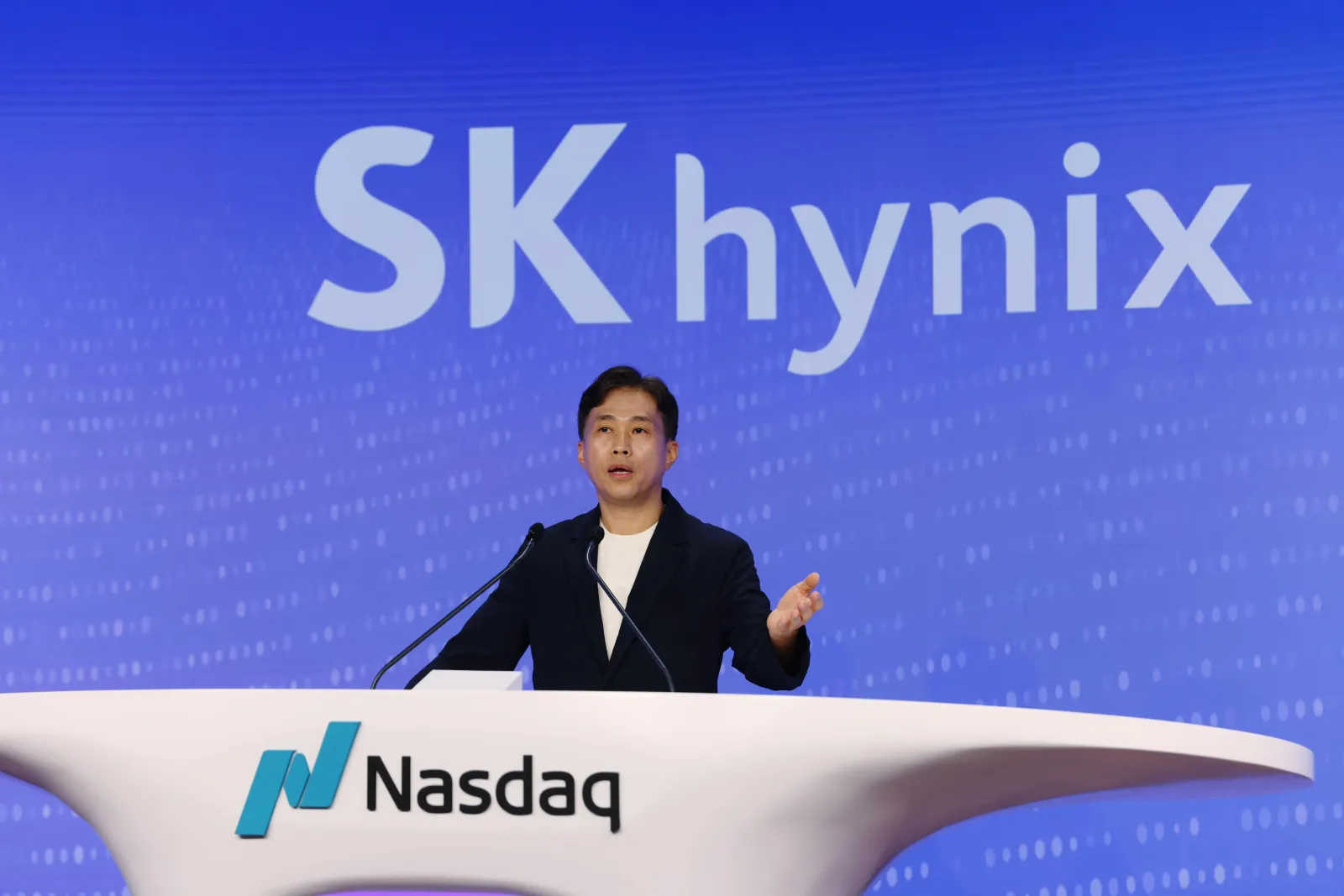
SK Hynix opens at $170, raises $26.5B, and tops foreign IPO records
In Friday's Wall Street debut, SK Hynix turns AI RAM demand into a $26.5B fundraising moment that rewrites comps.

China lands a reusable Long March booster, a first that matches SpaceX and Blue Origin
A barge landing and net-based recovery move China from theory to proof, reshaping the reusability race and satellite ambitions.

AstraZeneca $27B wipeout as Wainua late trial misses cardiovascular target
A failed late-stage heart study triggered a swift market punishment, forcing investors and boards to reset timelines and risk.