

Punisher leads a new Marvel Zombies War Zone, launching September 2
Manhattan falls to a zombie outbreak, and street-level heroes try to survive the “answers” Frank Castle wants.
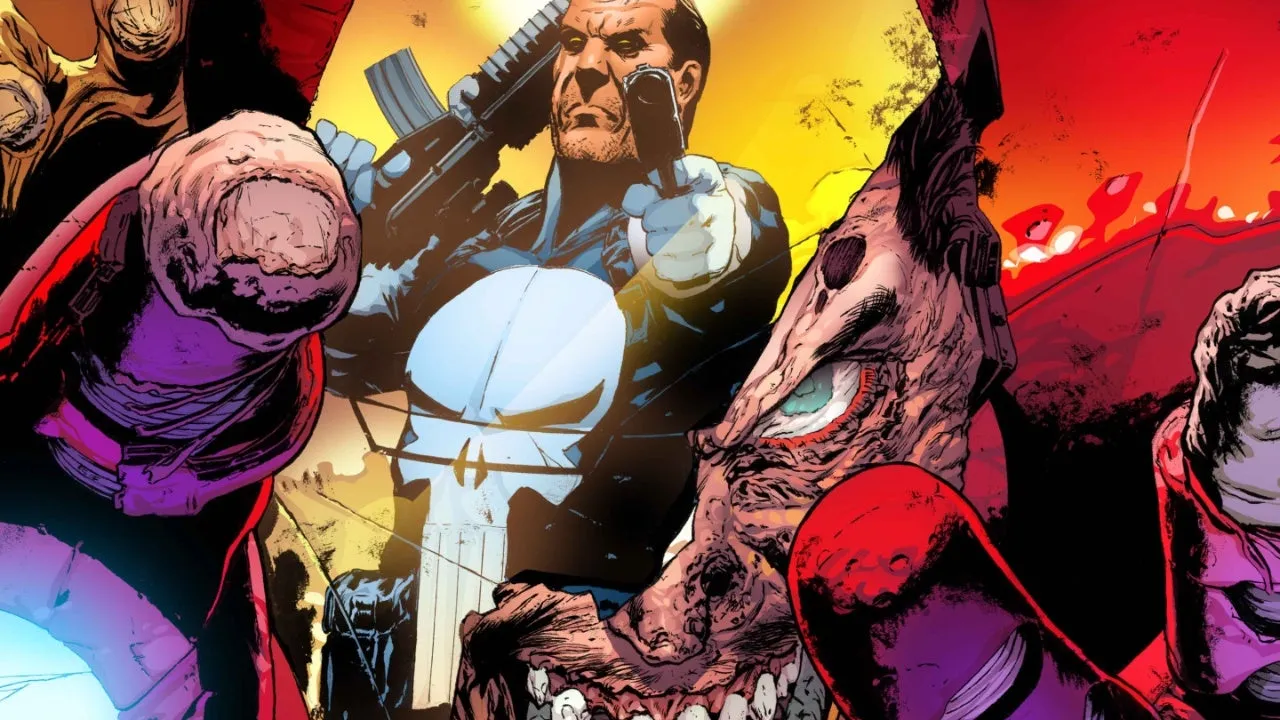
Marvel is reviving the Marvel Zombies franchise with Marvel Zombies: War Zone, releasing issue #1 on September 2. The series shifts the horror lens to the Punisher and other street-level characters, written by Tom Waltz and illustrated by Jaime Infante.
Marvel Zombies: War Zone #1 drops September 2, and it instantly tells you who Marvel wants to center: the Punisher, in a Manhattan overrun by zombies. The pitch is simple, but the stakes are immediate. A zombie outbreak hits the city, Earth’s Mightiest Heroes succumb to the virus, and a hastily erected barrier tries to protect the world while, inside it, a war zone breaks out as survivors fight an ever-growing horde.
In that chaos, the Punisher is not looking for survival. According to Marvel’s official series summary, he’s after answers, carving “a bloody swathe of his own through the ravaged city,” and he has plenty of lead to deal with any zombified obstacles. That “street-level executioner meets end-of-civilization horror” angle is the core hook of War Zone, and it is also a sharp reboot of how Marvel Zombies is framed compared to some earlier takes on the premise.
To understand why this matters beyond cosplay-and-crawl horror, it helps to zoom out on what the Marvel Zombies franchise has done over the years: it repeatedly reshapes the Marvel Universe into alternate versions where iconic heroes and villains fall victim to a zombie plague. That format is a flexible content engine. It lets Marvel take recognizable characters and ask a darker question each time, without being locked into one single timeline. War Zone keeps the premise, but changes the lens. Instead of leaning on the biggest names in the Marvel Universe as the default viewpoint, the series centers the Punisher and other street-level characters like Luke Cage, Iron Fist, Elektra, and Moon Knight.
That choice is not just creative flavor. It’s also a bet on reader behavior. Street-level characters tend to live in the gritty, grounded corners of superhero storytelling, where “how do you keep operating when the system breaks” is a more natural theme than cosmic-scale power. War Zone’s setup includes a barrier to protect the world, and then a separate reality inside it where the rules of order have collapsed. Putting characters built for alleyways and precinct politics into a zombie apocalypse is a way to make the conflict feel close enough to touch.
War Zone is written by Tom Waltz, with illustrations by Marvel newcomer Jaime Infante, and cover art by Tony Parker. Marvel also includes a clear creator-path statement from Waltz: he said that cutting his teeth as a comics writer with his creator-owned military-horror story Children of the Grave, then transitioning into a long stint writing mutated ninjas, and being an unabashed fan of super heroes led to the opportunity to write a Marvel Zombies series. In his remarks to Fangoria, Waltz framed his first instinct as taking the popular Marvel zombie trope to the streets, using Frank Castle, the Punisher, “as an old Marine like me” perspective. The point of that background is straightforward: it signals that War Zone’s violence and pacing are meant to align with a specific brand of genre storytelling, not just a theme-swap.
The issue also comes with a bigger franchise context that matters for anyone watching how Marvel builds audiences across formats. Last year, Marvel released a Marvel Zombies animated series on Disney+. IGN’s review described the series as a mixed bag at times, calling it “a bit formulaic” as it drags heroes from one locale to the next and pits them against hordes of undead superheroes. But the same review also argues that character dynamics and the way the show built bonds among various Phase 4 and 5 characters made it worth watching, and it highlighted the finale as an “epic showdown” rivaling the scale of Avengers: Endgame. In other words, Marvel Zombies as a concept has already proven it can earn attention even when the packaging feels familiar.
So what’s the strategic stake now for decision-makers, executives, and operators watching IP flywheels? War Zone has to do two jobs at once. It must satisfy readers who want the Marvel Zombies core experience: recognizable characters, a zombie outbreak, and a world where the familiar becomes grotesque. But it also has to expand the franchise’s reach by offering a different entry point. If the Disney+ version drew in audiences through the Multiverse-style logic of “what if,” then a comics series that moves to Manhattan and keeps returning to street-level power, street-level fear, and street-level grit is a different kind of distribution logic. It can pull in readers who want superhero worlds that feel like they could happen in the corner of their city, not just in some cosmic pocket.
For boards and brand managers, the second-order question is whether “barrier to protect the world, war zone inside it” becomes a repeatable narrative scaffold that keeps engagement high across episodes, issues, and spin-offs. For creators and investor-minded folks, the related question is whether pairing a genre-experienced writer like Waltz with a new artist like Jaime Infante helps Marvel refresh the look and tone without losing the franchise’s identity. And for fans, it boils down to a single, delicious tension: can a gun-toting vigilante focused on answers survive long enough to understand what happened when even Earth’s Mightiest Heroes are already lost to the virus?
Marvel Zombies: War Zone #1 releases September 2, and the series is ready to take that question into print with the Punisher at the center of the wreckage.
This story's Key Insights and Take-aways are locked.
Create a free account to unlock Executive Actions for one credit.
Register to UnlockAlways free for Executives Club members. Join the Club
More in Entertainment

Entertainer Russell Brand denies 7 sex charges amid accuser's 'couldn't breathe' claim
The alleged victim's account sharpens the reputational and legal stakes for Brand, his platforms, and any business tied to a public figure under criminal scrutiny.

Russell Brand's accuser 'bewildered and confused' as he denies 7 sex charges
The criminal case against the comedian is a live test of how media companies manage talent risk when serious allegations go public.

'It's a Magic Trick': Ballet Experts Say Rosalía's SNL Pose Is Impossible
Three ballet experts tell Rolling Stone Rosalía's gravity-defying SNL stillness shouldn't be possible - and why the debate is now part of the show.