

Qantas launches a 22-hour London-Sydney nonstop in October, using A350-1000ULR
The world’s longest direct flight raises comfort tradeoffs and pricing questions for airlines watching the premium shift.
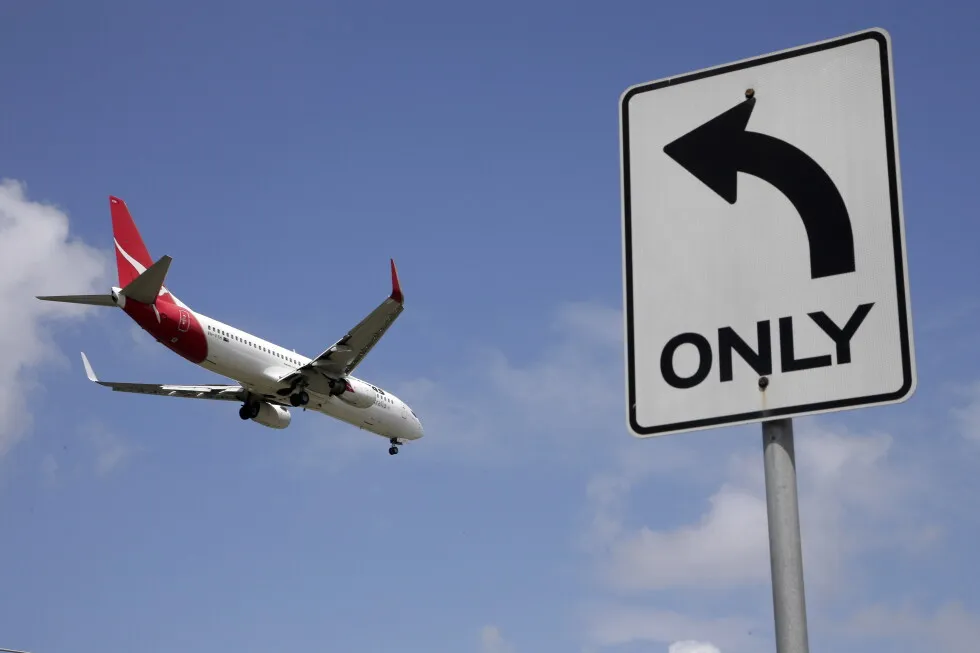
Qantas Airways plans to launch the world’s longest direct flight next year, with a specially modified Airbus A350-1000ULR jet making the 17,015-kilometer London-Sydney route from October. The carrier expects 19 to 22 hours in the air and says direct tickets will cost more than itineraries via Singapore.
Qantas is betting that passengers will still want to go coast-to-coast without stopping, even if the trip stretches up to 22 hours. The airline says the world’s longest direct flight will run between London and Sydney starting October next year, covering 17,015 kilometers (10,573 miles) on a specially-modified Airbus A350-1000ULR.
On Thursday, Qantas unveiled the first of those jets. Company expectations for the flight duration are between 19 and 22 hours, making this route longer than the current longest regularly scheduled direct flight, Singapore Airlines’ service between Singapore and New York. That Singapore-New York leg is 15,349 kilometers (9,537 miles) and is flown in under 19 hours, so Qantas is clearly trying to win on sheer distance, not just convenience.
This is also a product strategy disguised as an engineering flex. A standard Airbus A350-1000 can carry up to 480 passengers. Qantas’ customized A350-1000ULR is built to carry only 238 passengers, with 140 of them in what Qantas calls “cattle class” on the London-Sydney flights. In other words, this is not a standard long-haul config where you pack as many bodies as possible. It is a long-range layout that implicitly acknowledges a brutal reality of ultra-long flights: at these distances, the aircraft has to trade seats for range, and the airline has to trade volume for higher-value demand.
Why the smaller cabin? Qantas points to the fuel requirement. The A350-1000ULR is designed to include an additional tank carrying 20,000 liters (5,283 gallons) of fuel. AirlineRatings chief executive Sharon Petersen argues that the economics explain the passenger-heavy design. Because the flight is so long, airlines cannot rely on cargo given the weight constraints. That makes the aircraft “really a passenger-heavy aircraft and a premium passenger-heavy aircraft,” which is where the margin usually comes from on routes that long.
Qantas is also making direct-flight pricing part of the story. It has said passengers will pay more for direct flights when tickets go on sale in February than they do for flights that make a stop in Singapore. The airline’s stated value proposition is time savings: direct flights will save up to four hours of travel time. For decision-makers, that’s the key tension. Qantas is charging for convenience and time, but it also knows the comfort experience becomes more sensitive as the in-air time stretches toward the top end of its 19 to 22 hour estimate.
That’s where the cabin details matter. Petersen said Qantas economy seats between London and Sydney would have more leg room than most long haul airlines. Economy passengers would also have access to a “Wellbeing Zone” between economy and premium economy cabins, where they can stretch and help themselves to drinks and snacks. Still, her view on flying economy for the full duration is cautious. She said she would prefer to break up the journey than fly 22 hours in economy because long flights amplify annoyances that are hard to absorb, like someone next to you being smelly or unwell and coughing, a baby sitting nearby, or an oversized passenger who needs two seats. Her argument is basically second-order human reality: longer nonstop time makes it harder for passengers to “reset” socially and physically.
The route also reshapes how far economy passengers can currently fly on a direct service. In the source, Qantas is described as having the farthest economy direct route today, between London and Perth on Australia’s west coast, at 14,499 kilometers (9,009 miles) flown 16 to 18 hours. Sydney sits on Australia’s east coast, and this new plan extends the distance and the time window beyond that existing benchmark. If Qantas can pull this off commercially, it would likely pressure competitors to rethink what “ultra-long-haul” means, not just in aircraft selection but in cabin tradeoffs, onboard amenities, and how they price time savings.
For boardrooms and operators watching from the sidelines, Qantas also quietly sets up what comes next. Once the Sydney-London direct route is established, Qantas said its next ultralong-haul direct service will be Sydney-New York, described in the source as 16,013 kilometers (9,950 miles), a shorter distance than London-Sydney. That sequencing matters because it suggests the airline is not treating this as a one-off stunt. It is building a roadmap where ultra-long-haul profitability depends on premium-heavy capacity planning today, and on whether passengers are willing to keep paying for direct travel when the clock hits double digits tomorrow.
This story's Key Insights and Take-aways are locked.
Create a free account to unlock Executive Actions for one credit.
Register to UnlockAlways free for Executives Club members. Join the Club
More in Business

A flaw in PHP just forced governments to pull their own sites offline
European agencies from Belgium to Germany took websites dark to patch a critical weakness in the language behind almost 70% of the web, and the blast radius extends far beyond government portals.

BioWare shuts down, Mass Effect 5 dead after $55B EA buyout
The legendary RPG studio's closure lands months after a $55 billion investment group buyout of EA, raising tough questions for gaming's biggest acquirers.

Musk weighs Tesla-SpaceX mega-merger as boards form review panels
Special committees at both companies will examine a tie-up that could fuse electric vehicles and space launch, forcing a fresh look at governance and valuation.