

Quantinuum's error correction scales 10x per step, blowing past breakeven
A single hardware generation just cleared a major quantum computing hurdle: logical qubits get more reliable as they grow, not less.
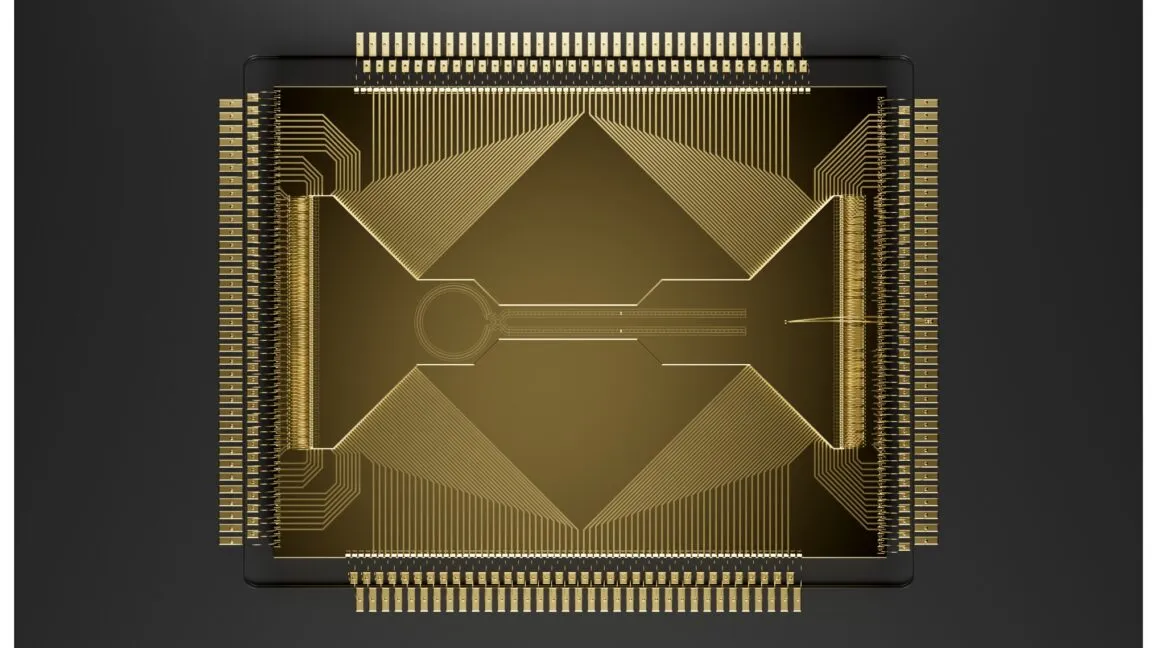
Quantinuum announced Monday that its current hardware generation scales error-corrected logical qubits well beyond breakeven, with performance improving by a factor of over 10 at each step up in size. For decision-makers, the demo suggests that practical quantum computing may arrive sooner than expected, though error rates still need to fall further for complex algorithms.
Monday's announcement from Quantinuum lands with a number that demands attention: each step up in the size of its error-corrected logical qubits improved some performance measures by a factor of over 10. That is not a marginal gain. In a field where the standard claim is "we are past breakeven, barely," Quantinuum says its current generation of hardware scales well beyond the breakeven point, where adding more physical qubits to a logical qubit actually reduces errors instead of amplifying them.
The context matters. For years, the quantum computing world has treated error correction as the central engineering tax on progress. Hardware qubits are noisy: they flip, drift, and decohere. To run useful algorithms, you need logical qubits, built from many physical qubits wired together so that errors can be detected and corrected. The trade-off has been brutal. More physical qubits give you more information to find errors, but each additional physical qubit also brings its own chance of failure. If the underlying hardware error rate is too high, growing the logical qubit makes things worse, not better.
Several companies have already demonstrated logical qubits beyond breakeven, where scaling up helps. But the improvements have been so modest that reaching the error rates needed for complex algorithms would require a completely impractical number of qubits per logical qubit. That has been the quiet pessimism behind many quantum timelines: the math works in principle, but the constants are unforgiving.
Quantinuum's new result changes that calculation, at least for its own hardware. The company announced that its current generation of hardware is capable of scaling well beyond breakeven. Each step up in the size of a logical qubit improved some performance measures by a factor of over 10. In a field where a 2x improvement is a milestone, a 10x improvement per scale step is the kind of leap that forces competitors to re-examine their roadmaps.
What does "over 10" actually mean? The phrasing is deliberately careful. Not every metric improves by that factor; the gain applies to "some measures" of logical qubit performance. That hedge is standard in quantum research, where different error channels behave differently. But even a single dominant error channel dropping by an order of magnitude per scale step is the difference between needing dozens of physical qubits versus hundreds to reach a given logical error rate. That gap determines whether a useful fault-tolerant machine fits in a lab or requires a building-sized installation.
The broader message for investors and enterprise buyers is that quantum computing's hard problems are now engineering problems, not just physics problems. The hardware error rate has crossed a threshold where error correction becomes a compounding asset rather than a liability. Quantinuum is positioning to own that transition. The announcement also raises the bar for competitors pursuing different hardware architectures. They now need to show not just past breakeven, but dramatically past breakeven.
Still, caution is warranted. Quantinuum's result is a demonstration, not a production system. The improvement applies to selected metrics, and the path from this milestone to the error rates required for complex algorithms still requires significant engineering work. But for the first time in a while, the direction of travel in quantum error correction is emphatically positive. For executives tracking quantum adoption, the takeaway is simple: the practical timeline just got more interesting.
This story's Key Insights and Take-aways are locked.
Create a free account to unlock Executive Actions for one credit.
Register to UnlockAlways free for Executives Club members. Join the Club
More in Technology

AI weed tech could cut herbicides, but the costs are steep
A new University of Mississippi and Cornell review finds precision weed tools can replace chemicals and labor, yet adoption comes with serious financial and operational hurdles.

SpaceX and Tesla form merger committees, Musk steps aside
Independent director panels will explore a deal between the two companies, with the CEO recused from both.

AlphaGo builder's new London lab bets LLMs can't be trusted to reason
Thore Graepel, who helped build DeepMind's AlphaGo, is applying game-winning search techniques to general reasoning. His warning: LLMs can't be trusted to reason.