
Reform-led Nottinghamshire council finds zero sponsors for £75,000 union flag plan
A scheme meant to avoid taxpayer costs collapsed without a single business stepping in to pay.

Reform UKs council in Nottinghamshire agreed a £75,000 union flag scheme aimed at 180 sites, saying it would be sponsored by local businesses and cost taxpayers nothing. It has now failed to attract any sponsors, leaving the plan short of the funding model Reform promised.
A Reform UK-led council in Nottinghamshire has failed to attract a single sponsor for a £75,000 union flag scheme, according to what has emerged. The party had justified the plan on the basis that local businesses would foot the bill, arguing it would “not cost the taxpayer a single penny.” Instead, the sponsorship piece of the funding equation simply did not materialize.
The plan itself is specific: flags would be attached to brackets on about 180 lamp-posts and other places across the county. Nottinghamshire’s council agreed the scheme in the autumn, after it was won by Nigel Farage’s party in last year’s May elections. The timeline matters because it shows this was not an impulsive add-on. It was debated enough to be approved, packaged enough to be sold publicly as sponsor funded, and then quietly undone by the simplest test of all: who signs the sponsorship check.
On paper, the argument was clean. A council controls placement and coordination, local businesses provide money through sponsorship, and the taxpayer does not pay. That is a familiar structure in public-facing local campaigns: outsource the cost to private partners while keeping the public legitimacy benefits. The problem is that it depends on two things aligning at the same time. First, businesses must see brand alignment and commercial value in the sponsorship. Second, they must decide they can absorb the reputational and practical risks of being publicly tied to a political optics exercise. This case suggests the alignment never happened.
For executives and boards, this is a real-world reminder of how quickly “no cost to the taxpayer” messaging can become a governance and budget problem the moment sponsorship fails. Even if a council could technically proceed without sponsors, the source of truth for who pays determines whether the project is defensible. The moment there are zero sponsors, the program stops matching the original justification. That shift can create political and administrative pressure, because the original narrative becomes something stakeholders have to either rescue or explain away.
There is also a deeper second-order issue: sponsorship is not only about money, it is about commitment. A scheme that banks on sponsors is vulnerable to market timing. Local firms might be busy, might already be underwriting other campaigns, or might not want to be first movers on a politically loaded initiative. If businesses wait to see whether the plan gains traction, the sponsor pipeline can stall. And once the window passes, there can be little left to do but scramble, revise, or quietly postpone.
The Guardian’s framing also underlines the regulatory and procedural angle that tends to sit behind these local government decisions, even when the public discussion is mostly about symbols. Councils agree placements and programs through formal processes. Once the council has approved something like flag attachment to approximately 180 sites, implementation logistics follow: procurement, installation coordination, and planning. When the funding model was sponsorship-first, those administrative steps can suddenly become a mismatch. That is where organizational friction shows up. Teams get pulled between project management and funding reality, and responsibility becomes harder to place.
For decision-makers, the stakes extend beyond Nottinghamshire’s union flags. Similar models are common: councils and public bodies aiming for political or civic messaging with private sponsorship rather than direct taxpayer funding. This outcome signals that sponsor-backed public schemes can face a credibility gap if the sponsor pipeline is thin. Even where the intent is to avoid taxpayer expense, the market response is still the market response. No sponsors means no funding, and no funding means you cannot keep the original promise.
In a world where councils, boards, and campaign teams all compete for attention and legitimacy, this story is a stress test. It asks whether a scheme that depends on local businesses can withstand the first cold look from those businesses. Reform’s approach was to position the scheme as taxpayer-free due to sponsorship by local firms. The reported reality is the opposite: a £75,000 plan agreed in autumn, following Reform UKs May election win and associated with Nigel Farage’s party, is now known to have attracted zero sponsors. For peers watching from other local authorities and public-sector adjacent initiatives, the lesson is blunt. If your budget rests on third-party funding, validate the pipeline early, not after approval, because symbolism does not pay bills.
This story's Key Insights and Take-aways are locked.
Create a free account to unlock Executive Actions for one credit.
Register to UnlockAlways free for Executives Club members. Join the Club
More in Politics

Glacial collapse, not rain, killed 180 in Nepal's Himalayan flood
The Himalaya's extreme geography hid the true cause of Nepal's catastrophic flood, a glacial collapse that turned a geological battleground into a mass-casualty zone.
Iran’s Esmail Baghaei says Oman talks start shipping via Hormuz, not US talks yet
Temporary route plans with Oman aim to restart commerce while Tehran says Washington dialogue is not on the table.
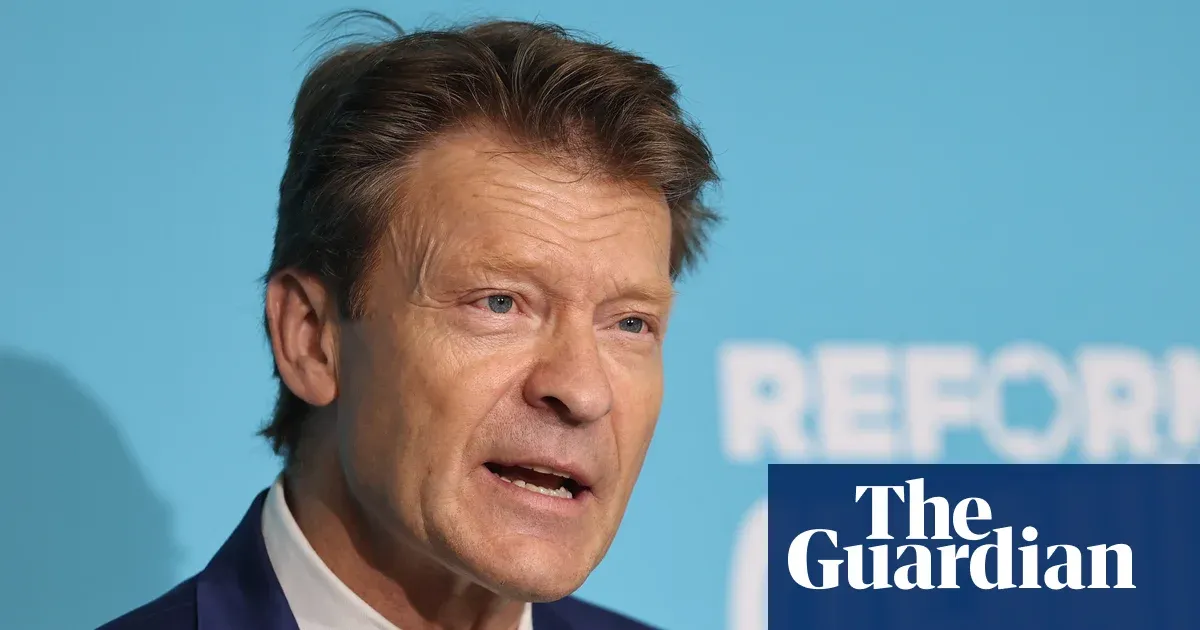
Standards watchdog opens probe into Reform UK deputy leader Richard Tice over interests
The parliamentary standards commissioner says it began an investigation on 28 July into a possible undeclared interest.