
Research finds childbirth is brutal across many primates, not just humans
A long-held belief collapses: the difficulty of birth is shared across primates. Here is what that changes for how we model evolution and risk.
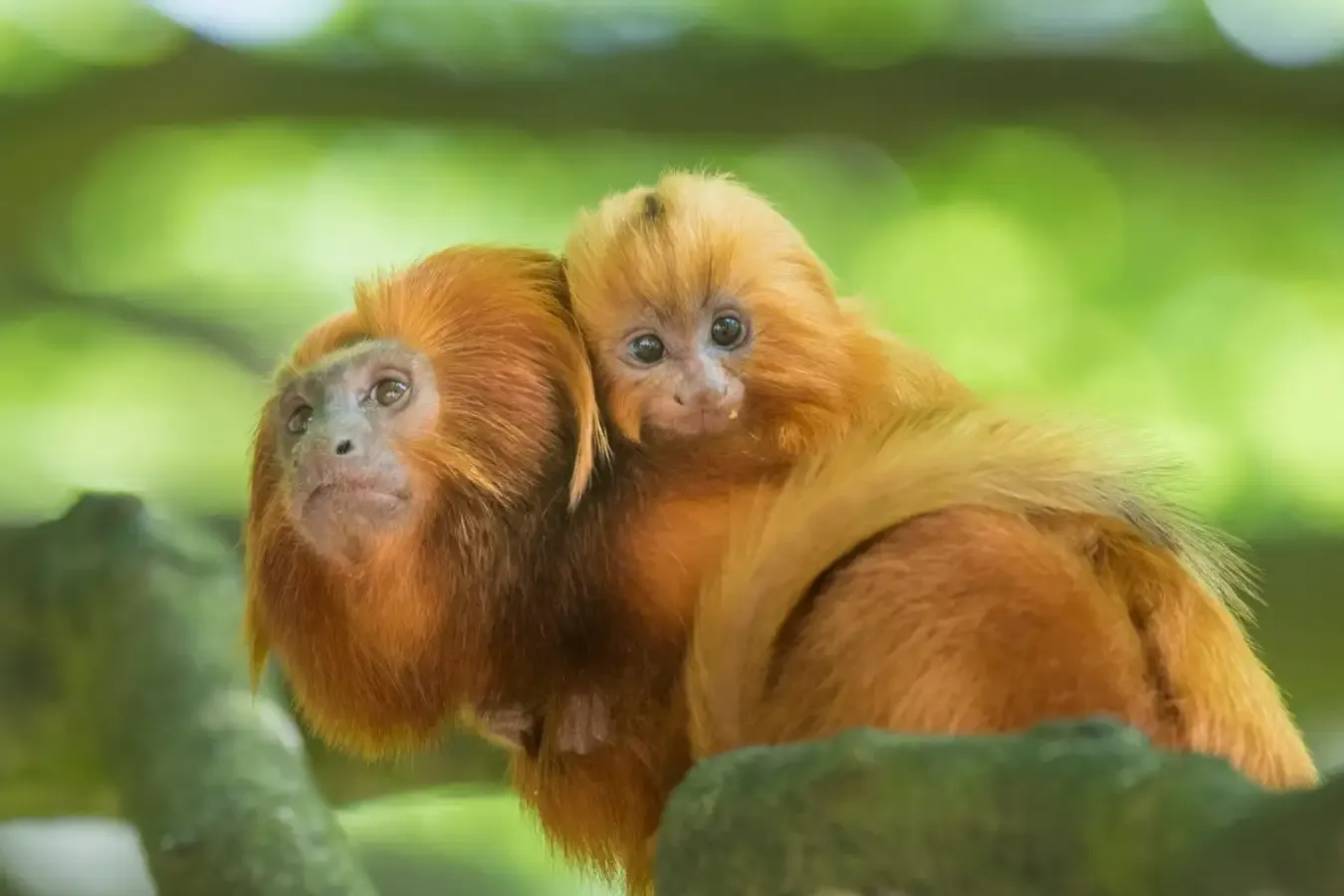
New Scientist reports that the idea of uniquely hard childbirth in humans does not hold up, because many other primate species face similarly difficult births. The consequence for decision-makers is simple: if you build theories, policies, or public narratives on “human-only” assumptions, you may be modeling the wrong baseline.
For decades, the story went like this: childbirth is uniquely difficult for humans, because our anatomy and life history force mothers into a uniquely punishing stretch. New Scientist turns that storyline on its head. Instead of being an outlier, humans appear to be part of a broader primate pattern, where childbirth can be just as difficult for many other species.
The key reversal is the same as the one in the original report: it is not only humans. The birth process in “many other primates” is described as similarly challenging. That matters because it changes what scientists can reasonably infer about why birth is hard in the first place. If multiple primate lineages share the problem, then “human-specific” explanations become less convincing and researchers have to broaden their search for the evolutionary pressures that generate difficult deliveries across the group.
This may sound like a niche biology correction. But it is also a methodological warning that reaches well beyond primatology. When a field treats one species as the baseline for a general claim, it can accidentally lock in assumptions that later evidence disproves. In business terms, it is like designing a model around a single market segment and then being shocked when the same mechanics show up in neighboring segments. You do not just get a slightly different answer. You get a different map of risk.
In humans, childbirth difficulty has been discussed for years through the lens of anatomy, pelvis shape, fetal growth, and the constraints of bipedal life. When people say childbirth is uniquely hard, they are usually trying to explain a specific biological “signature” in our species. The New Scientist finding suggests that signature is not unique. That implies that constraints familiar from human debates may also be produced by shared primate traits, shared developmental constraints, or evolutionary pressures that show up repeatedly across species.
There is also a communication angle that matters for leaders who manage public-facing narratives. Medical and science stories often shape expectations among families, clinicians, and policymakers. If the public hears “humans are uniquely burdened” and then the evidence shows that many primates face similarly difficult birth processes, the framing shifts from a human-only crisis to a broader biological challenge with shared evolutionary roots. That shift can influence how institutions talk about inevitability, mitigation, and the purpose of research. Not because it changes immediate clinical care, but because it changes the story people tell about why the difficulty exists.
From a second-order perspective, the finding can affect how researchers prioritize studies and how funders evaluate the “novelty” of projects. If childbirth difficulty is not a human one-off, then comparative studies across primates become more attractive for explaining mechanisms. Boards and executives supporting science ecosystems might interpret this as a portfolio signal: work that tests cross-species assumptions can yield higher leverage than work that simply refines human-only narratives.
The broader implication is strategic for anyone building models or setting research direction. When evidence expands the set of relevant cases, the original hypothesis weakens. You do not have to change every conclusion immediately, but you do have to update the baseline. In this case, the baseline is the claim that difficult childbirth is uniquely human. New Scientist reports that for many primate species, the birth process is similarly difficult. That is a direct hit to the “human-only” assumption, and it invites a recalibration of the evolutionary explanations that researchers have been using.
So what should leaders take away? The headline is not just a fact about animal reproduction. It is a reminder that even long-standing scientific beliefs can unravel when someone looks across a wider data set. If you run an institution where assumptions drive budgets, narratives, or research agendas, the instinct should be the same as in science: broaden the comparison, stress-test the baseline, and treat “unique” claims as provisional until the cross-species evidence says otherwise.
This story's Key Insights and Take-aways are locked.
Create a free account to unlock Executive Actions for one credit.
Register to UnlockAlways free for Executives Club members. Join the Club
More in Science

Alaska's 1,580-foot tsunami had warning signs. Scientists just found them.
Rapid glacier retreat, heavy rainfall, and thousands of tiny tremors preceded Alaska's 1,580-foot tsunami, a warning for every coastal community in a warming world.
The rare mutation that lets high-risk brains dodge Alzheimer's
Scientists found a natural defense against protein buildup, opening a new path to preventive treatments.

3,000 steps a day may halve Alzheimer's decline, study finds
New research links a modest daily walk to less tau buildup and nearly half the cognitive and functional decline, even for those with early signs.