

Rivian’s sub-$60,000 R2 starts deliveries this month, forcing EV rivals to rethink mass-market plans
The $60,000-ish R2 is built to look like Rivian, fit like mainstream SUVs, and scale like a real automaker.
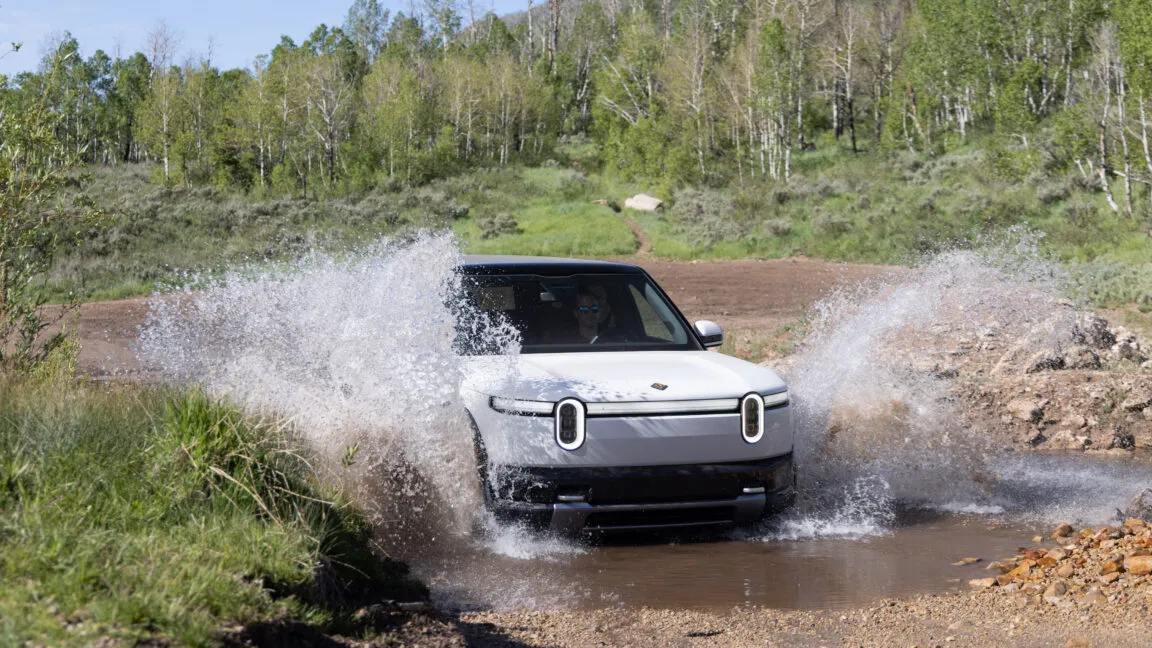
Rivian begins customer deliveries this month of its second EV, the R2, a sub-$60,000 model that brings Rivian’s adventure style to the mainstream. For decision-makers, it signals a shift from aspirational niche to cost-cutting, production scaling, and new customer reach.
Rivian is finally moving from “future bestseller” to “customer reality.” This month, the company begins customer deliveries of the highly anticipated R2, its second EV and the one designed to land in mainstream driveways rather than enthusiast garages. The R2 is positioned as a sub-$60,000 crossover, with the Launch Edition that stickers for just under $60,000 including destination. That price and timing matter because the EV market is no longer rewarding only cool design and ambitious tech. It is rewarding whoever can deliver enough vehicles at a price normal buyers can actually pay.
The real story is not just that the R2 exists. It is what Rivian had to do to make it exist at this scale and cost. The briefing frames the R2 as evidence of a startup transitioning into a mass-market automaker, which required cutting costs, scaling production, and reaching new customers. Rivian is essentially using the R2 as a test case for whether its “adventure lifestyle” identity can survive the ugly math of automotive margins. If it can, the company stops being a hardware experiment and starts becoming a durable competitor.
To get a concrete sense of how Rivian is targeting mainstream buyers, the article points to size and packaging. The R2 almost perfectly matches the dimensions of today’s best-selling US cars, and it is a dedicated two-row model. That is a notable shift from Rivian’s broader lineup: the R1 is a three-row S or pickup truck T, while the R2 is aimed at the volume sweet spot. Specifically, the R2 measures 185.9 inches (4,722 mm) long. That puts it about 1 inch (25.4 mm) longer than a Honda CR-V, signaling Rivian’s intent to feel familiar in the same parking lots and family-hauling decisions as established brands.
The design language also carries forward, but the piece emphasizes that unique packaging requirements forced “nifty design solutions.” In other words, Rivian did not just shrink a concept. A two-row crossover with EV packaging constraints is a different engineering puzzle than a larger multi-row platform. For executives, that distinction is a proxy for competence. Mass-market EV success requires fitting battery systems, motors, cooling, and crash structures into a body that buyers can interpret instantly as “a normal car.” The R2’s dimensions and the way the article describes its packaging suggest Rivian is paying attention to that translation step.
There is also a market timing angle embedded in the delivery launch. The article describes a media drive using flights from Los Angeles to Salt Lake City, Utah, with accommodation, plus on and off-road driving in the Launch Edition. That kind of event matters because it is part of narrative control as much as product demonstration. Rivian is trying to show the R2 can handle the brand promise, then at the same time make it legible to shoppers who previously dismissed EVs as compromises. The Launch Edition’s “just under $60,000 including destination” price point is doing double duty: it anchors the mainstream target while still letting Rivian talk like Rivian.
Strategically, this is where the second-order implications show up for rivals and partners. When an EV startup starts delivering a sub-$60,000 model that matches mainstream dimensions, it raises the bar for competitors that have been leaning on niche positioning, premium-only trims, or limited-scale manufacturing. The article explicitly frames Rivian’s challenge as scaling production and cost control. That means the R2 is likely intended to be a lever for unit economics, not just a halo product. Even without a full teardown of the financials in this source, the implication for decision-makers is clear: mass-market EV is no longer a question of who has the coolest prototype. It is a question of who can produce, price, and deliver.
Regulatory context is not spelled out in this excerpt, but the delivery timing is still tied to a broader reality: regulators and incentives depend on actual deployment, not brand ambition. The fact that Rivian is beginning customer deliveries “this month” puts it into the category that counts for real-world adoption, where vehicles on roads influence policy discussions about charging readiness, emissions goals, and consumer outcomes. For boards and executive teams, that is a big deal. If the R2 performs as intended, it strengthens Rivian’s credibility with regulators, fleet buyers, and mainstream consumers. If it stumbles, the same mainstream ambitions become a pressure point.
For peers, the takeaway is simple: Rivian is using the R2 to compress the time between startup narrative and automotive execution. The R2 is a sub-$60,000 attempt to bring Rivian’s adventure lifestyle to the mainstream, delivered in a two-row body sized like today’s best sellers. That combination is designed to change buying behavior, not just expand the catalog.
This story's Key Insights and Take-aways are locked.
Create a free account to unlock Executive Actions for one credit.
Register to UnlockAlways free for Executives Club members. Join the Club
More in Technology

OpenAI says 10,000 agents cracked a 90-year math problem in 88 hours
The company's claim is audacious, but one mathematician is pushing back. Here's what it means for AI-driven discovery.

Meta still serves child sexual abuse ads on Instagram in India - BBC report
A new report following the BBC Eye investigation says the ads are still there - what it signals for every platform with a self-serve ad engine.

White House yanks 'Build the Wall' game after Tetris Company copyright warning
The administration's arcade game vanished in hours - and the takedown playbook every brand can learn from.