

Rushanara Ali tells Andy Burnham to fix gaps in elections bill
The ex-democracy minister says the draft stays “timid” on voting reform, crypto donations, and social media rules.
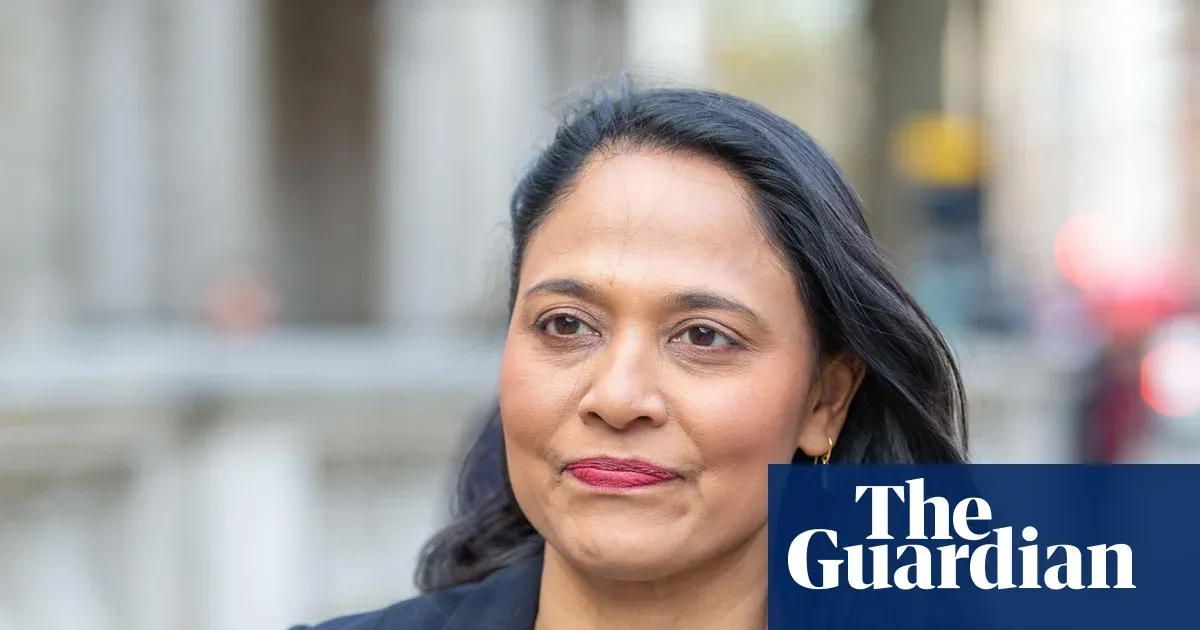
Rushanara Ali, the former democracy minister who helped write the draft elections bill, says the government was “timid” and “incremental” in what it included. She urged incoming prime minister Andy Burnham to overhaul the bill to address major gaps across voting reform, cryptocurrency donations, and social media regulation.
Rushanara Ali, the former democracy minister who helped write the draft elections bill, is publicly urging incoming prime minister Andy Burnham to go further. In her critique, she argues the government was “timid” and “incremental” when deciding what to include, and she points to “big gaps” that remain in the draft. The specific areas she flags are voting reform, cryptocurrency donations, and social media regulation, three buckets that, in practice, decide who gets heard, who gets funded, and how fast information travels during elections.
Ali resigned as democracy minister last August, and her message lands as Burnham prepares to take office: the draft is not a finished product, it is a starting point that still needs serious tightening. If you are an operator, investor, or board member watching politics as a regulatory risk, the headline is not just about parliamentary wording. Elections law can reshape compliance workloads, change the incentive structure for digital platforms, and determine how money flows into campaigns. Ali is essentially saying that, on those high-impact dimensions, the current bill does not yet match the scale of the problem.
To understand why this matters now, think about how modern campaigns actually work. Voting reform is not just procedural. It can affect voter registration, access, and turnout, which then changes the political map, and by extension the priorities that government agencies will fund and regulate. Social media regulation is similarly consequential because platforms have become the distribution layer for political messaging, including targeting, amplification, misinformation dynamics, and how content is moderated or left up. And cryptocurrency donations are a distinct compliance category: they raise questions about traceability, anti-fraud controls, and whether traditional donation rules can keep up with new channels.
Ali’s framing of the government as “timid” and “incremental” signals a strategic dispute over regulatory ambition. In most democracies, election bills sit at the intersection of civil liberties, administrative feasibility, and political bargaining. Governments often face pressure to move quickly but safely, which can lead to smaller, narrower changes. Ali is pushing back on that approach, arguing that the bill still contains “big gaps” rather than closing the most consequential loopholes.
There is also a sequencing angle that boardrooms and compliance teams will recognize: if the law is too underpowered at the draft stage, implementation follows later, and later is when the messy part happens. Agencies have to interpret what is included and what is not. Platforms and campaign operators build processes around the final text. If crypto donations are only partially addressed, for example, campaign infrastructure can remain exposed to ambiguity in accepted payment rails and reporting duties. If social media regulation is vague, enforcement can become inconsistent, which increases legal uncertainty for platforms and creates operational risk for anyone running political advertising or user engagement strategies.
For companies and investors exposed to political communications, the second-order effects are not limited to direct compliance. Social media regulation can influence how quickly a platform changes policies for political content, what kinds of moderation decisions are documented, and how appeals processes work. That, in turn, affects how political actors budget for distribution and how quickly controversies escalate. Voting reform can change the timetable and expectations around outreach, because turnout dynamics influence how much political spend shifts toward persuasion versus mobilization. And crypto donation rules can shape the economics of campaign fundraising by changing friction levels, monitoring requirements, and the cost of building compliant donation workflows.
Ali’s critique also carries a political governance lesson: when a former minister who helped write the draft says the current government approach was “timid” and “incremental,” that is not only about the content. It is about the decision-making posture of whoever sets the legislative agenda. Incoming prime ministers often inherit unfinished work, and those gaps become leverage points. Burnham now has a clear target: he can either accept the bill as a base and promise incremental changes later, or he can use Ali’s highlighted categories as a map to strengthen the draft before it hardens into law.
For readers who operate in adjacent decision spaces, the stakes are straightforward. Election regulation is a live operating environment, not a distant policy topic. Ali is pointing to specific domains, voting reform, cryptocurrency donations, and social media regulation, and arguing the draft still misses key coverage. If Burnham moves to overhaul those gaps, expect downstream changes in compliance expectations, enforcement priorities, and platform and campaign workflows. If not, expect persistent uncertainty and a higher chance that the next legislative fix will have to chase problems that were already visible at the draft stage.
This story's Key Insights and Take-aways are locked.
Create a free account to unlock Executive Actions for one credit.
Register to UnlockAlways free for Executives Club members. Join the Club
More in Politics

LA County: DOJ's 20,000 'noncitizen' voter list is 'unreliable,' includes U.S.-born
Preliminary review by Los Angeles County election officials finds errors in the federal list, raising the stakes for voter roll integrity ahead of November.

Trump's $1.5B Pentagon chip investment lands in North Carolina
A $1.5 billion defense infusion for North Carolina chipmaking signals a new era of Pentagon-backed reshoring - here's what it means for the industry.

Nigeria confirms first Ebola case in Abuja, a woman just off a Uganda flight
Health Minister Muhammad Ali Pate says the patient flew in from Uganda, putting Africa's latest outbreak on Nigeria's doorstep.