
Von der Leyen announces an EU drone deal with Ukraine, sketched as a breakthrough
The EU chief says a new drone arrangement is coming. Here is what it means for European defense procurement.

EU Commission President Ursula von der Leyen announced an EU “drone deal” with Ukraine. For decision-makers, it signals renewed urgency and coordination in how Europe buys and supplies defense capabilities.
EU Commission President Ursula von der Leyen announced an EU “drone deal” with Ukraine. In other words: the bloc is trying to move faster on unmanned systems by packaging commitments into something buyers and suppliers can execute.
That matters because drones are no longer a “special project.” They have become a core operational tool across modern conflicts: they are used for reconnaissance, targeting support, and strike missions. For Europe, the challenge is less about whether drones work and more about whether the region can produce, procure, and deliver them at the pace the front demands. When von der Leyen publicly frames a “deal,” she is doing more than announcing a program. She is telling member states, contractors, and supply-chain partners that the EU wants this treated like industrial throughput, not a one-off humanitarian-style shipment.
To understand the second-order implications, you have to look at how defense procurement usually behaves in the EU. Security and defense policy is politically sensitive, and spending decisions often fragment across national budgets, priorities, and contracting approaches. That fragmentation can slow things down when demand spikes. A centrally announced deal is an attempt to reduce that friction by creating a clearer umbrella under which procurement, delivery schedules, and interoperability expectations can be coordinated.
In practice, “drone deals” tend to involve hard realities that executives must plan around. First is supply capacity: drones, components, and enablers like sensors, communication links, and software all come from a stack of manufacturers. If demand ramps quickly, the bottleneck might not be the drone airframe, it could be microelectronics, batteries, radio modules, testing capacity, or specialty manufacturing lines. Second is sustainment: drones are not just shipped once. They need maintenance, replacement parts, and upgrades, especially when operational needs evolve.
Third is the question of regulatory and contracting framing. Defense procurement rarely maps cleanly onto commercial procurement playbooks. It can involve export controls, end-use restrictions, and licensing constraints that affect what can be shipped, to whom, and under what terms. When an EU head of Commission signals a new “deal” with Ukraine, it is also implicitly navigating those constraints to make transfers legally and operationally workable. That is a board-level concern because compliance delays can be just as damaging as production delays.
For executives at European defense firms, the headline creates both opportunity and pressure. Opportunity, because a stated EU drone deal suggests that government customers are looking for vendors who can deliver at scale, with predictable lead times and support. Pressure, because “deal” language often comes with political expectations. Once leadership puts something on the record, internal timelines get tighter. Vendors and prime contractors may face asks to accelerate production, expand supplier networks, or adapt product configurations for Ukrainian operational requirements.
For investors and capital allocators, the story is a signal about where demand is moving. The market has been watching whether Europe’s defense industrial base can keep up with real operational needs. A high-profile announcement from von der Leyen suggests that the EU is trying to turn that demand into procurement frameworks that are repeatable. If governments can convert urgency into structured contracting and funding, the defense supply chain becomes more legible to the next wave of investment decisions. That can influence everything from capacity expansions to inventory strategies.
Finally, for peers in adjacent roles, the strategic stakes are clear: Europe will likely keep treating drones as a priority domain, and procurement approaches will continue to evolve under EU-level coordination. If the EU can standardize drone sourcing and accelerate deliveries, it could reshape how other defense categories are procured too. But if it fails, the gap between political announcements and physical delivery will widen, and trust among member states and contractors can suffer. In that context, von der Leyen’s “drone deal” is not just a headline. It is a test of whether Europe can align industrial capacity, regulation, and procurement execution fast enough to match battlefield urgency.
This story's Key Insights and Take-aways are locked.
Create a free account to unlock Executive Actions for one credit.
Register to UnlockAlways free for Executives Club members. Join the Club
More in Politics
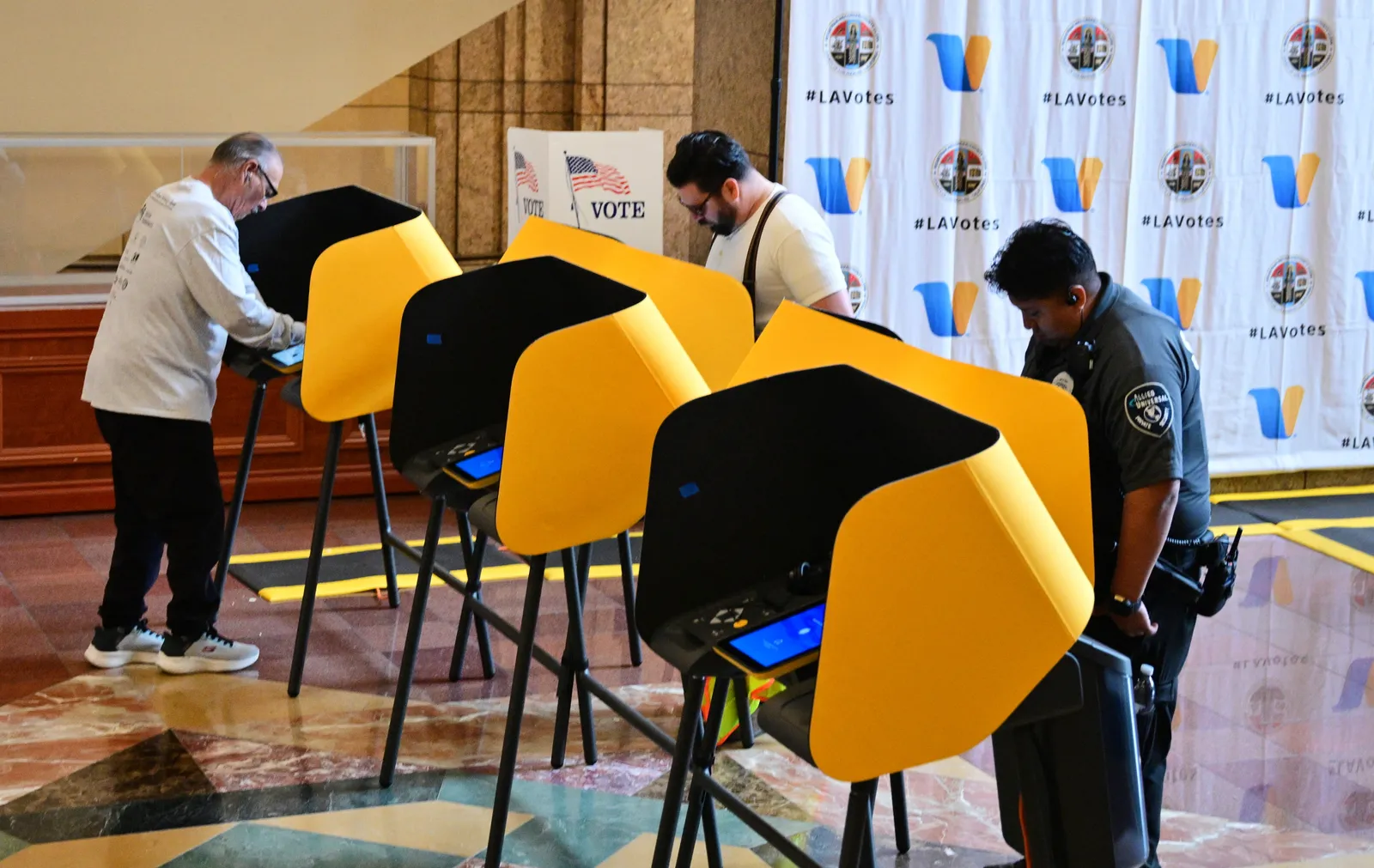
LA County: DOJ's 20,000 'noncitizen' voter list is 'unreliable,' includes U.S.-born
Preliminary review by Los Angeles County election officials finds errors in the federal list, raising the stakes for voter roll integrity ahead of November.
Trump's $1.5B Pentagon chip investment lands in North Carolina
A $1.5 billion defense infusion for North Carolina chipmaking signals a new era of Pentagon-backed reshoring - here's what it means for the industry.

Nigeria confirms first Ebola case in Abuja, a woman just off a Uganda flight
Health Minister Muhammad Ali Pate says the patient flew in from Uganda, putting Africa's latest outbreak on Nigeria's doorstep.