

Russia shifts to Black Sea trade routes to pressure Ukraine’s wartime economy
Moscow is targeting deepwater ports and key routes to squeeze Ukraine’s revenue flow at scale.
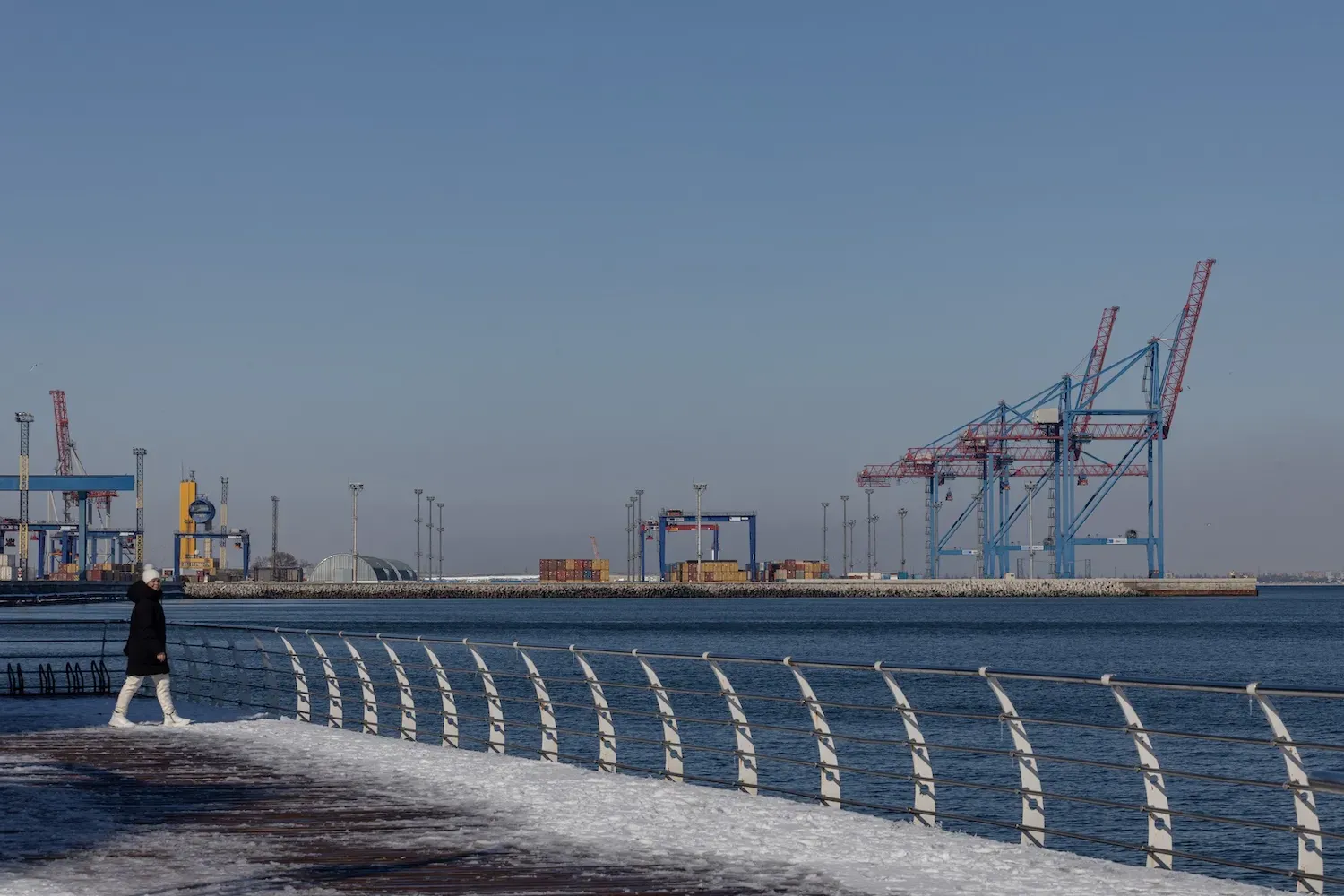
Foreign Policy reports that Moscow is targeting trade routes and deepwater ports as a pressure campaign against Ukraine’s wartime economy. The consequence for decision-makers is straightforward: tighter logistics and disrupted trade can directly hit Ukraine’s ability to fund the war.
Russia is shifting its focus to the Black Sea by targeting trade routes and deepwater ports, aiming to strain Ukraine’s wartime economy, according to Foreign Policy. The move matters because ports are not just infrastructure. They are the supply chain choke points where money, goods, and political leverage tend to concentrate.
In practical terms, targeting routes and deepwater ports is a way to pressure Ukraine without needing to win every battlefield contest. When shipping schedules get unpredictable and access becomes riskier, commerce slows down. That reduces throughput, increases costs, and complicates procurement. For a wartime economy, those frictions land where they hurt most: on the availability and price of imports, on the predictability of exports, and on the broader balance sheet reality of day-to-day survival.
To understand why this is a high-stakes lever, it helps to remember how modern trade works. Deepwater ports are the gateways for large-volume cargo, including essentials like fuel-related inputs, industrial components, and food supply movements. If a port is functionally constrained, it does not just delay shipments. It forces rerouting, increases demurrage and insurance expenses, and can create bottlenecks that ripple through inventories. Even if Ukraine maintains production, the ability to translate output into revenue depends heavily on logistics reaching buyers and bringing in critical inputs.
There is also a regulatory and compliance layer that tends to amplify the impact of route targeting. During wars and geopolitical crises, shipping and insurance markets react fast. Financial services, sanctions screening, and maritime compliance processes can slow or restrict transactions when routes are perceived as higher risk. That means even when goods are technically shippable, the administrative friction can become a de facto barrier. In that environment, a strategy aimed at trade routes can pressure not only physical movement, but also the willingness of counterparties to do business quickly.
The second-order effect is that port targeting can reshape incentives for the entire region’s shipping ecosystem. Shipowners, charterers, logistics providers, and insurers do not respond only to immediate threats. They respond to expected risk over time. If the Black Sea becomes a more volatile or contested corridor, commercial operators may adjust routes, consolidate capacity elsewhere, or demand higher premiums. Over weeks and months, these changes can become self-reinforcing: fewer alternative options means stronger bargaining power for whoever can reliably move cargo, while Ukraine’s counterparties may push for tighter terms to compensate for uncertainty.
This is why the “wartime economy” part of the Foreign Policy description is central. Wartime budgets are not forgiving. Disruptions that reduce revenue or raise import costs quickly translate into budget stress, which can then affect everything downstream, from procurement timelines to the ability to maintain steady operations. Even small percentage changes in shipping costs or delivery reliability can matter when expenditures are already compressed and urgent.
For executives, the strategic takeaway is less about whether the Black Sea plan “works” in some abstract sense and more about the operational vulnerabilities it highlights. Companies with exposure to Ukraine-linked trade, regional supply chains, or maritime logistics will typically feel the effects through lead times, landed costs, and contracting terms. Boards and CFOs should treat trade-route targeting like a risk multiplier that can cascade through working capital, procurement, and customer commitments.
If you are a peer decision-maker in logistics, trade finance, or industrial supply, the lesson is to assume that maritime pressure campaigns focus on choke points where economic pressure is easiest to convert into disruption. The Black Sea is not just a map location. It is a commercial artery, and Foreign Policy’s reporting suggests Russia wants to squeeze that artery to strain Ukraine’s ability to sustain its economy through the war.
This story's Key Insights and Take-aways are locked.
Create a free account to unlock Executive Actions for one credit.
Register to UnlockAlways free for Executives Club members. Join the Club
More in Politics

FBI evidence team inspects Lincoln Memorial pool after $16M repair starts peeling
A newly drained Lincoln Memorial reflect pool failed fast, and investigators are now probing whether vandals drove the damage.

GOP drops $2.2M to support Wisconsin socialist Francesca Hong’s primary run
The spending move is aimed at shaping the general election matchup, and it signals a cynical theory of risk.

Annie Andrews targets Nancy Mace, after Lindsey Graham’s death leaves South Carolina’s seat open
With filings starting July 21, Andrews calls the rematch with Mace “really interesting” and claims polling favors Democrats.