

Ryanair flight returned after passenger was partially sucked from a dislodged window
A 61-year-old suffered injuries, oxygen masks dropped, and the NTSB says the trigger involved engine trouble plus decompression.

A 61-year-old passenger was partially pulled out of a dislodged window on a Ryanair-linked Malta Air Boeing 737-800 shortly after takeoff Friday, forcing the plane to return to Thessaloniki. The incident puts regulators, airlines, and boards back on the same page about cabin safety, seatbelt discipline, and investigation ownership.
A Ryanair-linked Malta Air flight returned to Thessaloniki minutes after takeoff on Friday after a passenger was partially sucked out of a dislodged window. The 61-year-old, whose name was not released, suffered neck and shoulder injuries and friction burns, according to a Greek hospital official.
Ryanair said the flight “returned to Thessaloniki shortly after takeoff when a passenger window dislodged in-flight.” Greek media accounts described a loud bang, oxygen masks dropping, and the aircraft beginning to lose altitude, with fellow passengers pulling the injured man back inside.
Here’s why this matters to decision-makers, not just nervous flyers: this is the exact kind of chain reaction aviation is built to prevent, and the facts are unusually specific. The route was a morning flight from Thessaloniki to Memmingen, near Munich, operated by Malta Air, a subsidiary of Ryanair, Europe’s largest budget carrier. The aircraft was a Boeing 737-800 that can seat up to 189 passengers. Flight tracking cited by Flightradar24 shows it climbed past 15,000 feet about six minutes after departure, then descended immediately to about 6,000 feet “to burn fuel for 30 minutes,” before returning to Thessaloniki about an hour after takeoff. The plane landed normally, passengers returned to the terminal, and one passenger requested and received medical assistance on the ground in Thessaloniki, according to Ryanair.
Ryanair’s public explanation focused on the window: a passenger window dislodged in-flight. But the U.S. National Transportation Safety Board (NTSB) adds the missing linkage that boards and risk teams care about. The NTSB said it was notified the flight turned back because of “a right engine issue and cabin decompression.” Ryanair did not immediately respond to an email request seeking comment on the engine issue. In other words, the window story gets the dramatic imagery, while the engine and decompression story gets the operational root-cause questions that determine how airlines prevent repeat events.
The investigation structure also matters, because it changes who holds the steering wheel. Under international aviation rules, the probe will be led by the Aircraft Accident and Incident Investigation Committee of the Republic of North Macedonia, because the incident occurred in that country’s airspace. The agency in North Macedonia, which borders Greece to the north, did not immediately respond to an emailed request for comment. The NTSB said it was standing by to assist the investigation. For executives, this isn’t just bureaucracy. Investigation leadership shapes what evidence gets prioritized, how findings are translated into safety directives, and how quickly airlines can turn “lessons learned” into enforceable internal controls.
Passengers’ descriptions, plus the videos reportedly recorded inside the plane, show the human side of what happens in the first seconds of a cabin pressure event. Radio Thessaloniki reported that oxygen masks dropped and that some passengers panicked and screamed. One passenger, identified only as Christina, told Radio Thessaloniki that they heard a loud sound like a tire bursting, “very loud,” and that “we knew straight away we lost pressure because we lost altitude.” She said those seated near the injured man pulled him back in, describing that “his whole head, neck, shoulders” were pulled out of the window.
A former airline pilot, Shye Gilad, who teaches at Georgetown University’s business school, put a clear behavioral point on top of the physical one. He said rapid decompression can create a brief but powerful suction effect near a breach before cabin pressure stabilizes, and that the seatbelt “can help in those first few seconds.” He added that events like Friday’s are “a very rare” because “it takes a lot to breach a cabin.” The practical takeaway for boards is uncomfortable but straightforward: even when the underlying cause is mechanical, the severity of outcomes is often amplified by seconds of inattention.
There’s also a logistics and brand-stability angle. Ryanair later provided a replacement aircraft to fly passengers to Germany. That’s not just customer service theater. When an event includes injuries, cabin decompression imagery, and a high-profile budget carrier involved, the operational response becomes part of the safety narrative. Boards will want to see how quickly the airline preserves care continuity, flight disruption management, and communication discipline while investigators do their job.
Zooming out, this incident lands in a bigger context: commercial aviation safety relies on multiple layers, from cabin design and maintenance processes to pilot procedures and passenger compliance with safety instructions. The window dislodgement and decompression combination is rare, but the decision under time pressure is not. For other airline leaders and investors in airlines, the second-order question is whether the organization’s controls around aircraft integrity, inspection rigor, and cabin-risk training are tight enough to prevent a “passenger window dislodged” event from ever turning into “passenger partially sucked out” again.
This story's Key Insights and Take-aways are locked.
Create a free account to unlock Executive Actions for one credit.
Register to UnlockAlways free for Executives Club members. Join the Club
More in Business

SK Hynix opens at $170, raises $26.5B, and tops foreign IPO records
In Friday's Wall Street debut, SK Hynix turns AI RAM demand into a $26.5B fundraising moment that rewrites comps.
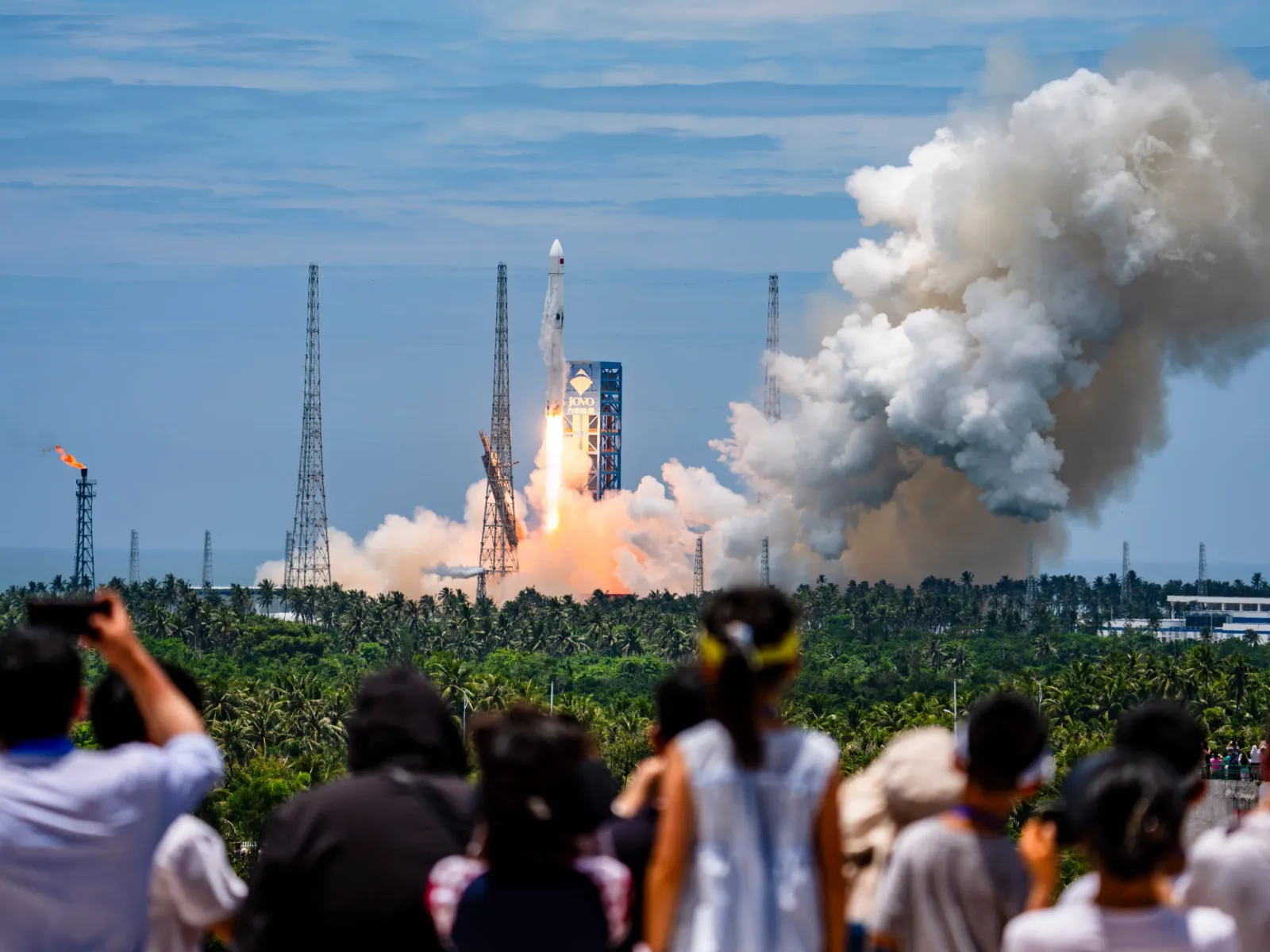
China lands a reusable Long March booster, a first that matches SpaceX and Blue Origin
A barge landing and net-based recovery move China from theory to proof, reshaping the reusability race and satellite ambitions.

AstraZeneca $27B wipeout as Wainua late trial misses cardiovascular target
A failed late-stage heart study triggered a swift market punishment, forcing investors and boards to reset timelines and risk.