

S&P 500 set to crash 21% by 2027 as Treasury yields breach 5%, analysts warn
Capital Economics sees a late-stage bubble pop, with a 21% drawdown and a new era of tight money that will squeeze AI funding and corporate borrowing.
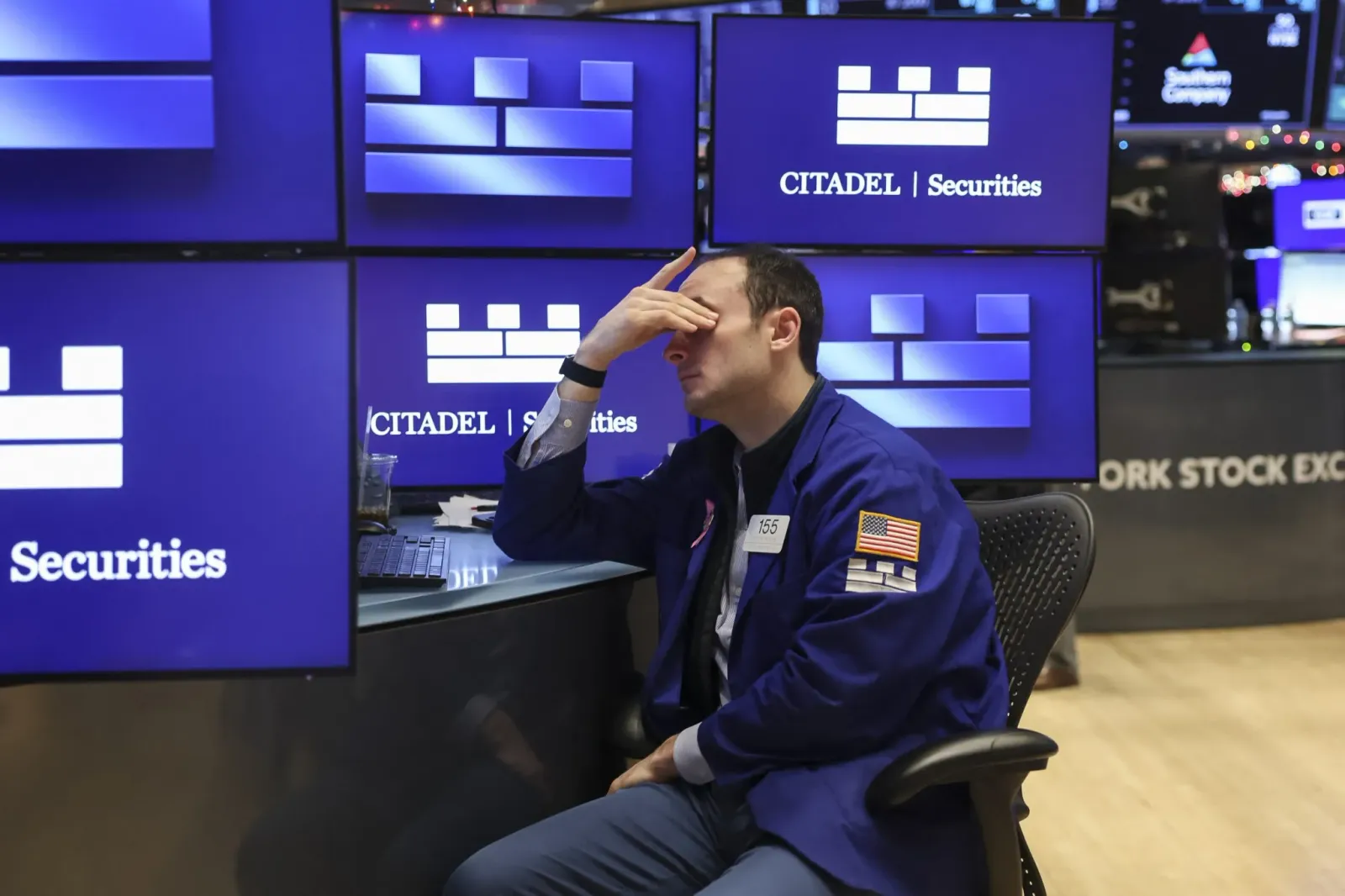
James Reilly of Capital Economics reiterates a forecast for the S&P 500 to plunge 21% to 6,500 by end-2027, while Ruchir Sharma warns a decisive breach of 5% Treasury yields signals a new era of tight money. Decision-makers should brace for a sharp equity drawdown, higher borrowing costs, and a harder funding environment for AI mega projects.
The S&P 500 is set to crash 21% by the end of 2027, and a decisive break above 5% on the 10-year Treasury yield will mark the start of a new era of tight money, according to analysts at Capital Economics and Rockefeller International. James Reilly, senior markets economist at Capital Economics, reiterated his forecast for the index to end 2026 at 8,250 - up 7.7% from Friday's close - before plunging to 6,500 by the end of next year. The warning comes as the 10-year yield hit 4.97% on Friday, just shy of the 5% threshold that Ruchir Sharma, chairman of Rockefeller International, says could pop the AI bubble.
Reilly's note, published Thursday, argues that "most of the factors we consider are at, or close to, levels that have preceded past stock market peaks." He flags a battery of bubble indicators: cyclically adjusted price-to-earnings ratios near dotcom peaks, forward 12-month earnings-per-share growth in line with the dotcom bubble, and a market-cap concentration that has historically preceded unsustainable rallies. He also points to a booming equity issuance pipeline - IPOs and follow-ons - that in past cycles has signaled a bubble's end is "just months away, not years."
Sharma, writing in the Financial Times, warns that the AI bubble could pop when the 10-year yield "decisively breaches" 5% - the upper end of its range since the dotcom era. "This breach would signal the start of a new era of tighter money, in which AI mega projects will be harder to fund," he wrote. Borrowing costs that high would hit the AI boom in multiple ways: hyperscalers would likely issue fewer bonds to finance spending, new equity issuance would face a historical headwind, and yields approaching nominal GDP growth would make the national debt even more unsustainable, given that the U.S. debt burden now exceeds 100% of GDP.
Sharma notes that while some on Wall Street argue yields are merely normalizing after years of central bank suppression, the U.S. is far more addicted to debt now. "As a result, debt-servicing costs are much higher now," he wrote. "Rising public borrowing costs will squeeze other borrowers sooner, and hit the bubbly AI markets harder."
Even staunch bulls are getting nervous. Wall Street veteran Ed Yardeni lowered the odds of his "Roaring 2020s" scenario for the rest of the decade from 80% to 70%, and raised the odds of a bearish outcome from 20% to 30%. "Admittedly, recent developments in the oil and bond markets are unnerving," he said in a note Saturday.
For executives and boards, the implications are immediate. A 21% drawdown in the S&P 500 would erase trillions in market value, hitting portfolio valuations, pension funds, and the cost of capital for even the most creditworthy issuers. The AI investment cycle - already under scrutiny for massive spending and shrinking free cash flow, with combined free cash flow for top hyperscalers expected to turn negative in 2027 - would face a much tougher funding environment if yields stay above 5%.
The concentration risk is also a governance issue. With market-cap concentration at extreme levels, index funds and passive strategies are disproportionately exposed to a handful of mega-cap tech names. A correction in those names would ripple through the entire market, and boards should stress-test their capital plans against a scenario where equity issuance dries up and debt refinancing becomes prohibitively expensive.
The strategic takeaway is that the window for opportunistic fundraising and balance-sheet optimization may be closing. Companies that need capital for AI initiatives or other long-term projects should consider locking in financing now, before a potential yield breach and equity market downturn make it far more costly. As Reilly's indicators suggest, the final months of 2026 may offer gains, but the risk-reward is deteriorating fast.
This story's Key Insights and Take-aways are locked.
Create a free account to unlock Executive Actions for one credit.
Register to UnlockAlways free for Executives Club members. Join the Club
More in Business

Royal Caribbean just spent $3B to own half of Sandals
The cruise giant is buying a 50% stake in the all-inclusive resort chain for $3 billion, a bet that land-based vacations are the next growth engine.

Paramount's Ellison: Merger Clearance Done, WBD Deal by Oct 1
David Ellison says the Paramount-WBD merger has full clearance after settling with state AGs, clearing the path for an October 1 close.

Paramount settles with 12 states, $110B Warner merger clears final hurdle
David Ellison's studio avoids a March trial and a $7M-a-day ticking fee by settling with state AGs over local job losses.