
Senegal’s Faye backs Macky Sall for UN chief, reversing course after Mali and Nigeria attacks
The Senegalese president’s pivot puts UN leverage and Sahel security politics into play right as Mali and Nigeria suffer deadly strikes.
Senegalese President Bassirou Diomaye Faye is now backing former president Macky Sall’s bid for UN Secretary-General. The decision matters to decision-makers watching how Sahel security, foreign influence, and diplomatic blocs may shift at the UN.
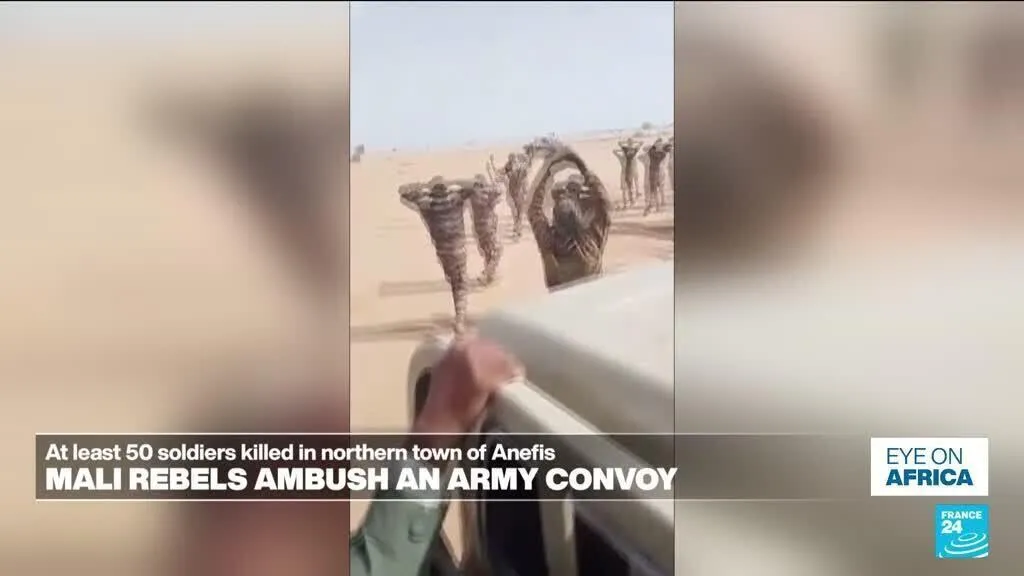
Senegal’s President Bassirou Diomaye Faye has backed former President Macky Sall’s bid to lead the United Nations, a political reversal that lands in the middle of worsening security shocks across the Sahel. This is not happening in a vacuum. In the same news cycle, a deadly ambush in northern Mali leaves at least 50 soldiers dead, underscoring how fast violence is absorbing national security priorities and, by extension, foreign policy bandwidth.
Faye’s backing is the immediate development, and it is exactly the kind of move that can reverberate far beyond Senegal’s borders. As a new candidate for UN Secretary-General gathers support, UN chief selection becomes less about credentials on paper and more about coalition arithmetic among states and regional blocs that are coping with insurgencies, security crises, and legitimacy challenges at home. In this moment, Senegal is signaling that it wants a seat at the table with a candidate it has chosen to support.
The Sahel backdrop helps explain why this matters. According to the source, Nigeria is also facing a new challenge in its war against jihadists, with foreign fighters joining insurgent groups. That detail is a big deal for how conflicts evolve because it raises the stakes of containment. When conflict attracts outside fighters, it can accelerate violence, diversify tactics, and complicate negotiations for local authorities and partner governments. For executives and boards with international exposure, that kind of instability tends to translate quickly into risk, even if you are not tracking security briefs day to day.
Meanwhile, northern Mali’s ambush, which leaves at least 50 soldiers dead, is a stark reminder that security failures can create political openings. When units are hit and casualties mount, governments often face pressure to respond with harder security measures, more international assistance, or political reshuffling. The source does not specify the causes of the attack, but the outcome itself is the kind of event that forces immediate attention. That urgency tends to redirect diplomatic capital. It also tends to make UN coordination, regional mediation, and international legitimacy more salient, which loops back to why a UN leadership bid is not just a ceremonial contest.
So why does Senegal’s move stand out? Because backing a UN Secretary-General candidate is a form of international signaling. It suggests Senegal believes that the person it supports can help align global attention, aid, and diplomatic focus at a time when conflicts are multiplying. It also suggests internal political confidence in linking a past presidency and a current administration’s foreign policy direction. The source is clear that Faye is now backing Sall. It does not claim how long this support has been in motion or what negotiations led to it, but the word “u-turns” in the original framing points to a reversal, meaning Senegal is changing tack.
For decision-makers, this kind of diplomatic pivot should be read as a small change with potentially big second-order effects. UN leadership influences agenda-setting and how quickly crises get attention. That can affect humanitarian coordination, security sector support, and the tone of international engagement. When wars intensify, the UN becomes one of the platforms where member states try to channel efforts into programs that are not purely military. If Nigeria is dealing with foreign fighters and Mali is absorbing deadly attacks, those realities increase the urgency for international frameworks that can keep pressure on militant networks and reduce incentives for escalation.
There is also a governance angle that matters to anyone who tracks political risk: UN leadership bids often shape how regional blocs align, which can alter the diplomatic environment for investment, development funding, and cross-border regulation. Even companies not in the defense sector feel the spillover through supply chains, banking risk, and project financing in high-volatility regions. Senegal’s decision, paired with the Sahel violence described in the source, is a reminder that the UN is not distant. It is a lever that can affect how quickly the world organizes itself when the local operating environment is breaking down.
Put simply: the source ties together three stories in one news cycle. A deadly Mali ambush leaves at least 50 soldiers dead. Nigeria faces new jihadist complications as foreign fighters join insurgent groups. And Senegalese President Bassirou Diomaye Faye is backing former President Macky Sall’s bid for UN Secretary-General. For executives and boards, the strategic stakes are straightforward: when security crises worsen and cross-border militant threats grow, international institutions and diplomatic coalitions become more consequential, and the people chosen to lead them can influence the speed and shape of global responses.
This story's Key Insights and Take-aways are locked.
Create a free account to unlock Executive Actions for one credit.
Register to UnlockAlways free for Executives Club members. Join the Club
More in Politics

LA County: DOJ's 20,000 'noncitizen' voter list is 'unreliable,' includes U.S.-born
Preliminary review by Los Angeles County election officials finds errors in the federal list, raising the stakes for voter roll integrity ahead of November.

Trump's $1.5B Pentagon chip investment lands in North Carolina
A $1.5 billion defense infusion for North Carolina chipmaking signals a new era of Pentagon-backed reshoring - here's what it means for the industry.

Nigeria confirms first Ebola case in Abuja, a woman just off a Uganda flight
Health Minister Muhammad Ali Pate says the patient flew in from Uganda, putting Africa's latest outbreak on Nigeria's doorstep.