

Seth Meyers calls Trump’s China address “10 beers deep” and says it worked
NBC’s Seth Meyers jokes that Trump sounded drunk, then argues his China rhetoric backfired spectacularly.
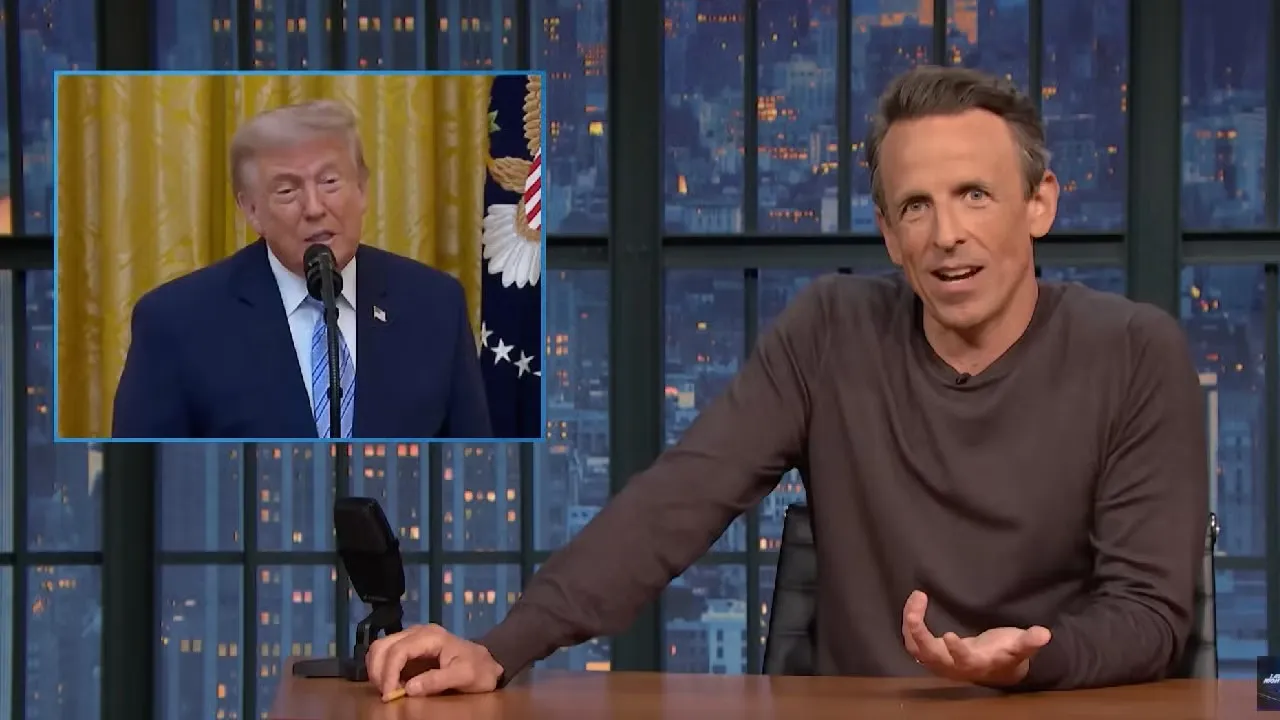
Seth Meyers used NBC’s “A Closer Look” to question whether Donald Trump was “drunk, bro” during last week’s primetime address. His jokes landed on Trump’s claims about China’s supposed messaging efforts and on what those claims imply for credibility.
After President Trump’s primetime address last week, the public debate went wide and immediate, with questions about possible punishment for China and whether Trump’s claims had evidence behind them. Seth Meyers, though, didn’t go wide. In his Wednesday “A Closer Look” segment, the NBC host went straight for one headline grabber: “Are you drunk, bro?” he asked, reflecting on everything Trump said during the speech.
Meyers’ core riff was that Trump’s delivery sounded less like a commander-in-chief and more like a frat-house meltdown. “You sound like you’re 10 beers deep at a frat party, complaining about your girlfriend’s besties,” Meyers joked. He then mocked the logic of Trump’s claim that the Chinese government “wanted to just make you sound like your president wasn’t so hot.” Meyers riffed on the imagined scene: Trump describing it as if China wanted to undermine him while he, in turn, spins it as a costume story. “No listen to Becky and Susan,” Meyers quipped, “they wanted to just make you sound like your boyfriend wasn’t so hot.” In Meyers’ framing, the joke is that if China’s goal was to change how people viewed Trump, the outcome was the opposite of subtle. “If that was their plan, it f-king worked!” Meyers said.
What makes Meyers’ bit more than late-night noise is how it connects to the bigger, more consequential debate hovering around that address: how narratives get built and enforced when governments and global companies both have incentives to control the story. When a political leader makes claims about another government, it is not just rhetoric. It shapes expectations among allies and audiences, pressures domestic regulators, and can influence the posture of markets that price in risk. Even if a segment is “just comedy,” the underlying question audiences are asking is real: did Trump’s assertions hold up, and if not, what happens next?
Meyers doubled down on timing and accountability by pointing out that the moment he was reacting to had occurred in 2020. “And this happened in 2020, you say? Man, whoever was president back then must feel like an idiot right now,” he said, tying the entertainment value of his joke to a credibility test that media critics, political commentators, and viewers keep returning to. There is also a parallel critique taking shape in mainstream TV commentary. The source notes that on “The View,” host Alyssa Farah Griffin also highlighted that Trump was in office during the 2020 election, so claiming there was fraud “under his watch” is “not the flex that Donald Trump thinks it is.” The common thread: if you are the political incumbent, the burden of explanation does not magically relocate.
Then Meyers went after another specific claim Trump made about China. Trump’s purported story included the idea that China obtained “names, addresses, phone numbers” and more, with Meyers treating the presented scale and details like a self-own. “Seriously, they used to send that information out to everyone’s house, whether you wanted it or not,” Meyers said. That line is doing a lot of work. It is a jab at the idea that something is uniquely impressive or scandalous when the underlying information was already widely disseminated. In a world where cybersecurity incidents and data exposure are common, the difference between “real threat” and “rhetorical threat” matters. If you exaggerate what data access means or how it happened, you can accidentally teach audiences to downgrade your future claims. That is the second-order implication executives and boards should care about, because credibility is a form of market infrastructure.
Meyers also mocked Trump for acting as if China’s alleged acquisition of more information, including “what time and channel our sitcoms are on,” was a major feat. “It’s a highly classified document called the TV Guide!” he said. Again, the punchline lands as comedy, but the underlying mechanism is important: when public leaders treat everyday facts as intelligence victories, they can distort how the public understands risk and preparedness. That can affect everything from how companies prioritize security investments to how regulators interpret severity when they later see similar narratives.
For decision-makers watching the media ecosystem around national-security messaging, this matters because attention is an asset. A primetime address is designed to control interpretation. When the strongest immediate response from a major late-night platform is to frame the delivery as incoherent, drunk, or clownish, you get a compliance problem: audiences remember how it felt, not just what was said. That can spill into other channels, including business media coverage and investor sentiment, especially when the address touches China and potential punitive actions. The source also notes that questions after the speech included potential punishment for China and evidentiary support of Trump’s claims. Those are not academic issues. They are the exact components that drive policy risk, cross-border business friction, and the cost of uncertainty.
So, what should leaders take from this? Not that late-night jokes are policy memos. But the energy of Meyers’ segment shows how quickly public claims can become cultural shorthand, and how that shorthand can either tighten scrutiny or blunt it. If the message is perceived as sloppy, the follow-on consequences can be sharper than anyone expects: harder negotiations, higher political friction, and deeper reputational risk for whoever has to translate rhetoric into real-world action. In short, Meyers is making fun of Trump’s delivery. But the real takeaway for peers in leadership roles is that credibility is operational. Once audiences decide your narrative sounds like a bad frat story, you spend the rest of the week paying for it.
This story's Key Insights and Take-aways are locked.
Create a free account to unlock Executive Actions for one credit.
Register to UnlockAlways free for Executives Club members. Join the Club
More in Politics
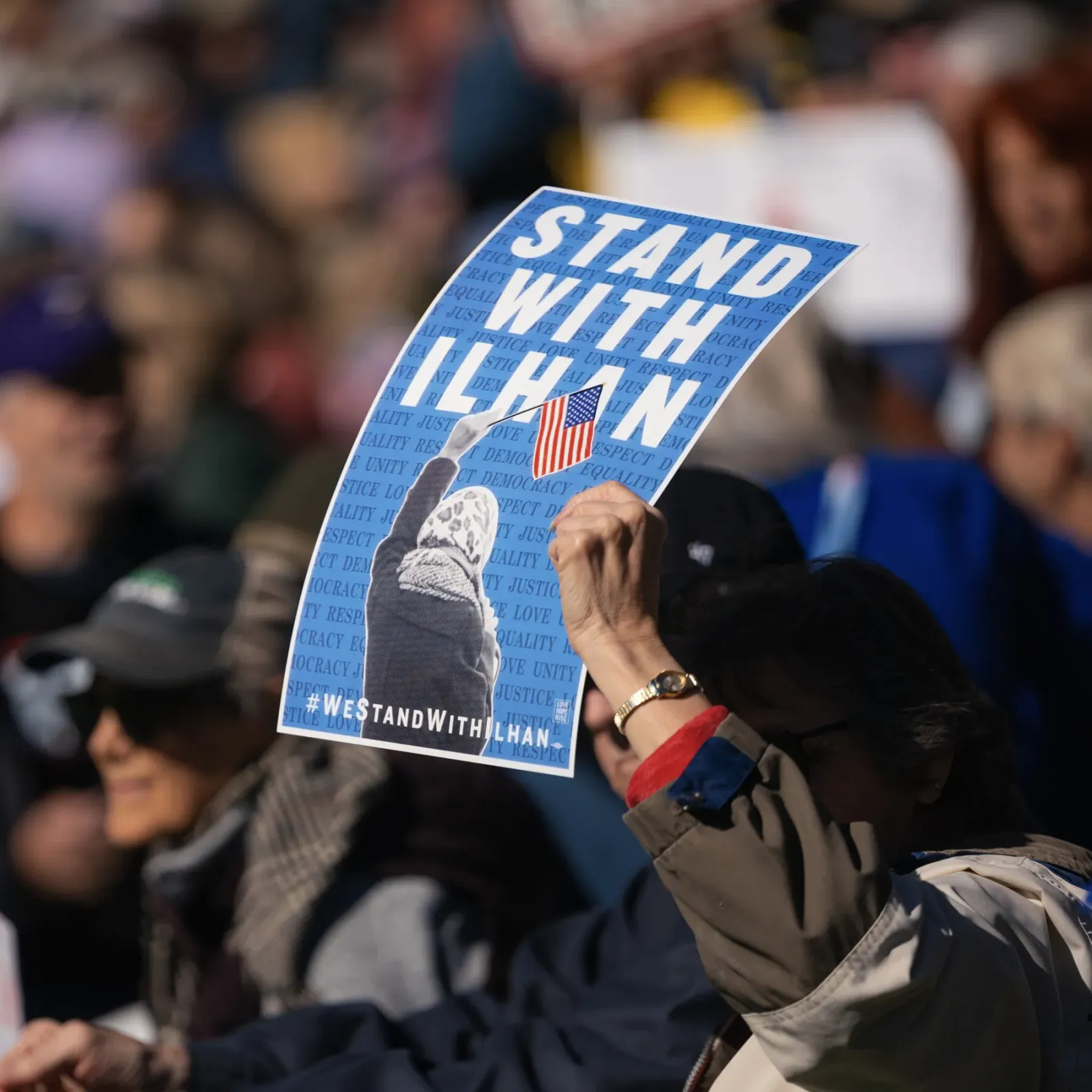
Obama Defends Ilhan Omar After Agents Search Her Home in Trump Inquiry
The former president's intervention raises the stakes in a federal probe into immigration paperwork that has put a prominent progressive lawmaker in the crosshairs.

Blair-era minister: cut welfare to fund youth job support
Alan Milburn's call for welfare cuts to fund employment support opens a Labour fight over benefits and the Neet crisis.
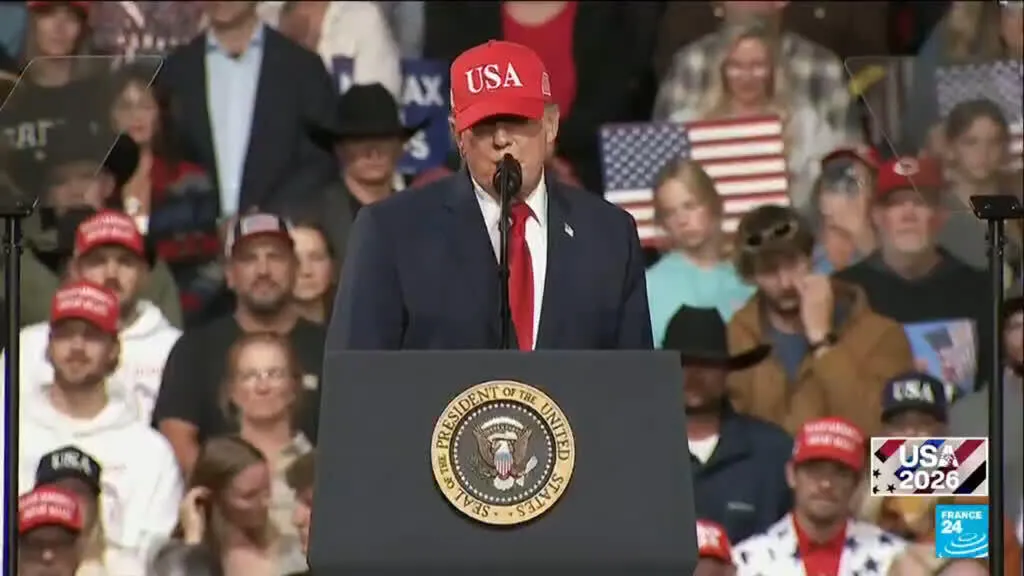
Hot September CPI: energy costs surge, voters feel the squeeze before midterms
The latest inflation print lands as Trump campaigns for GOP control of Congress, putting cost-of-living worries at the center of the midterm fight.