
Shaheen and Murkowski press Rubio to unlock family planning aid in Congo Ebola
A bipartisan letter urges the Trump administration to release women-focused family planning funding and supplies during DRC’s Ebola outbreak.
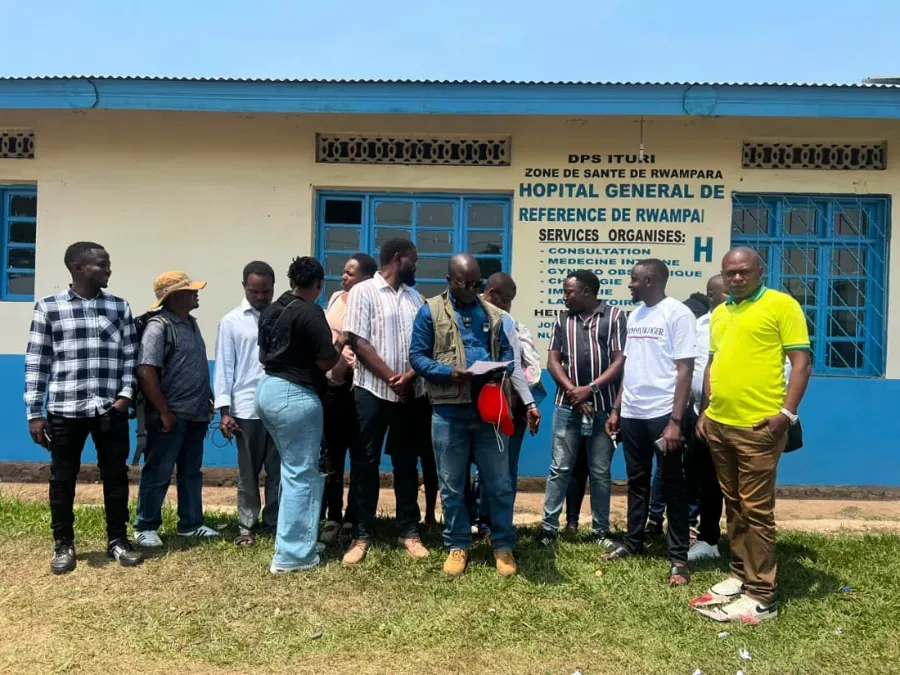
Sens. Jeanne Shaheen and Lisa Murkowski sent a Thursday letter to Secretary of State Marco Rubio asking the administration to lift barriers to releasing family planning funding and supplies. For decision-makers, the request ties public health response capacity to political and administrative control over aid flows.
A bipartisan pair of senators is pressing Secretary of State Marco Rubio to release family planning funding and supplies for women affected by the ongoing Ebola outbreak in the Democratic Republic of Congo (DRC). In a letter dated Thursday, Sens. Jeanne Shaheen (D-N.H.) and Lisa Murkowski (R-Alaska) asked the Trump administration to lift the restrictions that are preventing the money and materials from getting to women who need them.
That’s the headline. The immediate stake is practical and urgent: Ebola response is not just about stopping transmission. It is also about keeping essential healthcare services functioning for groups whose needs do not pause when an outbreak does. Shaheen and Murkowski are effectively arguing that family planning support is part of a responsible, complete emergency response, not an optional add-on.
To understand why senators are targeting Rubio and the State Department, you have to look at how US government funding and global health programs often move. In many crises, the bottleneck is not the existence of priorities. It is the specific mechanism. “Unlocking” can mean lifting an internal administrative hold, changing eligibility rules, or moving resources through channels that were constrained by policy frameworks. When lawmakers intervene publicly, they are usually forcing a decision: keep the current interpretation, or revise it quickly enough to matter on the ground.
This is also a political message disguised as an operational one. Shaheen and Murkowski represent opposite parties, but they are aligned on a narrow, high-stakes issue: women’s health during an emergency in DRC. That bipartisan framing is important because family planning funding and related health services have historically been politically contentious in the United States. By pairing a Democrat from New Hampshire with a Republican from Alaska, the senators are signaling that the request is not about reopening ideological battles in Washington. It is about preventing an avoidable gap in care while an outbreak continues.
For executives and boards watching from the sidelines, this is a reminder that global health and emergency response are increasingly shaped by governance, not just medicine. Even companies that provide logistics, diagnostics, or medical supplies are exposed to how quickly governments can move funds and approvals. If administrative steps delay distribution, the delay can translate into missed windows, disrupted procurement cycles, and complicated on-the-ground planning for partners supporting relief efforts.
There is also a second-order effect that often gets overlooked: aid rules can influence behavior and staffing in ways that ripple through local health systems. If family planning funding and supplies are tied up, programs that coordinate women’s healthcare may have to scale back services, even if they are willing and able to support Ebola-related prevention and treatment. That can strain trust in public health messages. In an outbreak environment, trust is an asset you cannot afford to squander.
From the perspective of policymakers, directing attention to the Secretary of State highlights the interplay between foreign assistance and domestic policy constraints. The Hill story centers the letter to Rubio and the senators’ request to lift barriers to releasing family planning resources. That choice of target matters because it points to where the levers likely are. In other words, Shaheen and Murkowski are not asking for a vague “more help.” They are asking for specific action on funding and supplies, with Rubio as the named executive responsible for responding.
If you are a CEO, CFO, or board member at an organization that works in public health, humanitarian logistics, or global development, the strategic lesson is simple: regulatory and administrative decisions can become supply chain events. The Ebola outbreak in DRC is ongoing, and while the medical response is the headline, the funding authorization and release process is what determines whether programs can actually deliver. Bipartisan senators are now publicly raising that question, and when oversight shows up in a letter to a Cabinet official, it can accelerate or re-route decisions fast. Your peers should pay attention, because this is how emergency governance turns into operational outcomes.
This story's Key Insights and Take-aways are locked.
Create a free account to unlock Executive Actions for one credit.
Register to UnlockAlways free for Executives Club members. Join the Club
More in Politics
Obama Defends Ilhan Omar After Agents Search Her Home in Trump Inquiry
The former president's intervention raises the stakes in a federal probe into immigration paperwork that has put a prominent progressive lawmaker in the crosshairs.

Blair-era minister: cut welfare to fund youth job support
Alan Milburn's call for welfare cuts to fund employment support opens a Labour fight over benefits and the Neet crisis.

Hot September CPI: energy costs surge, voters feel the squeeze before midterms
The latest inflation print lands as Trump campaigns for GOP control of Congress, putting cost-of-living worries at the center of the midterm fight.