

Skyroot’s Vikram-1 Aagaman targets low Earth orbit July 12-Aug. 4, aiming to prove India’s private path
Pawan Kumar Chandana’s team has assembled Vikram-1 for a first private Indian orbital satellite launch, with multiple payloads and restartable upper-stage moves.
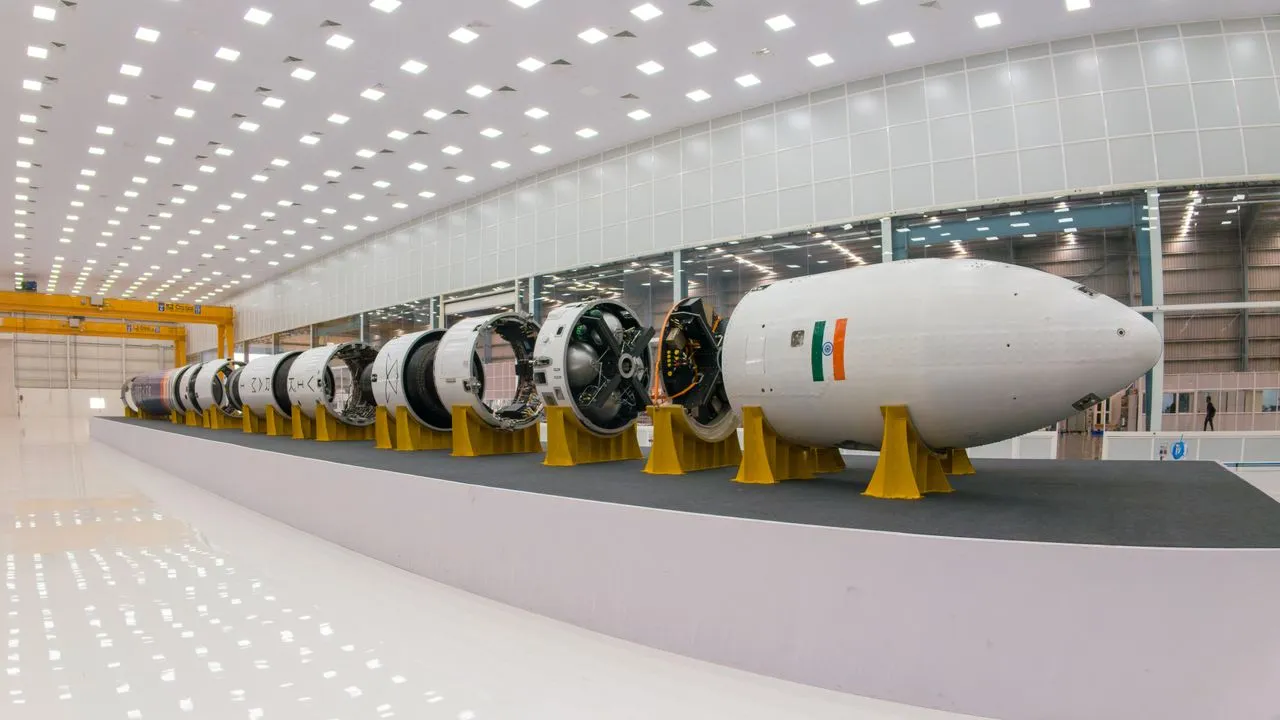
Skyroot Aerospace co-founder and CEO Pawan Kumar Chandana is preparing the company’s Vikram-1 rocket for its first orbital mission, Aagaman, during a launch window from July 12 through Aug. 4 at Satish Dhawan Space Centre in Sriharikota. If it works, Skyroot could validate an orbital delivery model for small satellites and accelerate a broader shift as India scales private launch capability.
HYDERABAD, India - Skyroot Aerospace’s Vikram-1 mission, named Aagaman (Sanskrit for "arrival"), is set to fly in a launch window that opens July 12 and runs through Aug. 4, 2026. The target: low Earth orbit at an altitude of 280 miles (450 kilometers), carrying multiple customer payloads into precise orbital destinations. The stakes are unusually clean for a space debut, because the mission is aiming at a line India has never crossed: no private Indian company has ever launched a satellite to orbit.
The rocket on the pad is not just a bigger version of last time. Vikram-1 has three solid-fueled lower stages, but it also centers a liquid-fueled upper stage called the Orbit Adjustment Module that can restart its engine, enabling multiple satellite deployments into different orbits during a single mission. That restartability is the key capability Skyroot has tested extensively on the ground, but not yet demonstrated in flight. In other words, the July 12 to Aug. 4 window is not merely about whether the rocket rises, it is about whether the orbital “plumbing” behaves the way the simulations say it should.
Space.com visited Skyroot in February at its Max-Q campus, where Vikram-1 was still coming together inside a 55,000-square-foot (5,110 square meters) rocket factory. Engineers were working through critical simulations and system checks for the Orbit Adjustment Module. Back then, the company was waiting for an overnight transport of one major component to Sriharikota, where the lower stages had already arrived for final integration. Five months later, the assembled seven-story vehicle stands on the coastal launch pad, monitored by a launch team of about 200 people, roughly one-fifth of Skyroot’s workforce, preparing for the window. Skyroot has not announced a firm target date within that range, but the countdown is now real because the entire campaign has converged on that one shot.
If Aagaman succeeds, the manifest reads like a mix of commercial intent and national signaling. Skyroot’s SCOPE satellite is aboard, along with a technology demonstration from the German company DCUBED, Grahaa Space’s SOLARAS S3 satellite, and Embrace, a robotic arm designed to capture debris in orbit, from fellow Indian company Cosmoserve Space. The mission also carries two symbolic payloads: a floral-shaped artwork called Cosmic Bloom from lab-grown-jewelry company Cosmos Diamonds, and a miniature 18-karat gold rocket by artist Ajay Kumar Mattewada honoring Indian scientific pioneers Vikram Sarabhai (after whom the Vikram rocket series is named), C.V. Raman, and A.P.J. Abdul Kalam.
From a business perspective, these payload choices underline the “why now” behind Skyroot’s bet. A successful mission would move Skyroot closer to offering dedicated launches for small satellites that require precise orbital destinations. Instead of flying as secondary payloads on larger rockets, customers would be able to purchase missions tailored to their own orbital requirements, a model most successfully employed these days by Rocket Lab in the commercial market. Skyroot co-founder and CEO Pawan Kumar Chandana frames it as booking a cab rather than taking a train, saying there are very few opportunities for customers to reach customized orbits today.
Aagaman is the first of three planned development flights intended to validate Vikram-1 before Skyroot begins commercial operations. The company’s scaling ambition is tied directly to performance and data quality. Chandana says Skyroot hopes to scale production to one orbital rocket a month from its two Hyderabad campuses if the vehicle performs as expected. The operational logic is clear: the whole idea is to launch as prepared as possible and to collect as much data as possible from each mission, so the company can move toward fast-paced, high-frequency launches. That is a second-order promise executives should care about, because cadence is often what turns launch from a novelty into a repeatable revenue machine.
The timeline behind Vikram-1 also shows how hard it is to go from “space reached” to “orbit achieved.” Skyroot first drew headlines in 2022 when its Vikram-S vehicle became the first privately developed Indian rocket to reach space, climbing to an altitude of roughly 54 miles (88 km) before falling back to Earth. That flight was a suborbital technology demonstrator, so it was not the same engineering mountain. Developing an orbital-capable rocket capable of reaching 280 miles (450 km) also requires accelerating the payload to about 8 km (5 miles) per second, fast enough to remain in orbit around Earth. Vikram-1 must execute precisely timed stage separations before relying on its restartable liquid-fueled upper stage to place satellites into their intended orbits.
And that brings us to the context executives often underestimate: regulation and infrastructure. When Chandana and co-founder Bharath Daka left the Indian Space Research Organisation (ISRO) to establish Skyroot in 2018, India’s private launch industry was almost nonexistent. There was no national space policy or formal framework for private investment, and startups lacked an established pathway to use government launch facilities. Skyroot leaned on India’s existing aerospace supplier base, the expertise of former ISRO engineers, and the founders’ belief that India’s proximity to the equator would make it a commercially attractive base for launches, since Earth spins faster near the equator and rockets launched from low latitudes receive an extra push toward orbit.
In 2020, the Indian government opened the space sector to private companies by establishing the Indian National Space Promotion and Authorization Center (IN-SPACe). A new space policy in 2023 then allowed startups to independently design, test, and launch their own space technologies while also giving access to ISRO’s launch pads, propulsion test stands, and other facilities. Chandana says those reforms accelerate development cycles because the company does not need to invest energy into building facilities. Since then, India’s space sector has grown from a state-dominated enterprise to an ecosystem of more than 400 startups. Jitendra Singh, India’s minister of state for science and technology, recently estimated that the country’s space economy, valued at roughly $8.4 billion in 2022, could expand to about $40 billion over the next decade as private investment and launch activity accelerate.
Skyroot itself is positioned as a capital-backed proof point for that growth narrative. The company is backed by a $1.1 billion valuation after raising $60 million in May. It is already looking beyond small satellites, with plans to develop larger launch vehicles capable of carrying heavier payloads while investing in reusable rocket technology to decrease launch costs, which Chandana says will be increasingly important for launching big satellite constellations. For now, though, the near-term strategic focus is brutally simple: validate Vikram-1 in orbit.
For decision-makers across the venture, aerospace, and satellite ecosystems, this is the kind of moment that changes how risk gets priced. If Skyroot achieves the orbital insertion and successfully uses the restartable upper stage to deliver multiple payloads into their intended orbits during Aagaman, it strengthens the case for tailored small-satellite missions and pressures competitors to match cadence and capability. If it does not, the industry learns what ground tests could not fully capture. Either way, July 12 to Aug. 4 is more than a launch window. It is the referendum on whether India’s private orbital era is ready to move from policy talk to mission reality.
This story's Key Insights and Take-aways are locked.
Create a free account to unlock Executive Actions for one credit.
Register to UnlockAlways free for Executives Club members. Join the Club
More in Business

T. rex sells for $50M, surpassing the stegosaurus Ken Griffin bought for $44.6M
A $50 million T. rex auction record reshuffles the rare-fossil leaderboard and sends a clear wealth signal to high-end bidders.
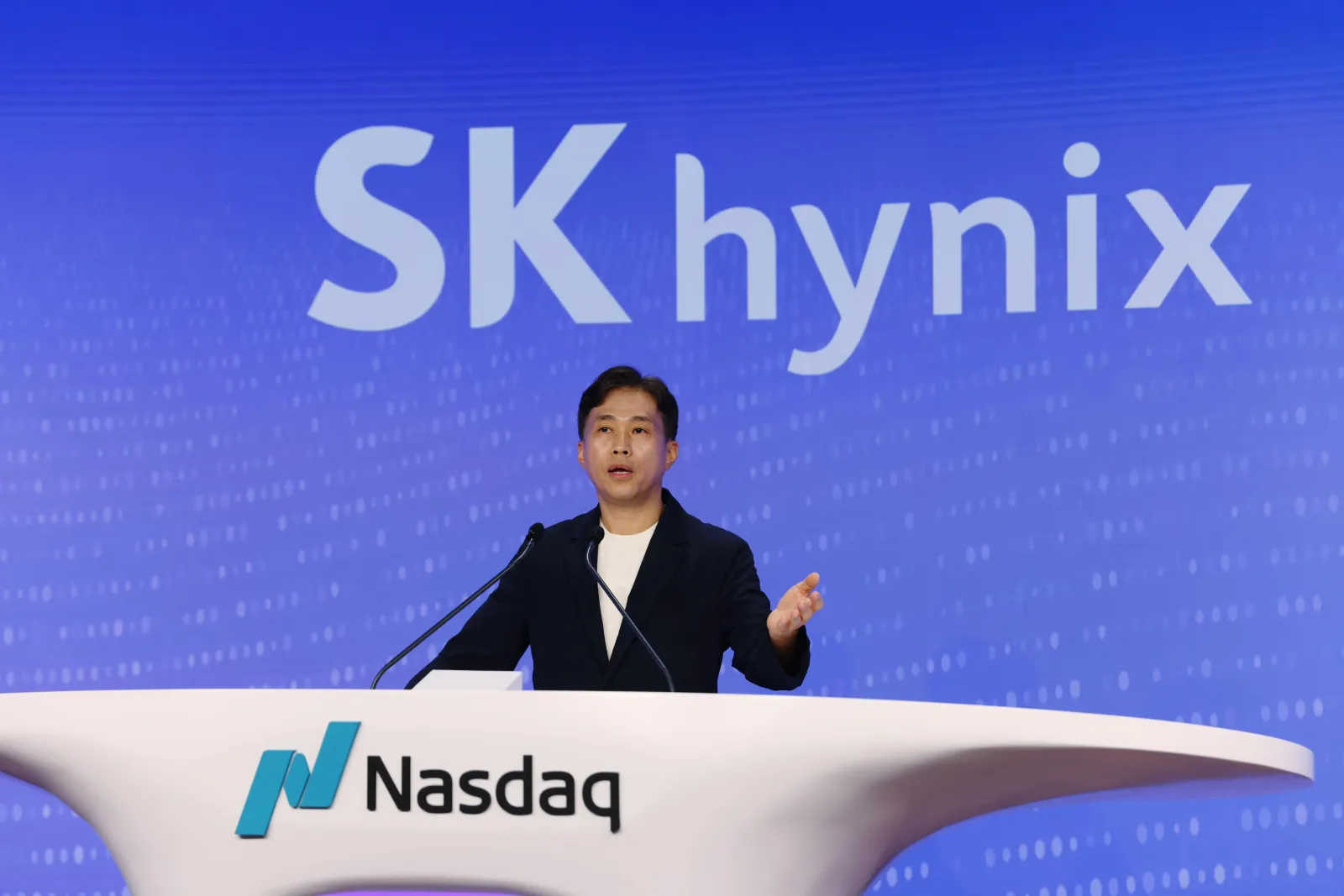
SK Hynix opens at $170, raises $26.5B, and tops foreign IPO records
In Friday's Wall Street debut, SK Hynix turns AI RAM demand into a $26.5B fundraising moment that rewrites comps.
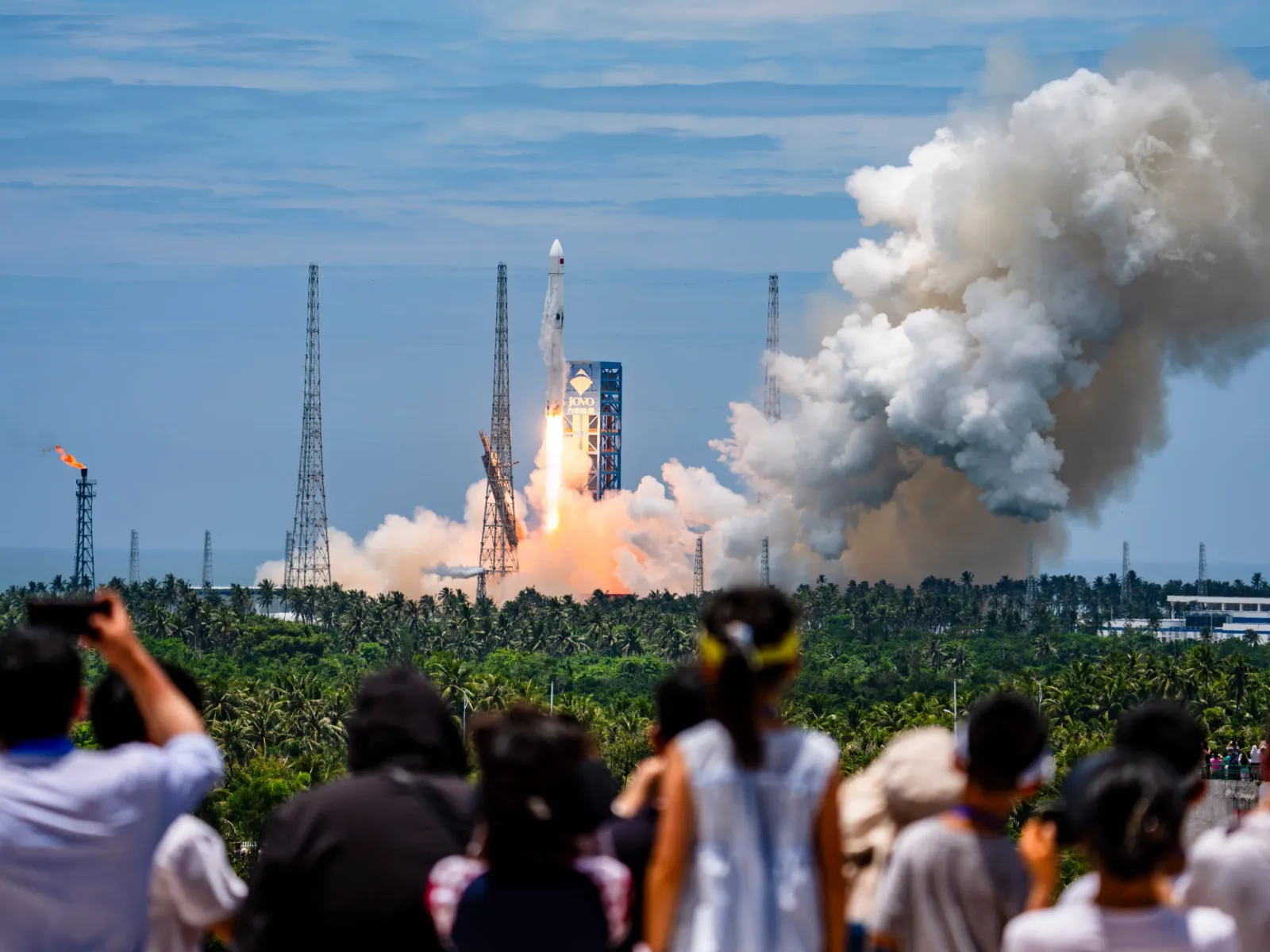
China lands a reusable Long March booster, a first that matches SpaceX and Blue Origin
A barge landing and net-based recovery move China from theory to proof, reshaping the reusability race and satellite ambitions.