

Solid-state AC pilots are underway, but scientists question whether they can beat COP.
Tech is chasing kinder, leakier-fewer cooling. The rub: efficiency at scale, especially during big temperature swings.
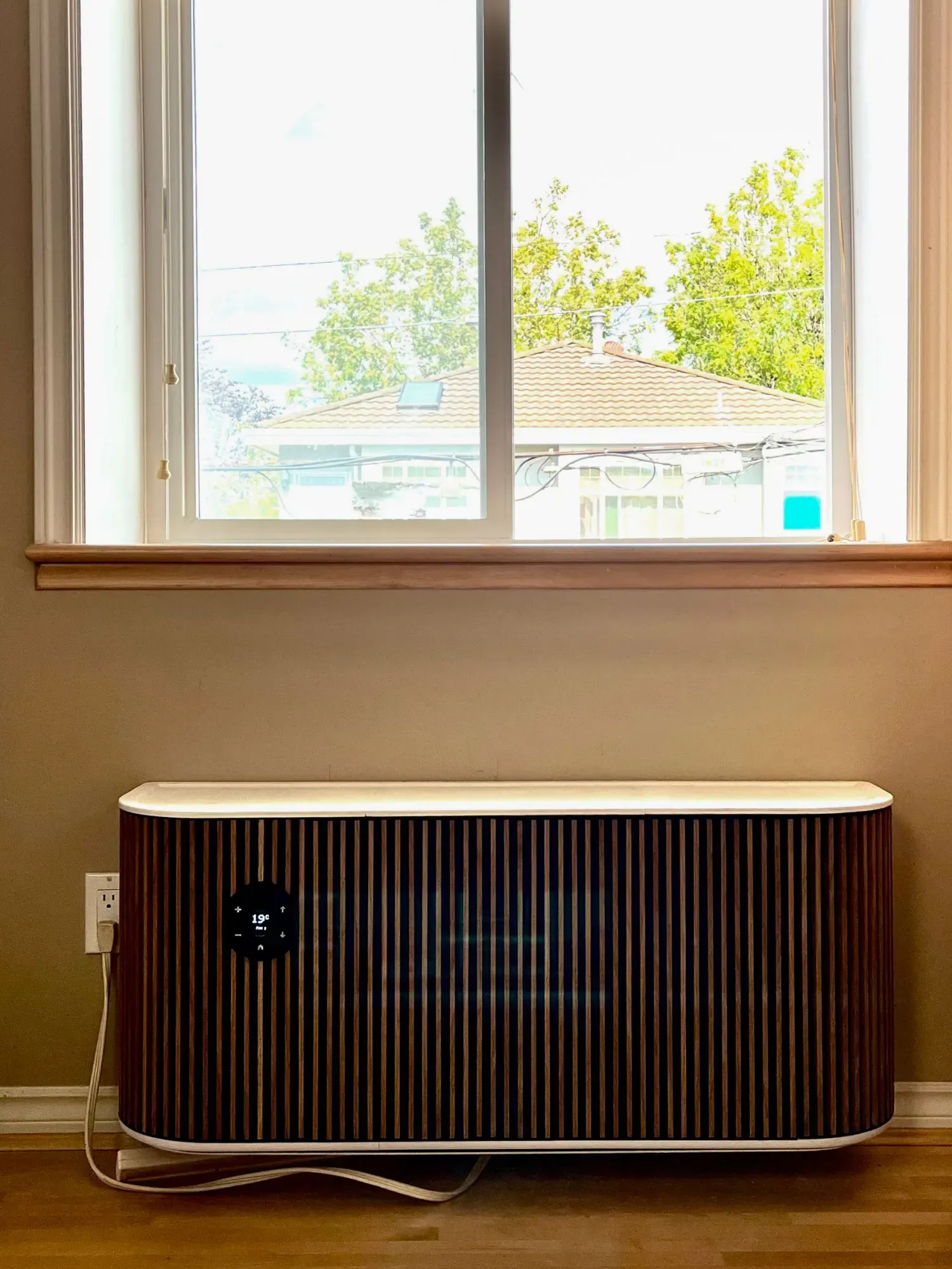
Brooklyn startup Mimic Systems and German firm Magnotherm are piloting solid-state cooling approaches, alongside Hong Kong and UK teams testing elastocaloric and barocaloric devices. Decision-makers need to weigh health and emissions benefits against the hard engineering question of whether these systems can match or beat conventional AC performance.
After three years of record-breaking heat, the world is not getting a break on air-conditioning. The International Energy Agency projects that the number of AC units will triple by 2050. The health case is real: a Lancet study estimated that AC prevented nearly 200,000 premature deaths in 2019 alone. But the planet case is also real, and it is getting louder: artificial chill already accounts for 7% of global electricity use and 3% of greenhouse-gas emissions.
That means solid-state cooling has moved from sci-fi to pilot projects. But scientists are not convinced it can deliver the thermodynamic efficiency needed to replace conventional compressor-based systems at scale. “One of the key questions that remain is why are the solid-state coolers not as efficient as typical thermodynamic cycles?” says Pramod Reddy, a professor of mechanical engineering at the University of Michigan who studies heat transfer. In other words, the biggest question is not whether solid-state can cool something. It is whether it can do it efficiently enough when you ask it to cool a room, not a gadget.
To understand why this matters, it helps to compare how today’s mainstream AC works. Traditional AC transfers heat by using a compressor and a fan to circulate a refrigerant and turn it from liquid to gas. Solid-state systems try to move heat through conductive or responsive materials instead. The article points to materials like gadolinium and bismuth telluride, which could theoretically cool spaces and surfaces with fewer messy side effects than conventional refrigerants. In the short term, solid-state cooling is already used at a small scale for things like mini fridges, EV batteries, and some high-end gaming computers. The jump to mainstream HVAC is the hard part.
The pilots are ambitious, and they are different enough that executives cannot treat this like one technology with one risk profile. Brooklyn-based Mimic Systems uses thermo-electric cooling, passing a current through semiconductive materials to shift heat from one side to another. Its room-scale climate control system is being piloted in an apartment in Vancouver. Germany’s Magnotherm is set to test its system that relies on a magnetocaloric setup, transferring heat by magnetizing and demagnetizing materials, in a chain of supermarkets. A Hong Kong team has announced that its elastocaloric device, whose material heats and cools as it expands and contracts, can dip below 0 °C. The UK’s Barocal is betting on barocaloric systems, which change temperature in response to shifts in pressure.
Still, efficiency is where the story gets prickly. Jeff Snyder, a professor at Northwestern University who studies electrical and thermal conductivity, explains that for most modern HVAC systems, the coefficient of performance (COP) is 3. COP is the simple way to describe performance: it means the system moves three units of heat for every unit of energy that goes into it. Thermoelectrics in particular tend to have much lower performance at high levels of temperature change, Snyder says, which is why they may currently be best suited for niche uses such as cooling the back of a car seat. That framing is important for boardrooms because a company can show cooling in a prototype without proving it can run economically for a whole season of real weather swings.
Efficiency is not the only variable, though. Lindsay Rasmussen, a manager at the Rocky Mountain Institute’s climate tech accelerator Third Derivative, supports both Magnotherm and Mimic. She points to the downside of incumbent AC that goes beyond energy costs. In the US, many ACs use a refrigerant called R410A, which has a global-warming potential more than 2,000 times that of carbon dioxide. She also argues that moving parts can make conventional AC less durable, especially compared with a solid-state model that is less mechanically complex. But Rasmussen also flags a measurement trap: with a dearth of units, it is hard to answer the efficiency question by COP alone. Researchers, she says, need to compare long-term energy consumption with conventional models instead of simply looking at COP.
Mimic’s room-scale thermoelectric HVAC unit is being tested in a Vancouver apartment, but the bigger claim is temporal. Rasmussen notes that Mimic claims its room-scale model should match the draw of a typical AC unit over the course of a year. For elastocaloric and barocaloric systems, Rasmussen says room-scale prototypes are probably two to three years away. That timeline matters because regulators and investors tend to ask for results that survive the calendar, not just the lab bench.
So what is the verdict? In the end, the likelihood that solid-state cooling could replace compressor-based AC is slim. However, the article lands on the part executives should not ignore: replacing even a slice could matter. As the planet warms and places like India install tens of millions of new AC units over the next decade, supplanting even a small number could make a dent. “If [solid-state] could take over even a 5% market share,” Rasmussen says, “that is a really large potential impact.” For investors, operators, and product leaders, the question becomes practical: which architectures can move from apartment pilots and supermarket chains to measurable long-term energy consumption, durability, and system-level performance before the market locks in another generation of refrigerant-driven HVAC.
The stakes are not just climate science. They are balance sheets, infrastructure decisions, and how quickly global demand can be steered toward lower-carbon cooling without sacrificing comfort or reliability. The technology may not need to conquer every room everywhere to matter. But it does need to stop being “promising” in a way that only works on slides, and start being competitive where it counts.
This story's Key Insights and Take-aways are locked.
Create a free account to unlock Executive Actions for one credit.
Register to UnlockAlways free for Executives Club members. Join the Club
More in Business

Anthropic's S-1 reveals $80.7B loss as it races OpenAI to IPO
The Claude maker files publicly for a Nasdaq listing under 'ANT,' exposing staggering losses and a world-altering ambition before it can beat OpenAI to the market.

A flaw in PHP just forced governments to pull their own sites offline
European agencies from Belgium to Germany took websites dark to patch a critical weakness in the language behind almost 70% of the web, and the blast radius extends far beyond government portals.

BioWare shuts down, Mass Effect 5 dead after $55B EA buyout
The legendary RPG studio's closure lands months after a $55 billion investment group buyout of EA, raising tough questions for gaming's biggest acquirers.