
Solid-state startup bets on safer batteries as mass production gets tougher
The race is not just chemistry. It is scale, safety, and whether non-Chinese makers can rebuild leverage.
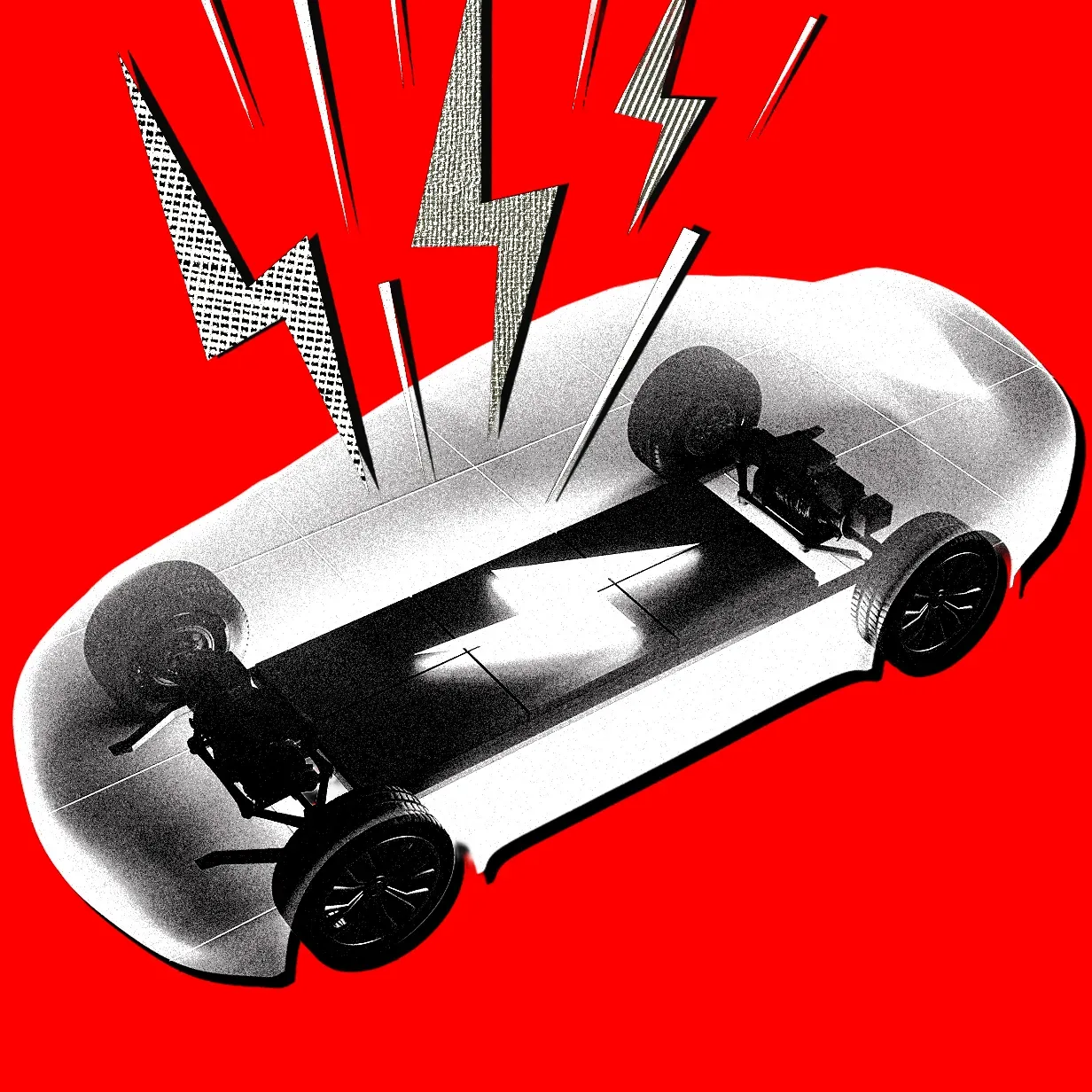
The WIRED story frames solid-state batteries as a safer, more capable alternative that remains difficult to mass-produce. For decision-makers, the key consequence is how this technical bottleneck could reshape which companies gain market power outside China.
Solid-state batteries are having a moment for one simple reason: they promise safer, more capable performance than today’s mainstream lithium-ion designs. But the catch is just as real. Solid-state batteries are also harder to mass-produce.
That tension is the whole point of WIRED’s “Meet the Battery Startup Taking on China’s Giants.” The article positions solid-state as a potential opening for non-Chinese companies trying to get back in the game, precisely because it is not an easy drop-in upgrade. It is a manufacturing and supply-chain problem as much as it is an engineering problem, which means incumbents and late movers are playing a different sport than they were with conventional cells.
To understand why executives should care, look at what solid-state changes and what it does not. The promise is “safer and more capable.” In battery terms, safety and performance are existential. If you are an automaker, a grid operator, or a consumer electronics brand, your downside is not just cost, it is risk. A technology that can reduce safety concerns while delivering better capability can change the risk equation for procurement, warranties, and insurance. The upside is bigger than a technical milestone, because it affects how confidently customers can scale adoption.
The reason this story stays interesting beyond the lab is that mass production is where most battery dreams go to get humbled. WIRED highlights that solid-state is harder to mass-produce. That matters because the whole battery industry runs on scale economics. High-throughput manufacturing, reliable yields, and predictable supply chain inputs are what turn “promising” into “buyable.” If solid-state manufacturing takes longer to industrialize or needs new equipment, new processes, and tighter quality control, then timelines and investment plans shift for everyone around it. It also changes which companies can credibly sign long-term supply deals.
Now add the China angle. WIRED frames solid-state as an opportunity for non-Chinese companies to get back in the game. In plain English: if the technology’s main advantage is achieved through a different production path, then the firms that dominated legacy lithium-ion manufacturing do not automatically win. They still may have cost and volume advantages, but the bottleneck can become a temporary opening for challengers. This is not just a narrative about national competition. It is a structural question about whether manufacturing barriers are enough to counterbalance supply-chain gravity.
There is also a governance and regulatory undertone worth executives paying attention to, even though WIRED does not spell out a specific agency or rule in the excerpt provided. Battery safety increasingly intersects with regulation, from transportation rules to product safety standards. When a technology is framed as safer, it is often positioned to fit regulators’ priorities faster, or at least to reduce the friction of compliance. That can affect purchasing decisions by making certification and approvals less risky and less uncertain. Even without naming a particular regulation, the basic mechanism is consistent: safety improvements can lower both legal exposure and operational anxiety.
For boards and investors, the second-order implication is that the real diligence checklist shifts. In an easier-to-manufacture world, you could underwrite solid-state around lab results and prototype performance. In a world where “harder to mass-produce” is the headline constraint, diligence has to concentrate on execution capability: pilot lines, yield ramp plans, production engineering, supplier readiness, and the capital intensity required to cross the gap from samples to scaled output. You are not just funding chemistry. You are funding industrialization.
And for peers watching from the sidelines, the strategic stake is straightforward. If solid-state can be scaled, companies outside China may be able to reclaim negotiating leverage in parts of the battery value chain. If it cannot, non-Chinese challengers may still have technology progress but lose market access to incumbents who can outproduce them on cost and volume. Either way, the outcome will not be decided by a single breakthrough. It will be decided by the ability to turn “safer and more capable” into something factories can reliably and economically deliver.
This story's Key Insights and Take-aways are locked.
Create a free account to unlock Executive Actions for one credit.
Register to UnlockAlways free for Executives Club members. Join the Club
More in Technology

Google quietly links your phone number to every Android account on your SIM
Adding a SIM now ties your phone number to all Google accounts - and future accounts inherit it. Here's the security and privacy stakes.

Hijacker AI 'Skynet mode' runs 100,000 attack steps against exposed models
Symantec caught a criminal AI agent that borrows other models, steals data, and mines crypto; the only relief is no confirmed victims yet.

Nvidia's AI-financier shift faces its first big test as neoclouds stumble
A rout in neocloud stocks is forcing investors to weigh Nvidia's hidden exposure as both supplier and lender to the AI buildout.