

Sony RX10 V returns with stacked sensor, 30fps no-blackout, costs $2,299.99
The RX10 superzoom comes back after nearly nine years, but it ups performance and the price in early August.
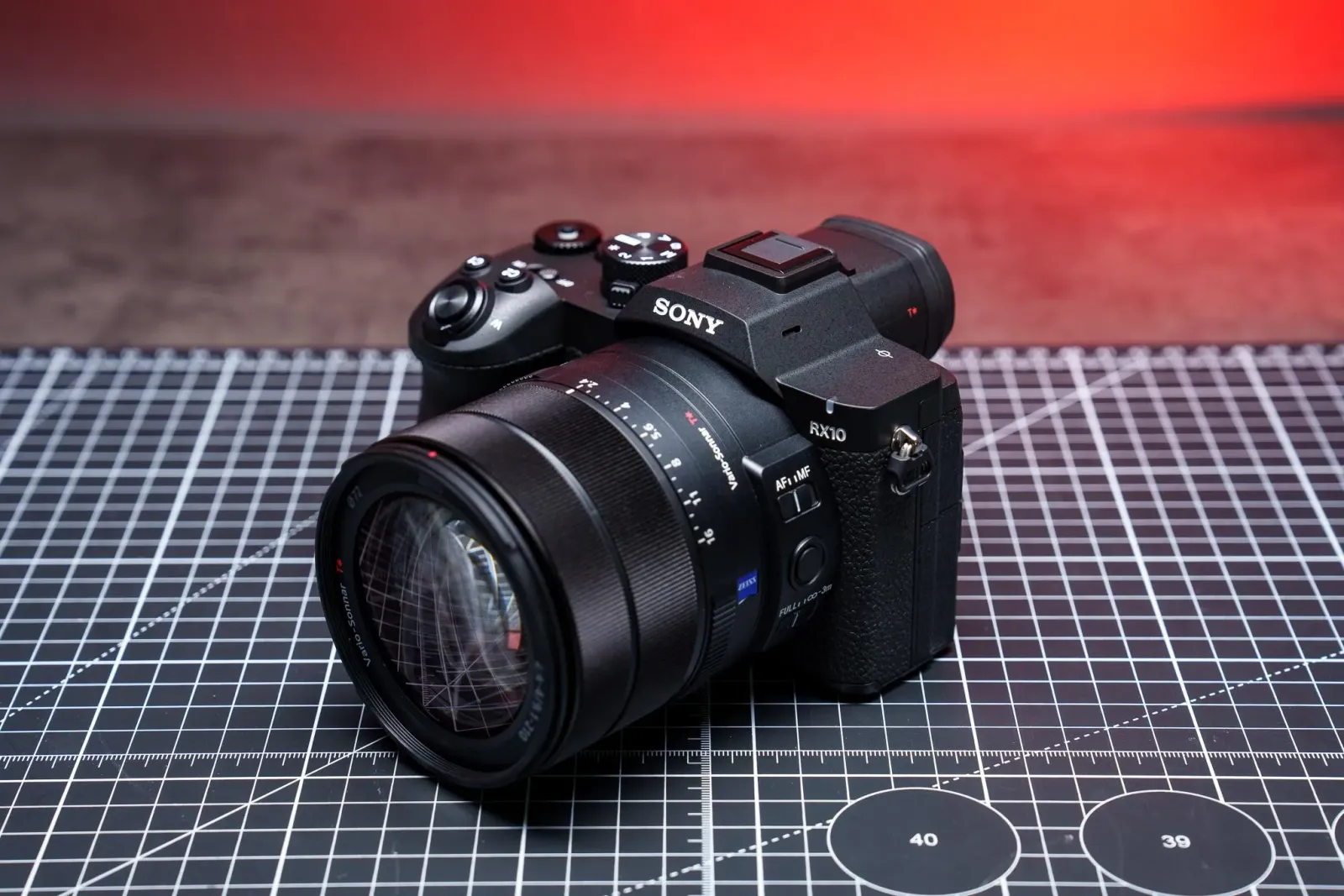
Sony is bringing back its RX10 superzoom line with the newly announced RX10 V, after a nearly nine-year gap between models. The RX10 V keeps the same 24-600mm equivalent f/2.4-4 Zeiss Vario-Sonnar 25x lens, adds a 20.1-megapixel stacked 1-inch-type sensor, and launches early August at $2,299.99.
Sony is rebooting its RX10 superzoom play with a spec sheet that reads like it is trying to win back a category. After a nearly nine-year gap between RX10 models, the newly announced RX10 V brings a 20.1-megapixel 1-inch-type stacked sensor that enables up to 30fps continuous burst shooting without blackout. That is a meaningful jump from the previous generation's 24fps, and it matters because “superzoom” buyers often want reach without giving up the ability to track fast action.
The other headline number is the one that will get CFOs and channel partners sweating: $2,299.99. Sony says the RX10 V launches in early August at that price, which is a steep step up compared with the RX10 IV, which launched at $1,700 in 2017. The RX10 IV’s earlier price gives you the baseline, and the RX10 V’s launch price shows Sony is not trying to play the mid-market pricing game this time.
Zoom cameras live in a tension that spec sheets sometimes hide: long reach usually comes with compromises in speed, buffering, and how “usable” the camera feels while tracking moving subjects. Sony is targeting sports, action, and wildlife photography with a combination that is explicitly designed for continuous bursts and subject continuity. The lens itself stays familiar. The RX10 V retains the same 24-600mm equivalent f/2.4-4 Zeiss Vario-Sonnar 25x zoom lens as its last two predecessors. That continuity signals Sony does not think its core imaging geometry needs a redesign to justify a comeback.
So where does the upgrade really land? The stacked sensor is the centerpiece. A stacked design, in plain English, is engineered to improve how quickly the camera can read and process image data, which is why Sony can promise up to 30fps continuous burst shooting without blackout. In real-world shooting terms, that means the view does not “go dark” during bursts, helping photographers maintain framing and timing while the subject is moving. For executives thinking about product positioning, this is not just a minor bump. “No blackout” turns a burst mode from a reactive tool into something you can use to actually nail moments.
The jump from 24fps to 30fps is also a clear signal about who Sony thinks the RX10 should compete with. It is aimed at buyers who notice performance, not only optics. Those buyers typically decide based on what the camera lets them do on the ground, especially in wildlife and action where you do not get a second chance. The RX10 V’s spec tells the same story from a different angle: Sony is betting that, at least at the top end, buyers will pay for usability during continuous shooting.
And the payment is not subtle. The price is $2,299.99 for a camera that launches early August. The source notes that the RX10 IV launched at $1,700 in 2017, which means the price is materially higher versus the last time Sony asked the market for RX10 dollars. That matters for more than photography enthusiasts. Pricing shifts like this affect the entire ecosystem around the product, including expectations for accessory bundles, retailer margins, and how dealers allocate shelf space or online promotion budgets.
One more second-order thing executives should clock: stacked sensor performance is capital intensive. Sony is moving toward a hardware strategy where fabrication quality and sensor architecture are part of the competitive advantage. Even though the source does not provide manufacturing details, the practical implication is that a premium camera position usually assumes stable supply and strong yield, because the economics only work if Sony can deliver high-end sensors reliably. When a company raises prices while simultaneously upgrading a key performance feature, it is effectively telling the market it has enough supply confidence to build that premium.
For peers, the stakes are simple: the RX10 V is a category signal. Sony is bringing back a “big boy” superzoom after nearly nine years, and it is not coming back timid. By keeping the 24-600mm equivalent Zeiss Vario-Sonnar 25x lens and focusing upgrades on a stacked 1-inch-type sensor that enables up to 30fps no-blackout bursts, Sony is making a clear bet that action-focused reach plus modern burst performance can still create demand. If you are a product executive, investor, or operator watching camera momentum, this is the kind of relaunch that sets expectations for what a premium superzoom should deliver, and what the buyer should be willing to pay in return.
This story's Key Insights and Take-aways are locked.
Create a free account to unlock Executive Actions for one credit.
Register to UnlockAlways free for Executives Club members. Join the Club
More in Technology

Google quietly links your phone number to every Android account on your SIM
Adding a SIM now ties your phone number to all Google accounts - and future accounts inherit it. Here's the security and privacy stakes.

Hijacker AI 'Skynet mode' runs 100,000 attack steps against exposed models
Symantec caught a criminal AI agent that borrows other models, steals data, and mines crypto; the only relief is no confirmed victims yet.

Nvidia's AI-financier shift faces its first big test as neoclouds stumble
A rout in neocloud stocks is forcing investors to weigh Nvidia's hidden exposure as both supplier and lender to the AI buildout.