

South Korea’s AI boom is colliding with a bubble risk. Regulators race to catch up
Nikkei Asia frames how fast AI capital is moving in South Korea, and why governance and hype are now inseparable for boards.
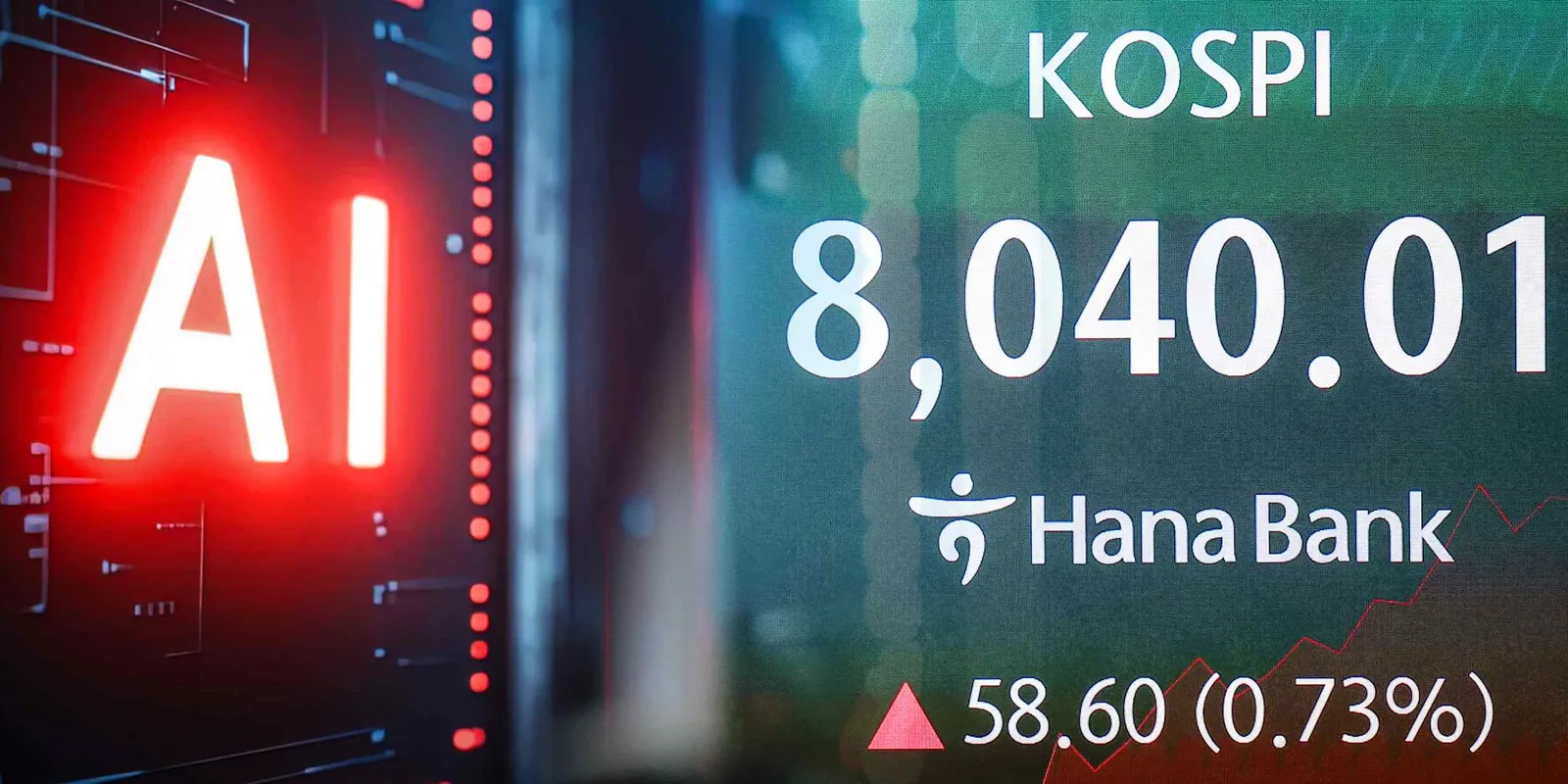
Nikkei Asia looks at South Korea’s AI moment, asking whether it is boom, bubble, or both. For decision-makers, the question is less philosophical and more about how quickly markets, policy, and corporate oversight are synchronizing.
South Korea is trying to turn an AI wave into a national advantage. Nikkei Asia’s framing is blunt: the country’s AI acceleration might be boom, bubble, or both, depending on what happens next in capital markets and regulation.
That uncertainty is the real headline. In AI, speed is the product and imagination is the marketing. South Korea has plenty of both, which is precisely why the “bubble risk” is not a side plot. It is the same pipeline. When investment, hiring, and partnerships move faster than governance and measurable output, boards can end up funding a story instead of a capability.
So what does “boom versus bubble” even mean in a place like South Korea? Think of it as a timing problem. A boom is when AI spending converts into real competitive strength: better products, lower costs, faster execution, and defensible technology. A bubble is when the spending is dominated by expectations that outrun validation, so valuations and resource allocation detach from fundamentals. Nikkei Asia’s question matters because in South Korea, the AI buildout is not happening in isolation. It sits inside a crowded, highly competitive ecosystem where large tech players, chip suppliers, startups, and corporate buyers all jockey for momentum.
In that environment, incentives get sharp. Companies want to be first, or at least early, to avoid missing platform shifts and procurement cycles. Investors want exposure before returns are “obvious.” Talent, partnerships, and compute are all scarce enough that early movers can look brilliant even when results are still ripening. But those same incentives can create a feedback loop: big announcements drive attention, attention drives funding, and funding drives more announcements. If regulatory frameworks and internal controls do not keep pace, oversight becomes a lagging indicator, not a steering wheel.
Regulation is where the lag becomes expensive. AI governance is not just about ethics headlines. It affects what data can be used, how models can be deployed, what claims companies are allowed to make, and how risk is documented. For executives, that translates into slower internal approvals, added compliance costs, and more scrutiny of model performance and transparency. For investors, it can change timelines for go-to-market and for exit. For boards, it can turn what looked like a high-growth plan into a timeline mismatch: the roadmap depends on technical readiness, but the risk review depends on governance maturity.
South Korea’s situation is especially sensitive because AI is both a national strategy and a boardroom ambition. When a country pushes hard, domestic demand can strengthen the boom case by pulling AI projects into production faster. But the same political and market energy can amplify the bubble case when the ecosystem treats AI capability as a scoreboard rather than a deliverable. Nikkei Asia’s “boom, bubble or both” framing is a reminder that the story can be mixed at the same time, with some sectors delivering real productivity while others chase narratives.
Second-order implications are what boards should actually worry about. First, valuation risk can accumulate quietly. If multiple companies in the same value chain pursue similar AI programs, budgets can expand in parallel even when measurable differentiation is unclear. Second, execution risk rises when orgs scale AI teams faster than they build durable processes for data governance, evaluation, and deployment monitoring. Third, regulatory risk can become financial risk, because new rules often show up after spending has already happened, forcing redesigns and, sometimes, reprioritization.
That is why the boom versus bubble question is not academic. If you are a CEO or CFO in a South Korean AI-linked business, your strategic problem is to separate momentum from value. If you are a board member, your job is to demand proof, not just progress. Nikkei Asia’s framing pushes decision-makers to treat AI spending like capital allocation with a dashboard attached: milestones, measured outcomes, risk controls, and governance processes that improve as fast as the technology does.
This story's Key Insights and Take-aways are locked.
Create a free account to unlock Executive Actions for one credit.
Register to UnlockAlways free for Executives Club members. Join the Club
More in Business

A flaw in PHP just forced governments to pull their own sites offline
European agencies from Belgium to Germany took websites dark to patch a critical weakness in the language behind almost 70% of the web, and the blast radius extends far beyond government portals.

BioWare shuts down, Mass Effect 5 dead after $55B EA buyout
The legendary RPG studio's closure lands months after a $55 billion investment group buyout of EA, raising tough questions for gaming's biggest acquirers.
Musk weighs Tesla-SpaceX mega-merger as boards form review panels
Special committees at both companies will examine a tie-up that could fuse electric vehicles and space launch, forcing a fresh look at governance and valuation.