

Space x-rays for humans: first in-orbit imaging could change long-duration mission safety
Spacecraft equipped with x-ray machines may provide a new in-flight safety tool for missions like crewed Mars.
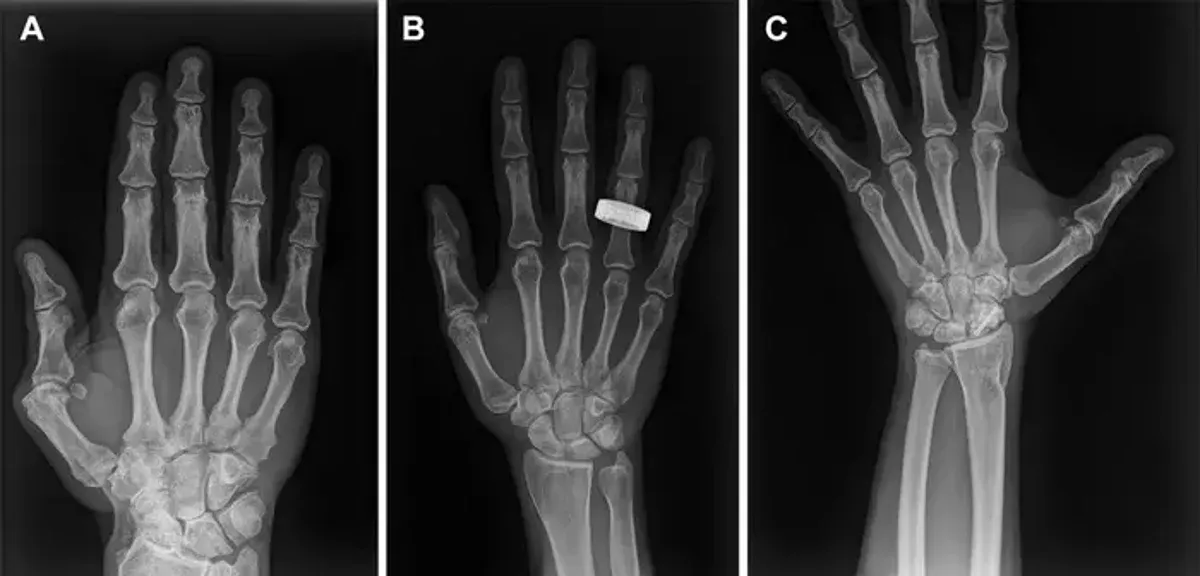
The development of x-ray capability aboard spacecraft aims to let crews perform in-orbit imaging of humans. For decision-makers, it reframes mission safety as a hardware-and-protocol problem, not just a medical logistics problem.
The first x-rays of humans taken in space are a proof-of-concept that turns a big, nagging problem into something you can actually measure. Long-duration missions, especially crewed journeys like a future Mars campaign, are governed by what you can monitor and fix when you cannot quickly bring a patient home. In that context, equipping spacecraft with x-ray machines could boost safety by adding a tool that supports diagnosis rather than waiting on a return to Earth.
The core idea is straightforward: if you can image internal conditions in space, you can make better decisions when time, oxygen, and distance do not care about your plans. The original reporting frames this as an improvement in safety for long-duration spaceflights, including scenarios like a crewed mission to Mars. That is the practical stake for anyone running a mission or building the systems around it. When your medical options are constrained, onboard diagnostics are not a nice-to-have. They can be the difference between early intervention and a problem that quietly compounds.
Now zoom out to how this kind of capability actually lands. Space medicine has always been about tradeoffs: mass and power budgets, crew time, and the friction of adding more equipment that needs training and maintenance. An x-ray payload changes the trade space. It is not just a detector or a machine. It implies an end-to-end workflow: imaging hardware, imaging protocols, safety procedures for radiation exposure, and interpretation that can happen with limited specialists. In other words, the “medical tool” becomes a systems integration project spanning engineering, operations, and human factors.
There is also a regulatory and compliance angle, even if the original piece is focused on the capability itself. In space, safety standards and approval processes are influenced by radiation considerations, operational limits, and how you document risk. Boards and executives will care less about the physics and more about what the compliance burden does to timelines. If an x-ray system is validated for human use in space, it can reduce uncertainty. Reduced uncertainty is capital efficiency. It can also shape insurance conversations and liability planning, since decision-makers prefer technologies with demonstrated on-orbit performance.
Second-order implications show up in procurement and program structure. If onboard x-rays become a viable safety enhancement, mission designers might start treating diagnostics equipment similarly to life-support subsystems. That can shift budgeting from “let’s bring it if we have extra margin” to “it is part of baseline crew survivability.” For organizations already juggling competing priorities, that is a real reallocation question. Where do you cut, and what do you standardize across mission types? The payoff is that standardized onboard imaging can also help future missions, because you can reuse hardware designs, protocols, and training materials.
Finally, consider the strategic signaling for the broader space ecosystem. A capability like this makes long-duration travel feel more operationally grounded. It suggests that medical uncertainty can be reduced with onboard instruments, not only with faster evacuation or more conservative mission profiles. That matters to investors and operators who are trying to underwrite whether crews can safely spend months in transit or live through the hazards of deep space. If the first human x-rays in orbit are a turning point, then mission architecture decisions today will reflect a new assumption: safety can be actively managed with onboard diagnostics, not just planned around risk.
For executives in adjacent roles, the takeaway is simple. This is not merely an imaging milestone. It is a shift in how missions can respond to medical problems at distance. As crewed missions move beyond low Earth orbit and toward longer timelines, hardware that supports real-time decision-making becomes a competitive advantage. In a field where the biggest costs are usually caused by uncertainty, the ability to see what is happening inside the human body while you are still in space could be one of the clearest practical steps toward sustainable long-duration flight.
This story's Key Insights and Take-aways are locked.
Create a free account to unlock Executive Actions for one credit.
Register to UnlockAlways free for Executives Club members. Join the Club
More in Science

Alaska's 1,580-foot tsunami had warning signs. Scientists just found them.
Rapid glacier retreat, heavy rainfall, and thousands of tiny tremors preceded Alaska's 1,580-foot tsunami, a warning for every coastal community in a warming world.

The rare mutation that lets high-risk brains dodge Alzheimer's
Scientists found a natural defense against protein buildup, opening a new path to preventive treatments.

3,000 steps a day may halve Alzheimer's decline, study finds
New research links a modest daily walk to less tau buildup and nearly half the cognitive and functional decline, even for those with early signs.