
SpaceX grants Elon Musk 1 billion shares if he builds a 1M-person Mars colony
It is executive compensation with a deadline absence, a board-certification gate, and a bet worth hundreds of billions.
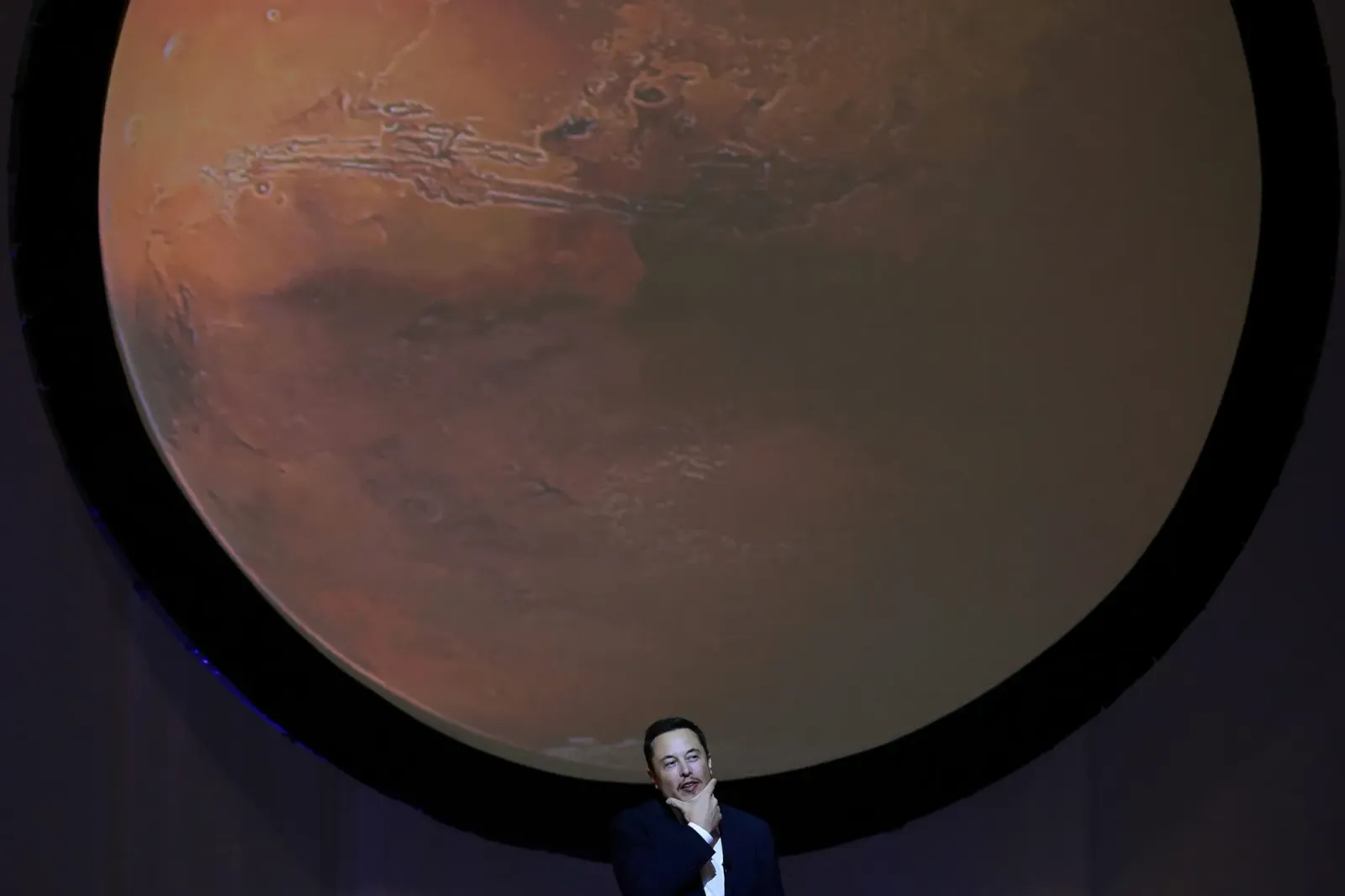
SpaceX’s May 20 S-1 says CEO and founder Elon Musk will receive 1 billion restricted shares of Class B common stock if the company establishes a permanent human colony on Mars with at least 1 million inhabitants. The payoff is tied to 15 market-cap milestones up to $7.5 trillion, and the vesting depends on Musk still being employed when the board certifies achievement.
On May 20, SpaceX filed its S-1. Buried in the executive compensation section is a condition that reads like a mission charter: CEO and founder Elon Musk is set to receive 1 billion restricted shares of SpaceX Class B common stock if SpaceX establishes a “permanent human colony on Mars with at least 1 million inhabitants.” The board also requires 15 market capitalization milestones, topping out at $7.5 trillion.
That is not just a big number. It is a structure that effectively turns the IPO into a long-horizon wagering platform, with vesting gated by both a Wall Street ladder and an ultra-specific Mars outcome. SpaceX’s filing also notes Musk already holds roughly 5 billion shares worth approximately $825 billion now, meaning the incremental 1 billion restricted shares could be worth several hundred billion dollars more at current pricing. And because the awards are “subject to Mr. Musk’s continued employment with us through the date on which achievement is certified by our board,” Musk must still be running SpaceX when the board signs off that a million-person Mars colony exists.
This is where executives should pay attention, even if they are not in rockets. Compensation design is usually about aligning management with company performance over measurable time horizons. SpaceX is aligning Musk with a technological and societal milestone that the company itself does not commit to a timeline for. The filing leans on the argument that getting to Mars is not a vanity project but the company’s core purpose, saying: “For the entirety of its existence, human civilization has lived on a single celestial body: Earth.” It adds that the “current paradigm” confines humanity to one planet, exposing people to existential threats “unpredictable and uncontrollable on a planetary scale,” and it warns against “the same fate as dinosaurs.”
The sci-fi framing matters because it is also operational. The prospectus is structured to connect Mars colonization with the technology stack SpaceX already builds, including robots to construct habitats, AI capable of operating autonomously on a planet with a 20-minute communications lag, and Starlink-scale connectivity. It is not a random motivational slogan. The filing explicitly discusses those enabling pieces as prerequisites, and the compensation structure mirrors that logic by requiring both market cap milestones and “human colony” milestones for each vesting tranche.
On the market side, prediction market traders appear skeptical. Kalshi gives SpaceX less than a 20% chance of sending humans to Mars by 2030. Meanwhile, SpaceX does not specify a timeline in its prospectus, citing the need for “new, unproven technologies.” For decision-makers, the practical takeaway is that this is an achievement condition without a calendar deadline spelled out in the filing. That shifts risk from “time to results” to “ability to define and certify results,” which is often the more complicated part of long-dated incentive plans.
SpaceX’s nearer-term roadmap, as described in the filing, is clearer in parts. It is targeting uncrewed cargo flights as early as 2028, with Tesla’s Optimus robots potentially among the first payloads. The Starship rocket that could enable a million-person colony is still in development and is undergoing test flights. But the compensation event is not “first cargo flight” or “test flight progress.” It is a board-certified permanent colony with at least 1 million inhabitants on Mars, and each tranche is still conditioned on Musk’s continued employment until certification.
There is also a capital markets angle that corporate boards can’t ignore. The stock-based awards consist of 1.3 billion super-voting Class B shares with 10 votes per share, designed to preserve Musk’s near-iron grip over the company. That matters because the pay package is paired with control mechanics. In other words, this is not only pay for performance. It is performance plus power. Three months before the S-1, Musk merged his AI company, xAI, and his social media platform, X, into SpaceX in a deal that valued the rocket company at $1 trillion and xAI at $250 billion, creating a merged entity that looked like Frankenstein on the surface but is presented in the mission statement as having a single purpose: building the Mars pipeline.
If you are an investor or a board member reviewing incentive structures elsewhere, the second-order implication is obvious: this filing shows what happens when a company treats its founding mission as an investable benchmark. It can supercharge attention and enthusiasm. It can also concentrate governance power and tie executive outcomes to events that markets struggle to forecast, like a human colony at a planet-to-planet distance. For peers considering similar comp design, the hard question is whether your board wants to certify breakthroughs that may require new technologies and uncertain timelines, while also locking key executives in through employment conditions.
Finally, there is a meta point that does not require speculation to see. The filing has “promotional quality,” with repeated invocations of existential risk and a mission statement that reads more like a thesis than standard S-1 boilerplate. Fortune reported at the time of the filing that SpaceX is a Mars company and everything else is infrastructure for the trip. The compensation structure is the bridge between that story and the public markets. For decision-makers, the bridge goes both ways: it shapes investor expectations, intensifies scrutiny on milestones, and raises the stakes for governance when the payoff depends on outcomes far beyond conventional executive-comp calendars.
This story's Key Insights and Take-aways are locked.
Create a free account to unlock Executive Actions for one credit.
Register to UnlockAlways free for Executives Club members. Join the Club
More in Business

A flaw in PHP just forced governments to pull their own sites offline
European agencies from Belgium to Germany took websites dark to patch a critical weakness in the language behind almost 70% of the web, and the blast radius extends far beyond government portals.

BioWare shuts down, Mass Effect 5 dead after $55B EA buyout
The legendary RPG studio's closure lands months after a $55 billion investment group buyout of EA, raising tough questions for gaming's biggest acquirers.
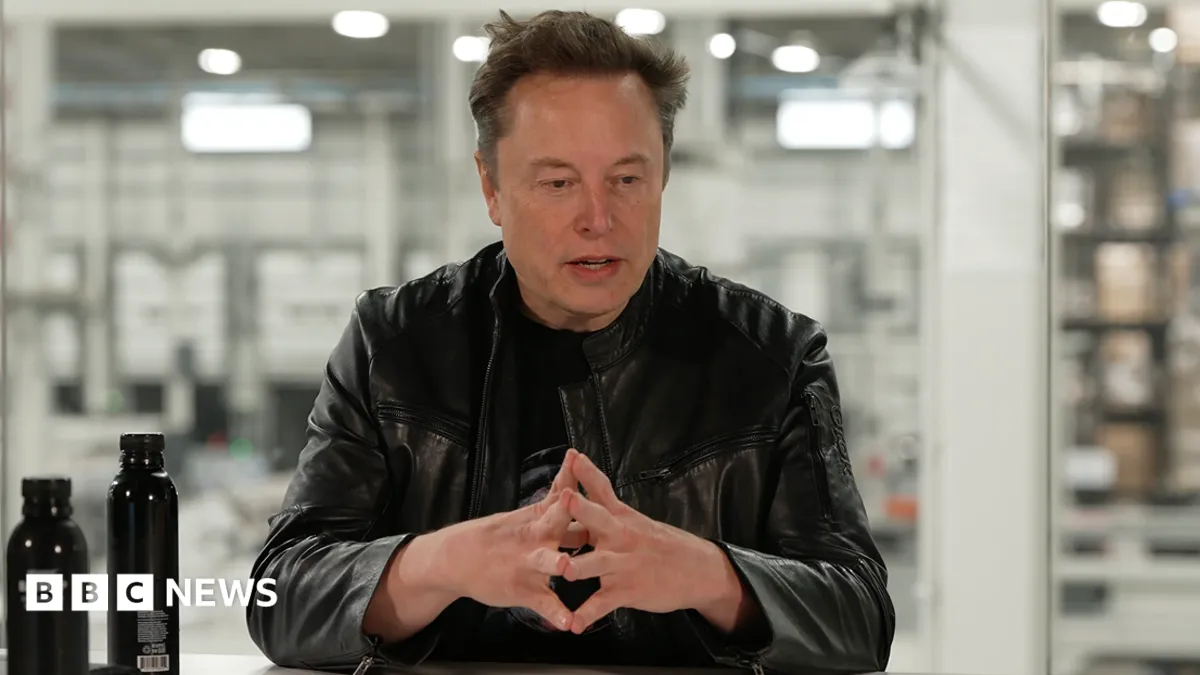
Musk weighs Tesla-SpaceX mega-merger as boards form review panels
Special committees at both companies will examine a tie-up that could fuse electric vehicles and space launch, forcing a fresh look at governance and valuation.