

SpaceX trades like Amazon despite $2.6B operating loss and $18.7B revenue
Fortune breaks down why investors assign Amazon-style valuation multiples to a company earning a fraction and losing money now.

Fortune reports that SpaceX and Amazon increasingly look like tech twins, but their financials tell a very different story. The gap between Amazon-like valuation multiples and SpaceX's current operating performance is now driving a boardroom-level question about risk pricing and capital discipline.
SpaceX looks like an Amazon story in a rockets-and-satellites costume, and investors are treating it that way. Fortune’s new analysis highlights why investors appear willing to assign Amazon-like valuation multiples to a company generating only a few percent of Amazon’s revenue while still reporting operating losses. The market has effectively said: the platform narrative matters more than today’s margins. That is a big deal for anyone making capital allocation decisions, pricing risk, or underwriting the durability of the current “AI and infrastructure” premium.
Fortune gets specific on the mismatch. Amazon generated $716.9 billion in revenue in 2025 and $80 billion in operating income, compared with SpaceX’s $18.7 billion in revenue and a $2.6 billion operating loss. The “nearly 700 billion differences” line captures the scale of the gap, and why this comparison is more than nerdy spreadsheet theater. One company is printing operating profit at massive scale. The other is burning money while it builds networks, capacity, and supply chains that could later underpin pricing power.
So why do they still get compared? Fortune’s reporting centers on the operational similarities that help explain the market’s framing. Both companies are satellite internet operators. Both are investing aggressively in hyperscale data centers and AI infrastructure. And both are betting that owning the underlying “pipes” creates durable competitive advantages across multiple businesses. In plain English, the bet is that control of key infrastructure layers, whether in orbit or on the ground, can turn from “cost center” into “power position,” letting the company charge more or defend better as demand shifts.
But the financial divergence is the whole point. When investors assign an Amazon-like valuation multiple to SpaceX today, they are essentially pricing future optionality. Optionality is what you buy when you think the upside is large enough to dwarf near-term losses, even if those losses are real and sizable. Fortune frames this as a wider gap between narrative-driven valuations and current financial performance. That gap matters because it can reshape how boards and executives think about cost of capital and competitive strategy.
Capital discipline is one pressure point. If a company is valued like a profit machine before it becomes one, management can face a paradox: the market may reward speed and scale, but the balance sheet and operating losses can punish slack. At the same time, investor expectations can lock in a high bar. If the next steps do not land, the “premium” can compress quickly, and valuation becomes a liability rather than a runway.
Risk pricing is the other pressure point. The comparison forces a question executives hate but boards ask anyway: why can't we earn a SpaceX multiple? Fortune’s analysis points to the central governance and underwriting dilemma behind the scenes. Investors are deciding that the risk is worth it, but they are also deciding what type of risk it is. Is the risk mainly execution risk that can be managed through capital spending and iteration? Or is it structural risk from regulatory constraints, technology shifts, or competitive imitation? The market’s multiple is a shorthand bet on which risks dominate and how quickly they resolve.
Regulatory and industry mechanics also sit in the background, even though the Fortune summary focuses on financials and infrastructure strategy. Satellite internet, hyperscale data center buildouts, and AI infrastructure all sit in sectors where approvals, spectrum and licensing, infrastructure permitting, and cross-border considerations can change the timeline and cost curve. That doesn’t show up directly in a revenue and operating income table, but it shapes the path from “capex now” to “profit later.” In that context, investor willingness to pay an Amazon-style multiple can be read as confidence that regulatory and operational hurdles will be navigable, or at least survivable with capital.
The strategic stakes are clear. Fortune treats the SpaceX-Amazon comparison as a case study in how markets price optionality, platform economics, and founder-led companies pursuing trillion-dollar opportunities long before the earnings arrive. For executives and board members at other infrastructure, AI, telecom-adjacent, or platform-like businesses, the lesson is uncomfortable: the market may reward the story, but the story still needs to cash out. Whether SpaceX proves to be the next Amazon or becomes a cautionary tale about growth expectations, the comparison is a live reminder that valuation premiums are not just financial outcomes. They are expectations with a countdown clock attached.
This story's Key Insights and Take-aways are locked.
Create a free account to unlock Executive Actions for one credit.
Register to UnlockAlways free for Executives Club members. Join the Club
More in Business

T. rex sells for $50M, surpassing the stegosaurus Ken Griffin bought for $44.6M
A $50 million T. rex auction record reshuffles the rare-fossil leaderboard and sends a clear wealth signal to high-end bidders.
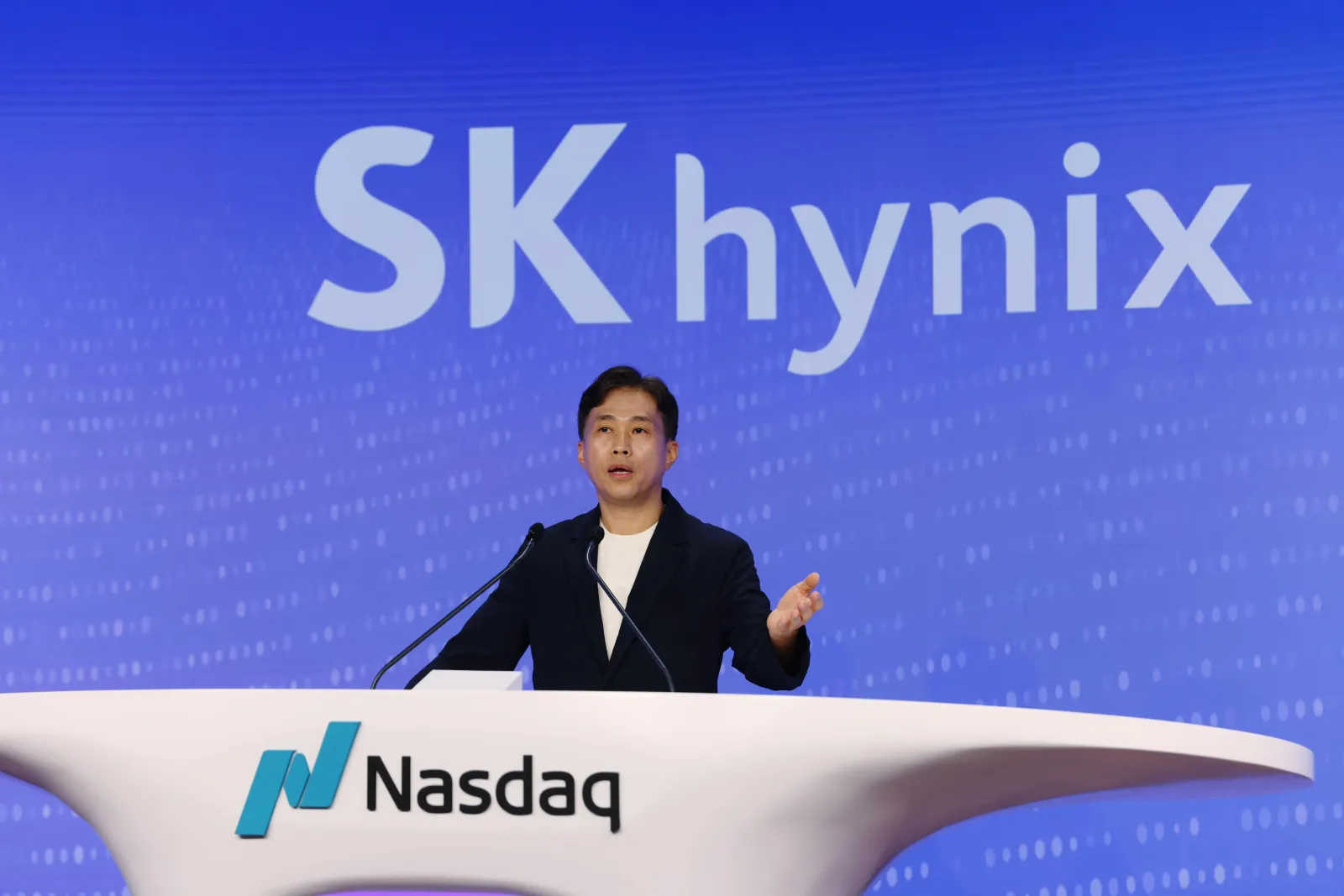
SK Hynix opens at $170, raises $26.5B, and tops foreign IPO records
In Friday's Wall Street debut, SK Hynix turns AI RAM demand into a $26.5B fundraising moment that rewrites comps.

China lands a reusable Long March booster, a first that matches SpaceX and Blue Origin
A barge landing and net-based recovery move China from theory to proof, reshaping the reusability race and satellite ambitions.