

Spain installs floating barrier in Ceuta after tens-of-thousands migrant surge
What changed on Spain's sea border with Morocco, and why it triggered EU-wide alarm overnight.
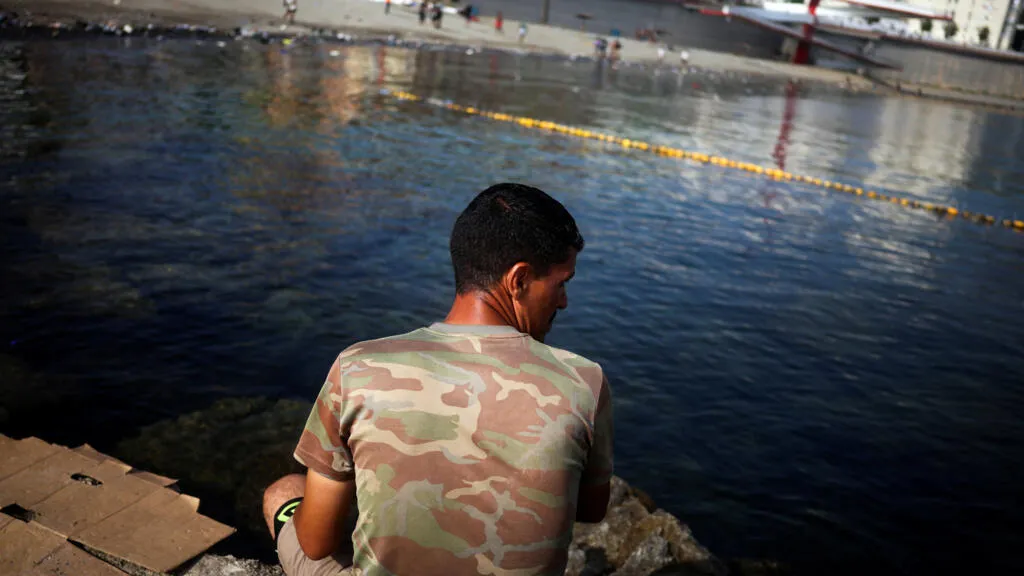
Spain’s authorities announced Saturday that they are installing a floating barrier on the sea border between Ceuta and neighboring Morocco after a surge of tens of thousands of migrants earlier in the week. The move escalates border control pressure and forces EU leaders and bordering states to reassess risk, resources, and coordination.
Spain’s authorities said on Saturday they are installing a floating barrier on the sea border between its North African territory of Ceuta and neighboring Morocco. The trigger: an earlier-week surge of tens of thousands of migrants into the territory that prompted alarm across the European Union.
For decision-makers, the headline is the policy signal. A floating barrier is not a vague promise or a committee meeting. It is a physical intervention at the sea border, deployed quickly in response to a sudden, large-scale influx. The European dimension matters too, because the source notes that the surge “prompted alarm across the European Union.” In other words, Ceuta is not operating in isolation. What happens on one of the EU’s external front lines becomes a shared political and operational stress test.
To understand why a barrier is such a consequential choice, it helps to zoom out on how border systems typically behave during migration surges. When numbers jump rapidly, authorities face a time crunch: staffing reception and processing capacity, managing sea and land routes, and preventing secondary movements. Barriers are designed to change the geometry of risk, making certain crossings harder while shifting pressure to other points. That sounds technical, but the real-world effect is political urgency. If the influx is large enough to generate “alarm across the European Union,” then the response has to be visible and fast, not just administrative.
Ceuta is Spain’s North African territory, bordering Morocco. That geography is central to why the EU pays attention. EU institutions do not run border operations line-by-line on the ground, but they do shape the framework within which countries coordinate and fund responses. When a surge of tens of thousands migrants hits a border territory, it pressures multiple layers at once: national authorities dealing with immediate arrivals, local officials managing logistics, and EU policymakers responding to cross-border fallout, including diplomatic tensions and public sentiment.
The source does not detail the barrier’s specifications, timeline, or the exact operational plan. But the decision to install a floating barrier after the “surge of tens of thousands” gives a clear sequence: large influx first, alarm next, engineering response immediately after. That sequence is what matters for executives and boards watching public-sector execution. It is also a reminder that policy procurement and deployment can become mission-critical in a way that looks like crisis logistics rather than routine infrastructure.
Second-order implications follow quickly. First, bordering regions and neighboring countries usually anticipate route shifts. If migrants cannot move freely across one sea line, pressure can build elsewhere, potentially increasing strain on other border points or encouraging different routes. Second, the visibility of the measure can raise the stakes for follow-through. Once a state publicly commits to a border technology response, expectations rise for additional measures: enforcement consistency, operational capacity, and coordination with EU partners. If those do not scale, the political cost can be higher than the original crisis.
Finally, there is the EU-wide coordination effect. The source explicitly links the earlier-week surge in Ceuta to “alarm across the European Union.” That phrasing implies spillover beyond Spain. When EU leaders feel alarm, they tend to push for tighter coordination, clearer responsibilities, and faster harmonization of approaches across member states and external partners. For executives in sectors that intersect with migration policy and border operations, the relevance is indirect but real: funding priorities can shift, procurement cycles can accelerate, and regulatory attention can intensify around border infrastructure and related services.
So the strategic stakes for peers managing public contracts, logistics networks, or compliance in regulated environments are straightforward. The story is not only that Spain built something new at a sea border. It is that a sudden surge of tens of thousands migrants triggered EU-wide alarm, and Spain responded with a tangible border-control move within days. In a world where border events can escalate from local incidents to EU-level crises, the speed and visibility of response are often what define outcomes.
This story's Key Insights and Take-aways are locked.
Create a free account to unlock Executive Actions for one credit.
Register to UnlockAlways free for Executives Club members. Join the Club
More in Politics

Obama Defends Ilhan Omar After Agents Search Her Home in Trump Inquiry
The former president's intervention raises the stakes in a federal probe into immigration paperwork that has put a prominent progressive lawmaker in the crosshairs.

Blair-era minister: cut welfare to fund youth job support
Alan Milburn's call for welfare cuts to fund employment support opens a Labour fight over benefits and the Neet crisis.

Hot September CPI: energy costs surge, voters feel the squeeze before midterms
The latest inflation print lands as Trump campaigns for GOP control of Congress, putting cost-of-living worries at the center of the midterm fight.