
Spotify confirms streaming fraud on Malcolm Todd after 500,000-plus streams deleted
Kalshi flagged suspicious Malcolm Todd “Earrings” numbers, and Spotify removed over 500,000 streams, reversing a #1 moment.
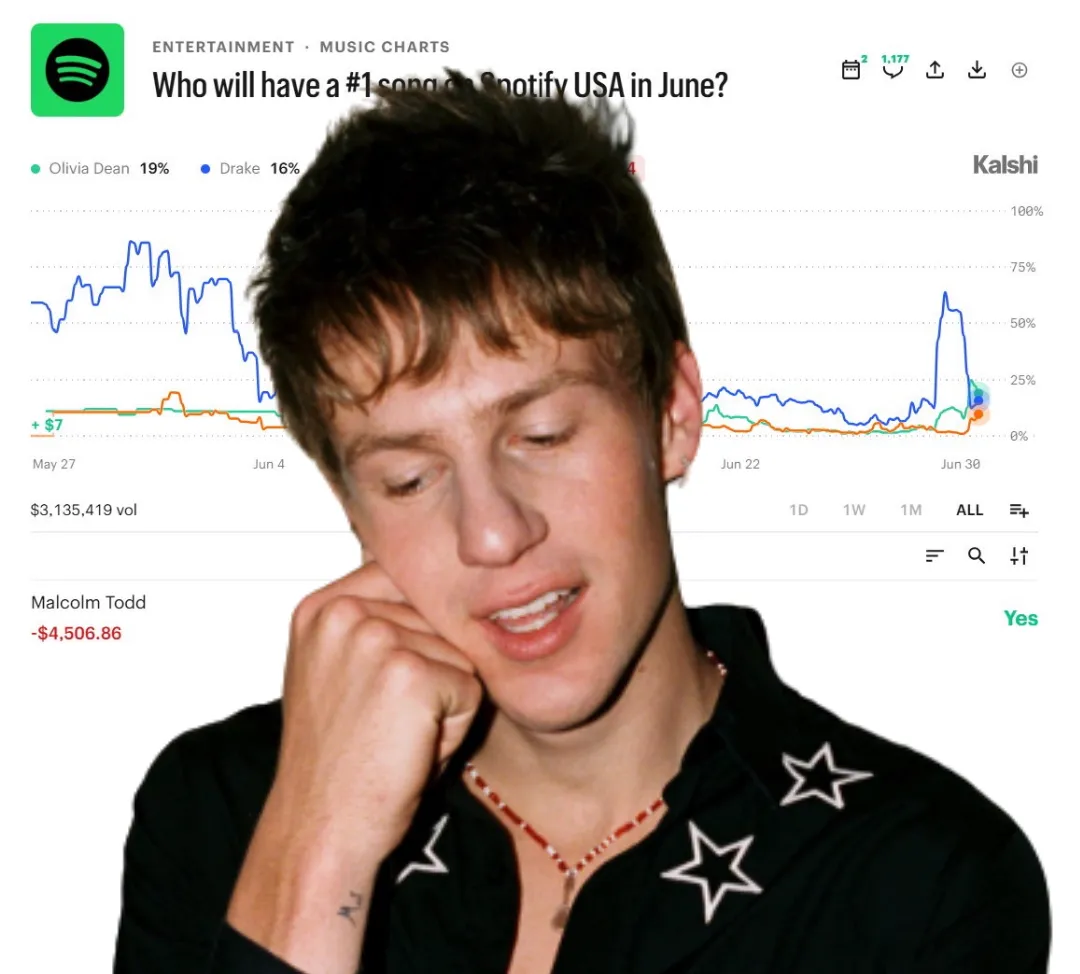
Spotify confirmed streaming fraud related to Malcolm Todd's song “Earrings” after a Kalshi trader flagged suspicious streaming numbers. The company deleted more than 500,000 streams, dropping the track from #1 to #4 on Spotify's Global Daily singles chart.
Spotify just pulled the plug on a viral moment for Malcolm Todd. On Tuesday, Todd got his first #1 song on Spotify when “Earrings” topped the Global Daily singles chart with 4.165 million streams. But after a Kalshi trader noticed suspicious details in the numbers, Spotify confirmed streaming fraud and deleted more than 500,000 of the song's streams, leaving it at #4.
That sequence matters because it flips what was supposed to be a clean, market-validating signal. A top position on Spotify's Global Daily chart is not just fan bragging rights. It is the kind of ranking that attracts attention, playlist consideration, and algorithmic momentum. Spotify awarded the #1 status based on 4.165 million streams, then reversed it after fraud confirmation and stream deletion. The reader takeaway is simple: in streaming, “the chart” can change quickly when the underlying measurement is challenged.
Zoom out and you get why this story is bigger than one artist. Streaming platforms are built on measurement at massive scale. The same system that surfaces a breakout song is also the system that can be gamed. When a third party, like a Kalshi trader, flags anomalies, it forces the platform to treat chart integrity as operational risk, not just a PR concern. Spotify's action to confirm fraud and remove streams is essentially a remediation step: it repairs the public-facing metric so the chart reflects what the system determines to be legitimate activity.
Also, this is a reminder that incentives in music streaming do not just sit with artists and fans. Labels, distributors, marketers, and anyone trying to move the needle all live and die by visibility. A sudden jump to #1 can trigger downstream effects even before the dust settles. If a chart is temporarily influenced by fraud, the ripple can reach beyond the song itself, including attention flows and promotional cycles. Spotify's deletion of more than 500,000 streams signals that the company is willing to revise outcomes after verification, not just watch charts propagate.
There is another layer here, and it is about verification and accountability in the modern data economy. Kalshi traders monitor markets, and they can spot patterns that look off. The fact pattern in this case is straightforward: after a Kalshi trader flagged suspicious Malcolm Todd numbers, Spotify confirmed streaming fraud and removed more than 500,000 streams. In other words, the platform was not acting solely on internal monitoring. It responded to an external flag, which implies that cross-party scrutiny is becoming part of how these systems police themselves.
For executives and board members, the strategic stake is integrity under speed. Streaming rankings operate in near real-time, but fraud investigations do not. The longer a suspicious spike stays visible, the more it can influence what people do next, including curators and audiences. The “Global Daily” framing underlines the short time window. Spotify can correct the metric after the fact, but it also has to think about the period where the wrong signal could have driven decisions.
And for artists and their teams, this is a cruelly normal industry truth. Malcolm Todd, brother to Audrey Hobert, was awarded his first #1 song on Spotify with “Earrings” hitting 4.165 million streams. Then fraud confirmation and deletions snapped it back to #4. The emotional payoff of a first #1 is real. So is the financial and logistical fallout if that first-place visibility influenced campaigns, outreach, or momentum during the window before the correction.
For peers in music platforms, analytics companies, and any business that relies on rankings, this episode reads like a case study in what happens when measurement meets manipulation. Your systems might detect fraud eventually, but the leadership question is whether your operating model can detect fast enough to protect the integrity of the public signal. Spotify's confirmation and deletion show it can act decisively. The broader lesson is that chart integrity is a living product requirement, not a one-time audit. In a world where 4.165 million streams can become a correction and a ranking can shift to #4 overnight, the platform's credibility depends on how quickly and transparently it repairs the data when something is broken.
This story's Key Insights and Take-aways are locked.
Create a free account to unlock Executive Actions for one credit.
Register to UnlockAlways free for Executives Club members. Join the Club
More in Entertainment

Russell Brand's accuser 'bewildered and confused' as he denies 7 sex charges
The criminal case against the comedian is a live test of how media companies manage talent risk when serious allegations go public.

'It's a Magic Trick': Ballet Experts Say Rosalía's SNL Pose Is Impossible
Three ballet experts tell Rolling Stone Rosalía's gravity-defying SNL stillness shouldn't be possible - and why the debate is now part of the show.

Activision CMO: GTA 6 Will Boost Call of Duty, Not Bury It
Activision's top marketer says Rockstar's blockbuster will drive players back to consoles and into Modern Warfare 4, even as the company admits its recent strategy failed.