
Starlink India: Musk cleared key approvals, yet launch remains in limbo
Security clearances and competition keep Starlink in limbo, testing India's investment climate.
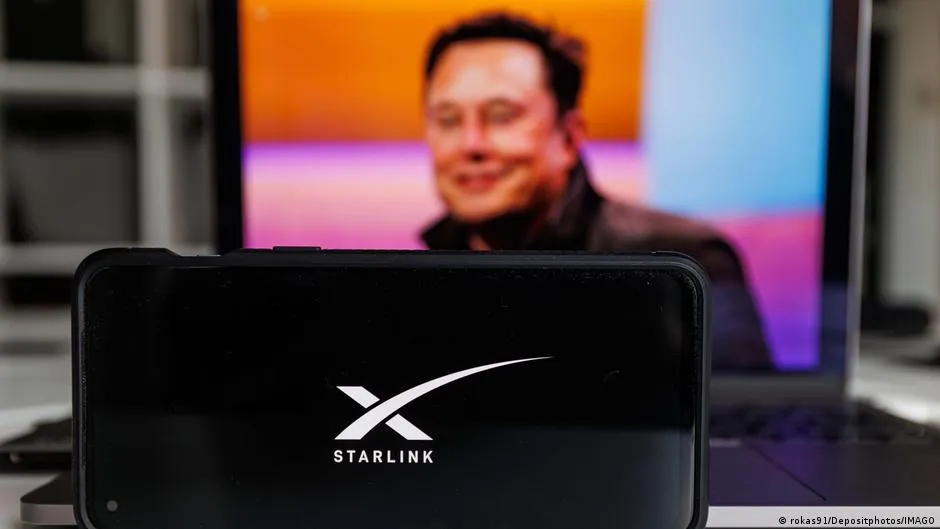
Elon Musk's Starlink has secured key approvals in India but remains in regulatory limbo, awaiting security clearances and facing competition questions. For decision-makers, the delay signals how India's cautious satellite policy could shape the investment climate for global tech entrants.
Elon Musk's Starlink has cleared key regulatory approvals in India, yet the satellite internet service still has not launched. The company remains in regulatory limbo, with security clearances and competition questions unresolved, according to Deutsche Welle. For a service that has already expanded across multiple markets, India is proving one of the hardest to crack, and the wait is now a test of both Musk's patience and India's openness to foreign tech investment.
The delay is not for lack of progress. Starlink has secured some approvals, but the final green light remains elusive. The source notes that the situation raises questions about security clearances, competition, and India's investment climate. In other words, the technical readiness is there, but the political and regulatory environment is not fully aligned. For a company accustomed to moving fast, this is a reminder that some markets demand a different kind of patience.
For context, India's space sector has undergone significant reforms in recent years, opening the door to private players after decades of state dominance. The government has signaled interest in attracting global satellite operators, but foreign companies must still navigate a complex approval process that includes security vetting. Satellite internet is particularly sensitive because it involves cross-border data flows and potential surveillance concerns. India's regulators are not alone in this caution, but the stakes are higher here given the country's massive unconnected population and its ambitions to become a digital economy.
The competition angle adds another layer. Starlink would enter a market where established telecom operators already provide broadband services, and where satellite internet could disrupt pricing and coverage models. The source explicitly flags competition as a concern, suggesting that incumbents may be wary of a well-funded newcomer. While the regulatory limbo persists, existing players gain time to strengthen their own offerings or lobby against new entry. For Starlink, every month of delay is a month of lost market opportunity in a country with over a billion potential users.
The investment climate dimension is perhaps the most consequential. India has been courting global tech giants, from manufacturing incentives to digital infrastructure projects. But a high-profile company like Starlink waiting indefinitely after securing key approvals sends a signal to other investors: regulatory certainty is not guaranteed. This could make boards and CFOs more cautious about committing capital to India's satellite and tech sectors, even as the government touts its reforms. The Starlink case is becoming a benchmark for how India balances national security with its ambition to be a global tech hub.
For executives in similar positions, the lesson is that initial approvals are not the finish line. In sectors with national security implications, the final stage of review can be the most unpredictable. Companies need to plan for extended timelines, engage with regulators early on security protocols, and build local partnerships that can ease concerns. The Starlink situation also underscores the importance of scenario planning: what happens if a key market stays in limbo for years? Diversification across regions becomes a hedge, but it does not replace the need for a clear regulatory strategy.
Ultimately, the Starlink India saga is not just about one company's launch. It reflects a broader tension between openness and security that many governments are grappling with as satellite internet becomes a strategic asset. For now, Musk's wait continues, and the outcome will be watched closely by anyone betting on India's digital future. If Starlink eventually launches, it will validate India's reform path. If it remains stuck, the message to global tech will be unmistakable: India's doors are open, but only so far.
This story's Key Insights and Take-aways are locked.
Create a free account to unlock Executive Actions for one credit.
Register to UnlockAlways free for Executives Club members. Join the Club
More in Science

France euthanized Félicette, the first cat in space, two months after her flight
Félicette's 1963 flight made France a space-race player, but her euthanasia and a crowdfunded statue reveal how high-risk programs are remembered.

Ultracold atoms just created a 'fractional Fermi sea' that breaks quantum rules
A new quantum state challenges decades of theory and hints at 'super-Fermions,' with real stakes for quantum computing and materials science.

Bangladesh's 202,000 measles cases are a 'real warning' to other nations
The world's worst measles outbreak is spreading as routine vaccination falters. Here is why every country's immunization program should pay attention.